


Art and the Transformation of Consciousness – How Art Shapes Our Inner Lives
More than 80 percent of people report that art has profoundly changed their view of the world. In a time when personal development is increasingly important, the impact of artistic experiences plays a central role. Art opens doors to new perceptions, challenges entrenched thought patterns, and can trigger genuine processes of change – far beyond mere aesthetics.
Table of contents
- Art and Change of Consciousness Defined
- Forms of Mind-Altering Art
- How Art Changes Our Consciousness
- Emotional and Neurological Effects
- Myth, Symbolism and Inner Resonance
- Avoiding Dangers and Misjudgments
Key findings
| Point | Details |
|---|---|
| Art as a tool for awareness | Art can bring about profound changes in inner consciousness and promote personal self-knowledge. |
| Emotional and neurological stimulation | Artistic experiences activate emotional and neurological processes that promote creativity and empathy. |
| Symbolism and myth | Myths and symbols in art enable deeper communication with the unconscious and promote transformative insights. |
| Critical self-reflection is required. | When engaging with art, overinterpretation and emotional complacency should be avoided in order to enable real change. |
Art and Change of Consciousness Defined
Art is more than a visual experience – it is a transformative process that fundamentally alters our inner consciousness. Artistic research defines itself as an interdisciplinary field between art and science, aiming to generate new insights and expand our perception through creative methods.
The shift in consciousness through art occurs on multiple levels. It not only touches our emotional landscape but also transforms our cognitive patterns. As altered states of consciousness demonstrate, artistic experiences, much like meditation, can fundamentally shift our perception and open up new perspectives.
The profound impact of art stems from its ability to stimulate emotions, encourage reflection, and touch upon hidden aspects of our psyche. It acts as a mirror to our inner states, simultaneously challenging and healing us. Through visual metaphors, symbolic representations, and emotional resonance, art creates a space for transformation.
Pro tip for a shift in consciousness : Regularly engage with works of art that emotionally move you. Take the time not only to look at them, but also to feel and reflect on them – this opens doors to deeper self-knowledge.
Forms of Mind-Altering Art
The art forms that can transform our consciousness are diverse and rich in expressive possibilities. Artistic experiences in the digital age demonstrate how different media and techniques can expand our perception.
Consciousness-altering art forms include, first and foremost, performance art and installations that directly involve the viewer in the artwork. Immersive installations break down traditional boundaries between art and audience, creating spaces for intense sensory and emotional experiences. Experimental media art, video art, and interactive digital installations enable new dimensions of perception and self-reflection.
Abstract painting, surrealist art, and conceptual art forms deliberately work with the deconstruction of familiar patterns of perception. Through unexpected visual languages and symbolic representations, they challenge our cognitive structures and open gateways to expanded states of consciousness. Meditative art forms such as mandala drawings or Zen-inspired artworks also aim to stimulate inner processes of transformation.
Pro tip for consciousness art : Don't just rely on passive observation, but experiment with different artistic forms of expression yourself. Creativity is the key to inner transformation.
The following table summarizes key forms of consciousness-altering art and their main modes of action:
| art form | Main effect | Typical medium |
|---|---|---|
| Performative art | Direct involvement of the audience | stage, public space |
| Immersive installations | Intensification of perception | Spatial installation, light |
| Digital media art | Enhanced Interactivity | VR, digital displays |
| Abstract painting | Deconstruction of visual habits | Canvas, Mixed Media |
| Meditative art forms | Promoting inner peace | Mandala, Zen drawings |
How Art Changes Our Consciousness
The process of altering consciousness through art is complex and profound. The benefits of wall art for the soul illustrate how artworks can subtly but sustainably transform our inner landscape.
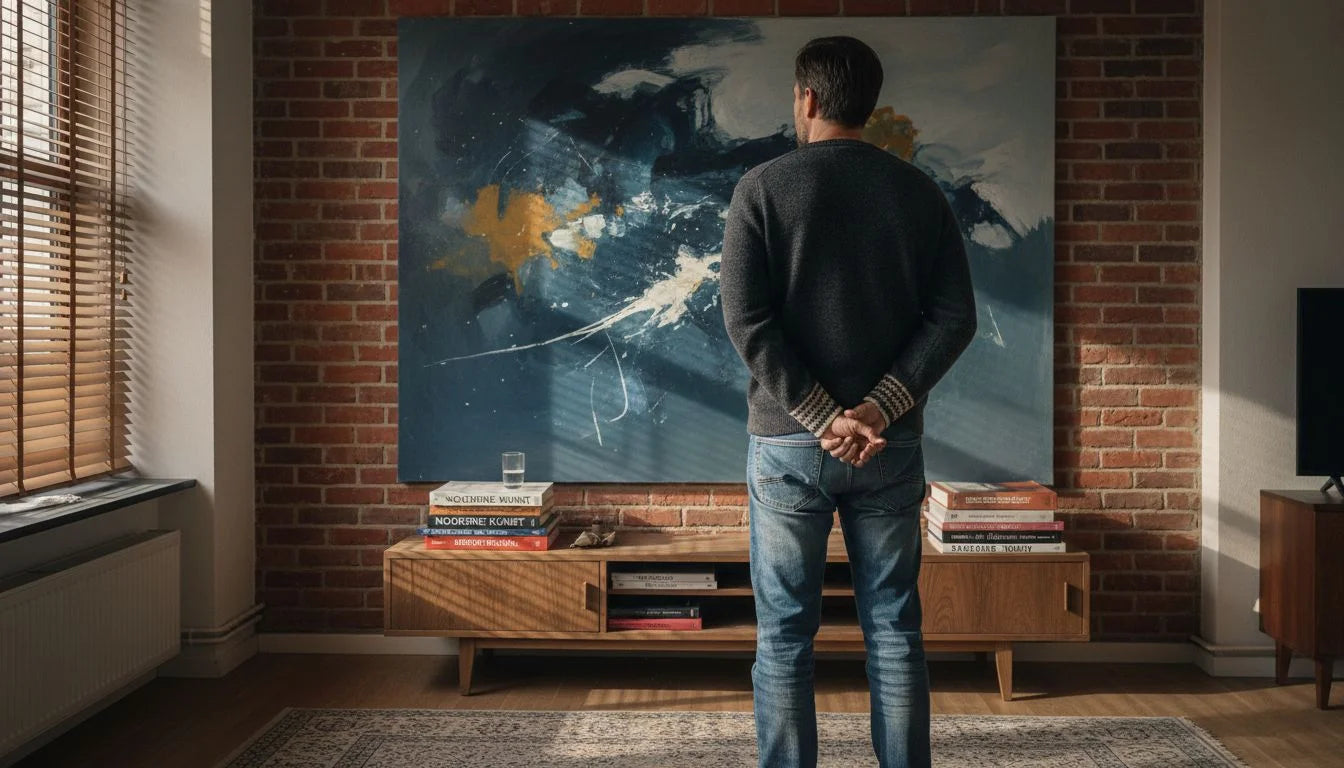
Art acts as a psychological mirror, revealing hidden layers of our emotions and thought patterns. Through visual metaphors, symbolic representations, and unexpected perspectives, it breaks through familiar cognitive structures. It stimulates neural networks, fosters empathy, and enables deeper self-reflection by communicating feelings and experiences beyond rational language.
The neuroplastic effects of artistic experiences are particularly remarkable. Viewing complex works of art activates multiple brain regions, fostering creativity, emotional processing, and problem-solving skills. Abstract and surrealist art challenges our perception by breaking down familiar patterns of interpretation and stimulating new neural connections.
Pro tip for expanding consciousness : Regularly take time for artistic encounters. Don't just look at artworks superficially, but let them touch and transform you.
Emotional and neurological effects
Art is a profound instrument for stimulating emotional and neurological processes. Altered states of consciousness demonstrate how artistic experiences can fundamentally influence our neural networks.
Emotionally, art acts as a complex resonating chamber for our inner states. It activates limbic systems that control feelings, memories, and unconscious reaction patterns. Through visual and symbolic impulses, artworks can trigger emotions that are deeper and more multifaceted than verbal communication—they speak directly to our emotional centers and enable immediate, non-rational processing.
From a neurological perspective, the perception of art stimulates multiple brain regions simultaneously. Psychedelic art forms illustrate how artworks challenge neural circuits, generate new synaptic connections, and promote cognitive flexibility. Neural plasticity is stimulated by complex visual stimuli, which enhances creativity, empathy, and problem-solving skills.
Pro tip for consciousness work : Consciously experiment with artworks that challenge your comfort zone. The more unexpected and complex the artistic experience, the more profound the neurological and emotional transformation.
This section demonstrates how artworks activate emotional and neurological processes:
| Level of impact | Description | Typical manifestation |
|---|---|---|
| Emotionally | Activation of deep feelings | Emotional Resonance |
| Neurological | Stimulation of neural networks | Promoting cognitive flexibility |
| Cognitive | Breaking down familiar thought patterns | Opening up new perspectives |
Myth, Symbolism and Inner Resonance
Myths and symbols are profound communication channels of our collective and individual unconscious. Medhananda's approach to symbol interpretation clarifies how symbols function as a universal language of our inner world of experience.
The symbolic power of art lies in its ability to convey complex emotional and spiritual states beyond rational language. Archetypal images and mythological narratives speak directly to our deepest psychic layers, activating collective memories and primal impulses. They bridge the gap between conscious and unconscious realms of experience, enabling multidimensional communication.
Artistic automatism demonstrates how spontaneous creativity can uncover hidden symbolic layers of meaning. By letting go of controlling impulses, artists open gateways to mythical imagery that resonate with our inner selves and trigger transformative processes of understanding.
A pro tip for symbolic self-exploration : Don't just look at works of art with your mind, but with all your senses. Allow symbols and myths to awaken their own stories and resonances within you.
Avoiding Dangers and Misjudgments
Engaging with art as a tool for raising awareness requires sensitivity and critical self-reflection. Symbolic artworks can have ambiguous layers of meaning that can be misinterpreted or overused.
A key danger lies in the overinterpretation of artistic experiences. Not every work of art is a profound spiritual revelation, and not every emotional reaction signifies a genuine shift in consciousness. Discernment is needed to separate authentic transformation from superficial sentimentality. Overestimation of one's own abilities and the projection of unrealistic expectations can block the actual process of gaining insight.
Another challenge is confusing emotional engagement with actual personal growth. Works of art can evoke feelings, but these feelings must be reflected upon and translated into concrete actions and insights. The danger lies in remaining in a kind of aesthetic complacency without undergoing any real inner transformation.
Pro tip for self-awareness : Practice an attitude of curious, but non-attachment-based observation when experiencing art. Remain open, but not uncritical.
Discover art that touches and transforms your consciousness.
Inner transformation through art demands experiences that go deep and create genuine emotional resonance. This is precisely where Curiocanvas comes in: Our collections combine poetic symbolism with aesthetic clarity, opening up new perspectives on your inner life and your longing for a shift in consciousness. Experience art as a powerful mirror of your soul in our Wall Art Gallery Flames Kisses Time and Compass .
Immerse yourself in a world where every wall becomes a space for reflection and inspiration. Transform your home with artwork that transcends mere decoration. Visit Curiocanvas and discover select masterpieces as a mirror of your soul . Harness the power of art for your own personal transformation and order exclusive prints that truly resonate today.
Frequently Asked Questions
How does art influence our consciousness?
Art influences our consciousness by stimulating emotions, encouraging reflection, and activating our neural networks, leading to a deeper self-awareness.
What role does symbolic art play in the shift in consciousness?
Symbolic art conveys complex emotional and spiritual states and speaks directly to our unconscious, thereby activating inner resonance and enabling transformative experiences.
What are some examples of mind-altering art forms?
Mind-altering art forms include performance art, immersive installations, digital media art, and abstract and meditative art, all of which offer different opportunities for self-reflection.
How can I actively engage with art to promote my shift in consciousness?
Regularly engage with artworks that emotionally move you, experiment with different artistic forms of expression, and reflect on your experiences to foster deeper self-awareness.
Recommendation
- Art and Mindfulness – Paths to Inner Peace – Curiocanvas
- Create your own personal art niche: Your individual art refuge – Curiocanvas
- Emotional Art in the Home: The Complete Guide – Curiocanvas
- Discover 7 benefits of wall art for the soul and home – Curiocanvas
- Furniture as a design object: Everything you need to know 2024 - AFUERA – outdoor steel design