


Create your own personal art niche: Your individual art refuge
Over 60 percent of people report that their living environment directly influences their mood. Your personal art niche offers the opportunity to make emotional needs visible and tangible. With a conscious selection and placement of artwork, you create a retreat that fosters inner peace and inspiration. In just a few steps, you can transform your home into a space that reflects your feelings and enhances your well-being.
Table of contents
- Step 1: Define your emotional orientation
- Step 2: Select spiritually inspiring artworks
- Step 3: Arrange art and decor harmoniously
- Step 4: Create a calm and mindful atmosphere
- Step 5: Check the personal impact of your niche
Quick summary
| Important point | Explanation |
|---|---|
| 1. Define your emotional orientation | Begin by reflecting on the emotions you want to evoke in your art. |
| 2. Choose spiritually inspiring artworks | Pay attention to works that create a deeper spiritual resonance and reflect your inner journey. |
| 3. Arrange art and decor harmoniously | Create a balanced arrangement that underlines your emotional narrative and gently guides the eye. |
| 4. Create a calm and mindful atmosphere | Use soft lighting and natural materials to create an oasis of peace and reflection. |
| 5. Check the personal impact of your niche | Regularly reflect on how your artistic niche affects your emotional well-being and adjust it if necessary. |
Step 1: Define your emotional orientation
Designing your personal art niche begins with a deeper understanding of your emotional landscape. Emotions are fundamental components of our human nature , unconsciously shaping our perception and evaluation of situations.
To define your emotional focus, start with self-reflection. What feelings and moods do you want to cultivate in your art sanctuary? Is it about peace and harmony, or energy and inspiration? Create a list of three to five core emotions such as serenity, passion, thoughtfulness, or hope. These will serve as an emotional compass for your art selection.
The authentic connection is crucial. Choose artworks that are not only aesthetically pleasing but also resonate deeply with your inner emotional landscape . Your art niche should become a reflection of your deepest feelings.
Step 2: Select spiritually inspiring artworks
Selecting spiritually inspiring artworks is a deeply personal and intimate process. Art therapy demonstrates how art can serve as a medium for self-discovery and healing, reflecting our inner emotional landscape.
Seek out artworks that convey more than just visual beauty. Pay attention to motifs, colors, and compositions that evoke a deeper spiritual resonance. Symbolic representations such as mandalas, abstract meditation images, or works that express transcendence and inner harmony can enrich your spiritual sanctuary. Trust your intuitive connection to the artworks.
Creating a gallery at home means understanding art as an authentic expression of the soul . Choose artworks that reflect your spiritual journey and give you strength and inspiration in moments of contemplation.
Step 3: Arrange art and decor harmoniously
The art of interior design is based on the subtle ability to create emotional states by artfully merging inner and outer worlds. Your artistic niche should be more than a simple collection of pictures; it should be an emotional narrative.
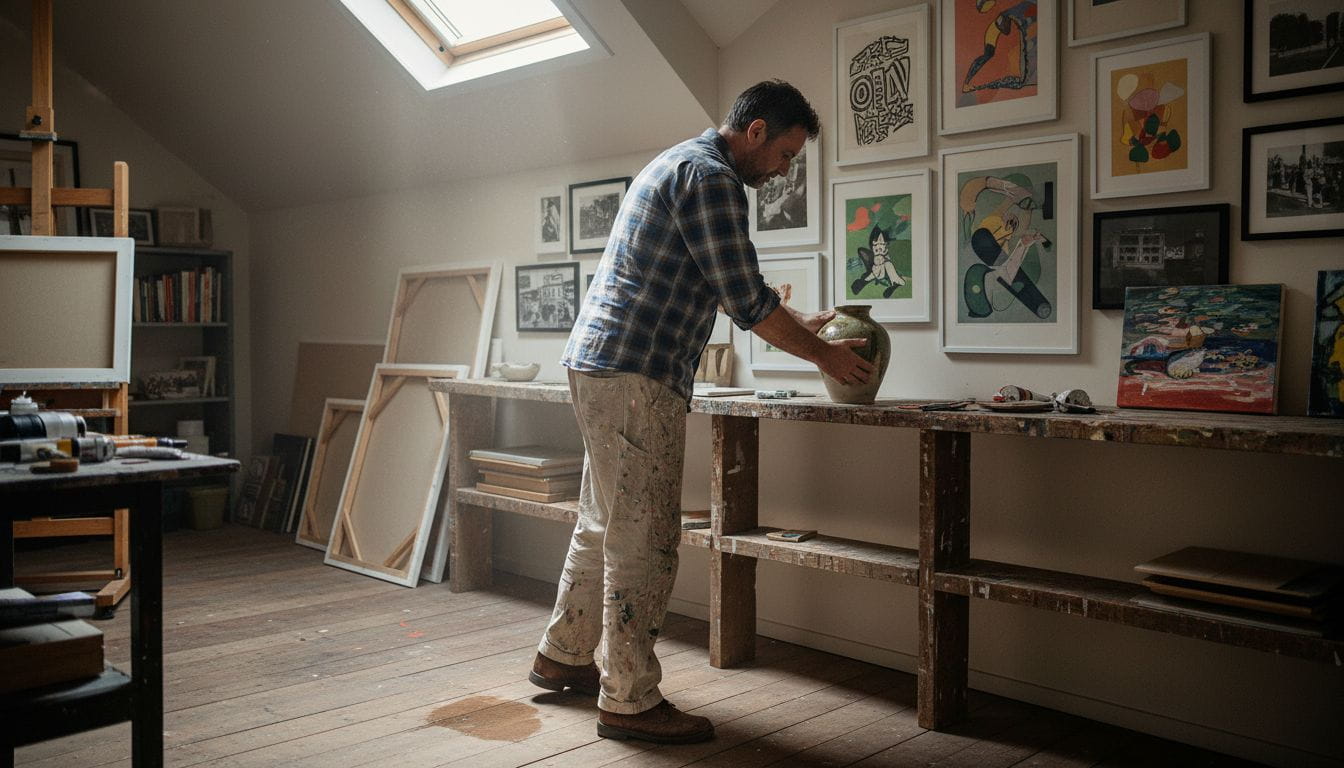
When arranging artwork, keep three key principles in mind. First, pay attention to symmetry and balance. Group odd numbers of artworks side by side or in a slight staggered arrangement. Second, play with heights and distances between the works. The eye should wander gently, not jump around hurriedly.
Art and interior design follow an intuitive logic : Let the space between artworks breathe. Combine different formats and frames, but maintain visual harmony. A large mural can be flanked by two smaller pictures. Trust your artistic intuition and create an arrangement that touches your soul.
Step 4: Create a calm and mindful atmosphere
Kindness and equanimity are crucial affective processes that enable deep inner peace in your artistic sanctuary. The atmosphere of your personal art niche should reflect your inner serenity—an oasis of reflection and contemplation.
Create a sense of calm through carefully chosen design elements. Opt for soft lighting such as candles or dimmed lamps. Incorporate natural materials like wood or stone, which have a grounding effect. Ensure openness and space between the artworks. Every element should be able to breathe.
Meditative music can further enhance your mindful atmosphere . Discreetly place a small Bluetooth speaker in your niche. Quiet, gentle sounds can deepen the emotional resonance of your artwork and create a space of inner peace.
Step 5: Check the personal impact of your niche
Art therapy approaches emphasize the importance of self-exploration and emotional healing, and this is precisely the perspective you should adopt when evaluating your art niche. An authentic art environment is more than a collection of images; it is a living space for the soul.
Develop a mindful reflection process. Sit in your niche and notice how your posture changes. Feel the emotional resonance of the artworks. Do you feel inspired? Calm? Stirred? The subjective functions and meanings of your artworks are crucial to your emotional experience .
Should you notice any inconsistencies, don't hesitate to rearrange. A true artistic niche evolves steadily and grows with you. It's a dynamic process, not a rigid construct.
Design your personal art niche with Curiocanvas
Creating a personal art sanctuary challenges you to delve deep into your emotional and spiritual world. Every choice should be an expression of your inner emotional landscape and a reflection of your unique journey. This is precisely where Curiocanvas comes in. Our collection of artwork as a mirror of your soul. Discover our homepage – Curiocanvas offers you artistic canvas prints and framed works that combine aesthetics with emotional depth. Find inspiration and authentic forms of expression for your art niche here.
Start rethinking your spaces now and create a harmonious, meaningful atmosphere with our selection. Our limited-edition Holiday Bundles 2025 Wall Stories Full of Light – Curiocanvas are perfect for arranging individual artworks into an atmospheric, spiritual ensemble. Let yourself be inspired by poetic art and transform your walls into places of reflection and inspiration.
Discover your new art niche at https://www.curiocanvas.de/ and take the first step towards a space that touches the soul and gives strength.
Frequently Asked Questions
How do I define my emotional orientation for my art niche?
To define your emotional focus, reflect on the feelings you wish to cultivate in your art sanctuary. Create a list of three to five core emotions, such as tranquility, passion, or hope, that can serve as an emotional compass for your art selection.
Which works of art are suitable for a spiritually inspired niche?
Choose artworks that offer more than just visual beauty. Look for motifs, colors, and compositions that evoke a deeper spiritual resonance, such as mandalas or abstract meditation images.
How do I arrange art and decor in my personal art niche?
When arranging your artwork, pay attention to symmetry and balance. Group pieces in odd numbers and play with heights and distances to create a harmonious narrative.
What can I do to create a calm and mindful atmosphere?
Create a tranquil atmosphere with soft lighting and natural materials. Incorporate elements like candles or wood to achieve a grounding effect and create an oasis of reflection.
How do I assess the personal impact of my artistic niche?
Sit in your niche and feel the emotional resonance of the artworks. Observe how your posture changes and reflect on whether the artworks inspire, soothe, or agitate you.
How often should I rearrange my art niche?
An art niche should constantly evolve and grow. Regularly check – about every few months – whether the existing works still resonate with your emotional focus or whether a rearrangement is necessary.