


Art and mindfulness – paths to inner peace
Over 60 percent of people report experiencing moments of profound inner peace through art. When art meets mindfulness, a space is created where genuine feelings become visible and everyday stress fades away. Those who consciously engage with art discover new facets of themselves and experience how even small creative impulses can enhance well-being. This approach enriches not only one's own life but also one's perspective on the world.
Table of contents
- Art and mindfulness explained in an understandable way
- How art promotes mindful perception
- Experiencing emotional resonance and self-reflection
- Creative practices for more inner peace
- Avoid common mistakes when mindfully enjoying art
Key findings
| Point | Details |
|---|---|
| Connecting art and mindfulness | Art enables deeper self-reflection and emotional experience by serving as a mirror to our inner landscape. |
| Mindful perception | Mindful viewing fosters a deeper connection to artworks and helps reduce stress and develop emotional intelligence. |
| Creative Practices | Creative activities such as free drawing or mandala design serve as meditative exercises to promote inner peace and self-discovery. |
| Avoid common mistakes | Avoid frantic viewing and intellectual overanalysis to allow for a deep, meditative connection to the art. |
Art and mindfulness explained in an understandable way
The connection between art and mindfulness is like a silent symphony of the soul. It allows us to look deep within ourselves and experience emotions that often remain hidden behind the noise of everyday life. Art becomes a mirror to our inner landscape—a window that helps us understand ourselves more clearly.
Mindfulness in art means more than just passive observation. It's about conscious, present perception, where we experience artistic expression not only with our eyes, but with the full sensitivity of our being. Every work of art tells a story that transcends visual impressions and touches our deepest emotions.
Those who experience art mindfully practice a form of meditation. They open themselves to moments of stillness, reflection, and inner peace. It doesn't matter whether one is actively creating art or simply observing it. What is crucial is the inner attitude—a willingness to fully engage with the present moment and perceive the subtle nuances inherent in every work of art. This conscious practice can help us reduce stress, expand our emotional intelligence, and develop a deeper connection to ourselves.
How art promotes mindful perception
Mindful perception through art is a powerful method for deepening our awareness and strengthening our inner presence. It's about not just superficially consuming artistic experiences , but consciously and fully engaging with them. Each artwork becomes a window through which we can gain a broader perspective on our feelings, thoughts, and inner states.
The practice of mindful viewing begins with a conscious slowing down. Instead of fleetingly glancing at a picture, we take the time to perceive every detail—the brushstrokes, color gradations, textures, and emotional nuances. This conscious attention trains our ability to dwell in the present moment and let go of distractions. It is a meditation with open eyes, in which we learn to calm our minds while remaining fully present.
Through regular, mindful engagement with art, we develop not only a deeper connection to artworks but also to ourselves. We learn to observe our emotions without judgment, to perceive impulses, and to understand our inner patterns of reaction. Art thus becomes a tool for self-discovery—a mirror that helps us explore our inner landscapes and look at ourselves with greater compassion and understanding.
Experiencing emotional resonance and self-reflection
Art offers a unique space for emotional self-exploration. Scientific studies show that encountering artworks enhances our well-being and contributes to emotional balance. It's not about passive observation, but about an active dialogue between the viewer and the artwork – a journey into one's own emotional landscape.
The power of self-reflection unfolds particularly in moments of deep connection with a work of art. Through conscious perception, we can explore emotions that otherwise remain hidden in everyday life. Every color, every line, every texture becomes a mirror of our inner states—a window that helps us decipher and understand complex feelings.
Self-reflection through art is a profoundly personal process. It allows us to observe emotions without judgment, recognize inner patterns, and look at ourselves with greater compassion. In this sense, viewing art becomes a meditative practice of self-discovery—a path to finding inner peace and expanding our emotional intelligence.
Creative practices for more inner peace
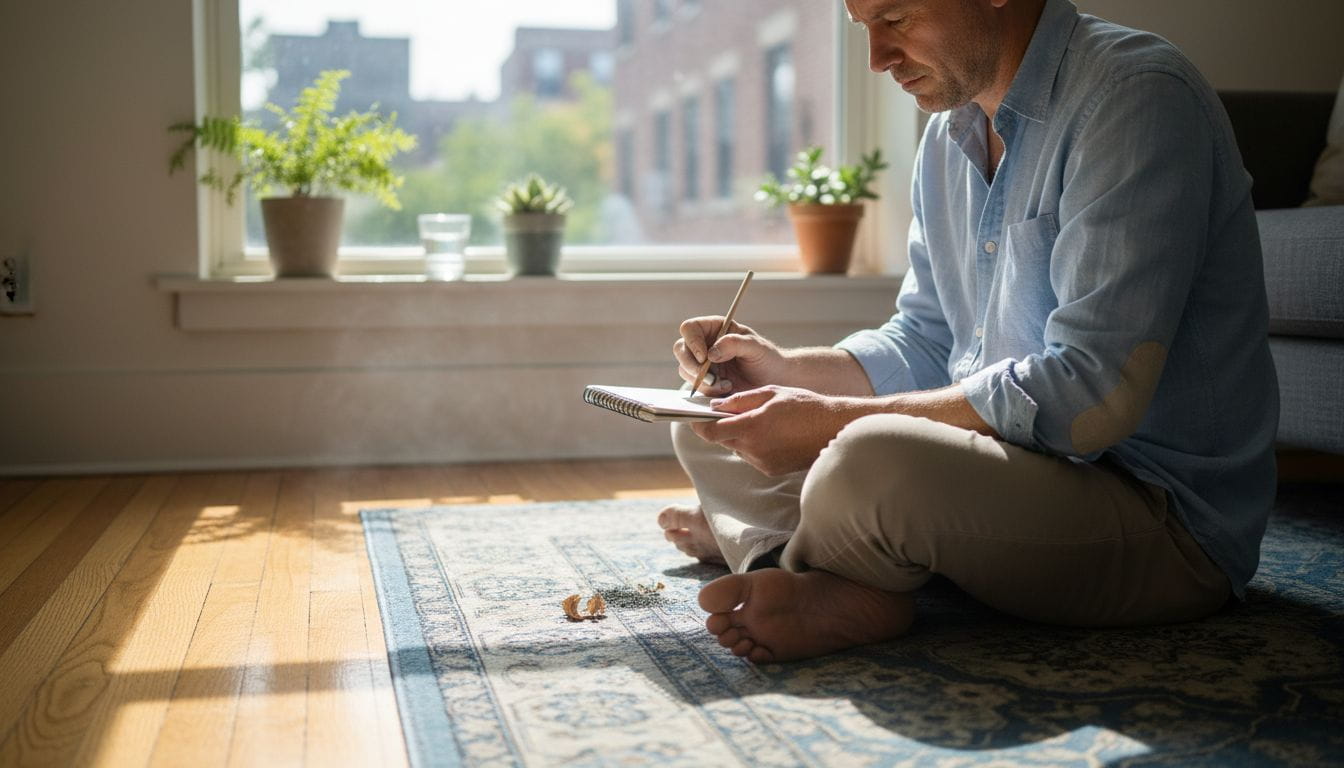
The connection between creativity and mindfulness opens wonderful paths to inner peace. Artistic practices can act like a meditation , leading us out of the hustle and bustle of everyday life and connecting us with our true selves. It's not about creating perfect works of art, but about experiencing the process of creation as a moment of presence.
Some powerful creative practices for greater inner peace include:
- Free drawing : Drawing without judgment or goal, simply to be in the moment.
- Mandala design : Concentration on symmetrical patterns as meditation
- Watercolor experiments : Letting colors flow without needing control
- Collage creation : Expressing feelings through image selection and arrangement
The goal of all these practices is not artistic perfection, but self-discovery and inner peace. By letting go of expectations and consciously immersing ourselves in the creative process, we open ourselves to a profound form of self-awareness. We learn to observe our thoughts without judgment, thus finding a state of serenity that extends far beyond the moment of creative activity.
Avoid common mistakes when mindfully enjoying art
Mindful appreciation of art requires more than just superficial observation. Creating a personal art niche can help minimize distractions and establish a space for conscious perception. However, many people make typical mistakes that impair their ability to engage in meditative art appreciation.
Here are some key pitfalls to avoid:
- Hectic viewing : Art needs time. Don't rush from one picture to the next.
- Intellectual overanalysis : Allow feelings, don't just interpret them rationally.
- Comparing and evaluating : Every work of art is unique. Do not apply performance standards.
- Tolerate distractions : Put away your smartphone, create peace and quiet, be present.
The key to mindful art appreciation lies in the willingness to fully engage with the artwork. Forget technical perfection, theoretical knowledge, or societal expectations. Art is a language of emotion, an invitation to self-discovery. Breathe consciously, let thoughts drift by like clouds, and allow yourself to be completely present in the moment.
Discover inner peace through mindful art
The tension between inner restlessness and the desire for greater mindfulness is the central theme of the article "Art and Mindfulness – Paths to Inner Peace." Many people long to reduce stress and regain emotional balance through conscious perception. Art can serve as a powerful tool for experiencing moments of calm and self-reflection in a meditative state. Consciously immersing yourself in the sensuality of a work of art allows you to enter the present moment and opens new avenues to your feelings.
Discover an exquisite selection of artworks at Curiocanvas that will touch your soul and bring mindfulness into your home. Our Wall Art Gallery, Flames Kisses Time and Compass, in particular, offers aesthetic motifs with spiritual depth. These artworks are more than mere decoration – they invite meditation and emotional resonance. Experience art as a mirror of your inner world and create a conscious space for serenity and self-discovery.
Visit the Curiocanvas homepage now to discover Artwork as a mirror of your soul and transform your walls into vibrant sources of inspiration. Begin your journey to greater mindfulness and inner peace today with art that speaks – not just decorates.
Frequently Asked Questions
What is the connection between art and mindfulness?
The connection between art and mindfulness allows us to explore deeper emotions and inner states through the conscious perception and experience of artworks.
How can I experience art mindfully?
To experience art mindfully, one should take the time to attentively perceive every detail of a work of art and concentrate on the present moment.
Which creative practices promote inner peace?
Creative practices such as free drawing, mandala design, watercolor experiments and creating collages can help promote inner peace and self-discovery.
What are common mistakes when mindfully appreciating art?
Typical mistakes include hurried viewing, intellectual overanalysis, comparing artworks, and distractions from smartphones. It is important to fully engage with the artwork.
Recommendation
- 7 ways to discover the meaning of canvas paintings – Curiocanvas
- Create your own personal art niche: Your individual art refuge – Curiocanvas
- 7 inspiring types of wall art for a meaningful home – Curiocanvas
- Emotional Art in the Home: The Complete Guide – Curiocanvas
- 7 Bedtime Stories for Adults – Edory AI – Educational Children's Stories