


Difference between posters and canvases: Impact for your home
One in three households in Germany decorates their rooms with wall art and faces the decision between posters and canvases. This difference not only influences the atmosphere but also the perceived value of your home. Whether your style is modern, minimalist, or classic, the right artwork adds individual touches and defines the character of your rooms. Here you'll learn how posters and canvases differ in material, effect, and use, and why the right choice can have a lasting impact on your interior design.
Table of contents
- What posters and canvases mean
- Materials and manufacturing methods
- Feel, appearance and lifespan
- Costs and value development in everyday life
- Use in keeping with the room's aesthetics
Key findings
| Point | Details |
|---|---|
| Differences between poster and canvas | Posters are flat and inexpensive, while canvases have a deep, textile structure and are more durable. |
| Investing in art | Canvases represent a long-term investment that retains its color brilliance for decades. |
| Selection of artworks according to room type | Depending on the room's design, posters or canvases may be a better fit for the room's atmosphere. |
| Pay attention to material quality | High-quality materials and coatings are crucial for the longevity and visual impact of the artwork. |
What posters and canvases mean
Artwork on our walls is more than mere decoration – it's a personal expression that fills our living space with meaning and emotion. Posters and canvases play a central role in interior design, but their effects and characteristics differ fundamentally.
A canvas print is a high-quality art product printed on stretched canvas. Unlike a traditional poster, it possesses a unique depth effect: the canvas fabric lends the image a textile texture and three-dimensionality, creating an almost painterly impression. Special coatings enable a wide color gamut and impressive detail, making each artwork appear vibrant and subtly three-dimensional.
Posters, on the other hand, are usually printed on paper and offer a flatter, two-dimensional representation. They are less expensive to produce and are particularly suitable for temporary decorations or quickly changing wall designs. Canvases, however, are a timeless investment – they look more sophisticated, last longer, and add an artistic dimension to any room.
Pro tip for wall decorators: Combine posters and canvases strategically to create different moods and atmospheres in your home. A large-format canvas print as a focal point, framed by smaller posters, can create an impressive visual composition.
Here is a structured comparison of the characteristics of posters and canvases:
| feature | Poster | canvas |
|---|---|---|
| material | High-quality paper | cotton or polyester cloth |
| Surface effect | Flat, smooth, two-dimensional | Textile, plastic, structured |
| Color effect | Precise, brilliant, graphic | Vibrant, picturesque, deep |
| longevity | Shorter, light-sensitive | Colorfast for decades |
| Price level | 20-80 euros | 80-300 euros |
| Suitable for | Temporary decoration | Timeless presentation |
Materials and manufacturing methods
The quality of an art print begins with the materials used and continues with the production method. Crucial factors include the substrate, printing technology, and coating, which determine the artistic expression and longevity.
Posters are typically produced on high-quality photo paper or art paper. Modern printing techniques such as digital or offset printing allow for precise color reproduction and sharp details. The paper varies from matte to glossy finishes and influences the visual impact of the image.
Canvases, on the other hand, are made of woven cotton or polyester material stretched over a sturdy wooden frame. Professional art prints use large-format printers with pigment inks, guaranteeing high color brilliance and lightfastness. The textile structure gives the artwork an additional dimension—it looks less like a print and more like an original painting.
The coating plays a crucial role: High-quality canvases receive a UV-resistant coating that protects against fading and gives the artwork depth and brilliance. For posters, special varnishes provide gloss or protection against fingerprints.
Pro tip for art lovers: When choosing a print, pay attention to the material quality. A good art print should not only look beautiful, but also promise durability and longevity.
Feel, appearance and lifespan
The atmosphere of a room is largely determined by the sensory perception of artworks. Posters and canvases differ fundamentally in their tactile and visual effects, which directly influences their lifespan and aesthetic presence.
Canvases offer a textile depth dimension that posters cannot achieve. The woven structure creates an almost three-dimensional surface, where light and shadow glide gently across the image. This three-dimensional texture lends the artwork an almost painterly quality – it appears alive, not just like a simple print.
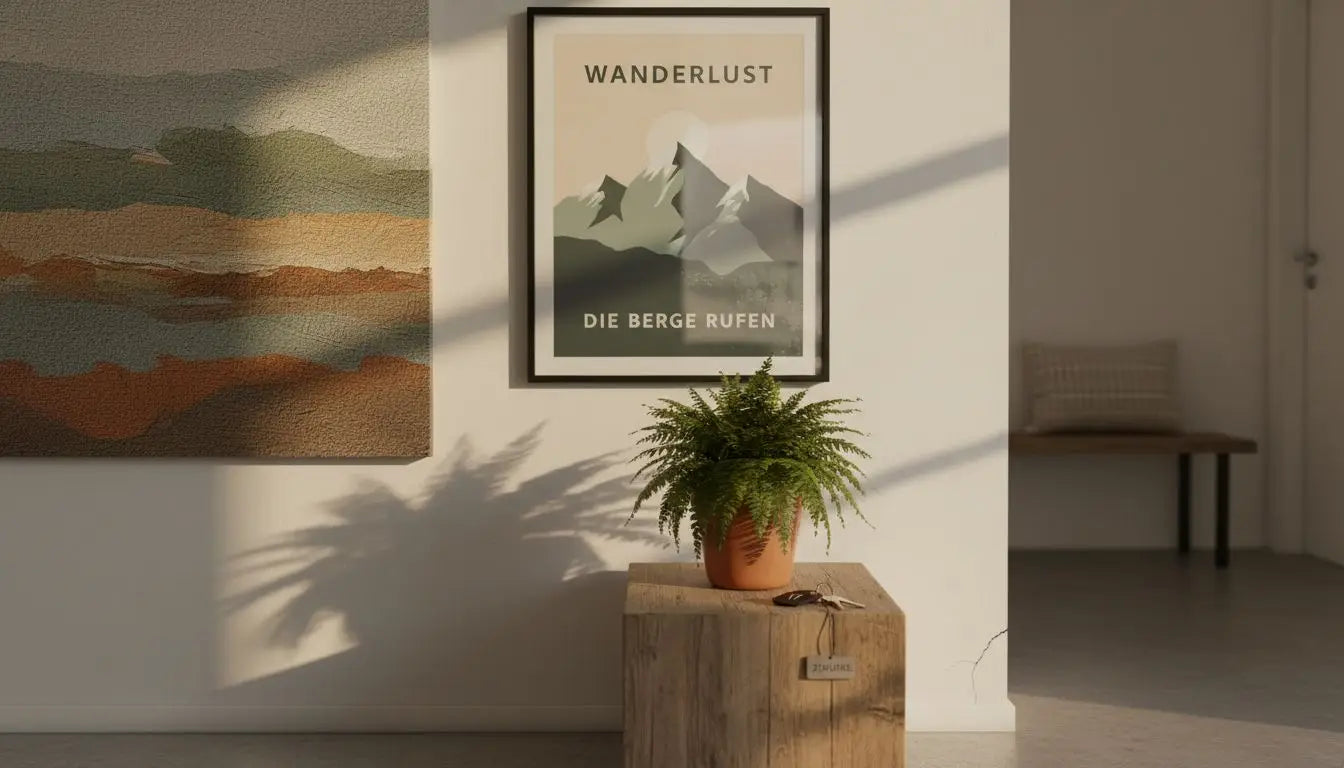
Posters are classically flat and two-dimensional. They have a smooth, cool feel and are usually printed on smooth paper. The surface texture is uniform, lacking the textile depth of a canvas. Their visual impact is precise and graphic, ideal for modern, minimalist spaces with clean lines and geometric shapes.
There are significant differences in terms of lifespan: High-quality canvases with a UV-resistant coating often retain their color brilliance for decades, while posters fade more quickly and are more sensitive to sunlight and moisture. The robust material of the canvas protects the image from external influences and guarantees a long-lasting artistic presence.
Pro tip for art collectors: Invest in canvases for timeless spaces and use posters for dynamic, frequently changing wall designs. The right balance makes your wall decor vibrant and unique.
Costs and value development in everyday life
Investing in wall art is a delicate decision between aesthetic desire and financial prudence. Posters and canvases differ not only in their artistic impact but also in their economic viability for everyday use.
Posters are the more affordable option, offering quick decorating solutions with minimal financial risk. They allow for frequent image changes and are ideal for those who want to keep their wall decor dynamic and flexible. Prices range from €20 to €80, depending on size, print quality, and artistic merit.
Canvases, on the other hand, represent a long-term investment. Their prices typically range between 80 and 300 euros, depending on size, artist, and production technique. Their financial value lies in their durability: high-quality canvases retain their color brilliance and aesthetic integrity for decades, while posters lose their appeal more quickly. They evolve almost like a work of art—with potentially increasing sentimental and material value.
For price-conscious art lovers, there are interesting intermediate solutions: limited edition art prints, reproductions of important works, or motifs by up-and-coming artists, which represent a smart choice both financially and aesthetically.
Pro tip for art investors: Don't just buy artwork with your wallet, but with your heart. The emotional connection to a subject is often more valuable than any financial calculation.
Use in keeping with the room's aesthetics
Every room has its own soul, and wall art becomes the crucial translator of this individual atmosphere. The choice between poster and canvas is not merely a matter of taste, but a nuanced decision regarding room design.
In minimalist, urban-designed spaces , artworks with clean lines and graphic elements truly shine. Posters, with their precise, flat aesthetic, are the perfect choice here. They blend seamlessly into modern interiors and create visual accents without overwhelming the room's geometry.
Classic or rustically furnished rooms call for the soft, almost organic presence of canvases. Their textile structure and three-dimensional depth harmonize perfectly with warm wood tones, muted colors, and traditional furnishings. The almost painterly quality of the canvas transforms the wall into a vibrant narrative surface that is more than just decoration.
The size of the artwork plays a crucial role: large canvases are ideal as eye-catchers in rooms with high ceilings, while smaller posters are more effective in more compact spaces such as hallways or work areas. The interplay with the existing room architecture is always key.
Pro tip for interior designers: Consider your wall art as a dialogue with the room. The perfect artwork not only translates your personality but also engages in a subtle dance with light, color, and architecture.
For guidance: How can rooms be optimally decorated using posters or canvases?
| Room type | Ideal for posters | Ideal for canvas |
|---|---|---|
| Modern/minimalist | Clear lines, graphic forms | Unique pieces, subtle color fields |
| Classic/rustic | Subtle, unobtrusive motifs | Organic, painterly motifs |
| Hallway, small work areas | Several small formats | Small-format, structured works |
| Living room with high ceiling | Large posters as an accent | Large-format eye-catchers |
Discover the perfect wall art for your home
The choice between poster and canvas determines the atmosphere in your rooms and the emotional impact of your art. If you value depth, longevity, and a poetic aura , Curiocanvas offers high-quality art prints that are far more than mere decoration. Whether you opt for the painterly effect of a canvas or the clean, modern aesthetic of a poster, you'll find artworks with us that will fill your living spaces with soul.

Experience art that transforms your walls into expression and fills spaces with meaning. Browse our exclusive collection, such as ballerinas – poetry in motion as art on canvas – or discover artwork as a mirror of your soul. Explore our homepage for inspiring designs that reflect your personality. Transform your home now with art that touches you – start your personal wall design today at Curiocanvas.
Frequently Asked Questions
What is the main difference between a poster and a canvas print?
The main difference lies in the materials and the presentation. A poster is printed on paper and offers a flat, graphic effect, while a canvas is made of woven material and has a textile, textured surface that creates a painterly impression.
How long do posters last compared to canvases?
Posters have a shorter lifespan because they fade more quickly and are more sensitive to light and humidity. High-quality canvases, on the other hand, can retain their color brilliance for decades and are therefore more durable.
Can I combine posters and canvases?
Yes, combining posters and canvases can create an impressive visual composition. A large canvas print can serve as a focal point and be framed by smaller posters to create different moods in the room.
How do I choose the right wall art for my room?
The choice of wall art depends on the room's aesthetic. Posters with clean lines are suitable for minimalist spaces, while canvases are more effective in classically or rustically furnished rooms. Also consider the size of the artwork in relation to the room where it will be placed.