


Canvas print: Everything you need to know
More than 60 percent of all wall art in modern living rooms is now produced as high-quality prints on canvas. This technique lends photos and digital artworks a vibrant, almost painterly quality that far surpasses that of a standard paper print. Anyone looking for an expressive and long-lasting way to display art at home will quickly come across canvas prints. Here you'll learn why they are so popular and what really matters when choosing one.
Table of contents
- What exactly does "printing on canvas" mean?
- Different types of canvas prints
- This is how the printing process works on canvas
- Quality features and material differences
- Canvas print vs. poster and other alternatives
- Avoid common mistakes when printing on canvas
Key findings
| Point | Details |
|---|---|
| Print on canvas | A high-quality technique for transferring digital or photographic images onto textile fabric, conveying an authentic, painterly impression. |
| Quality features | The quality of the canvas print depends on factors such as image resolution, printing technology and material, with professionally used techniques delivering the best results. |
| Various printing techniques | Methods such as oil printing and monotype offer unique artistic expression possibilities, while digital methods such as giclée printing ensure detailed reproductions. |
| Avoid common mistakes | Pay attention to the image resolution and composition to avoid blurry prints and loss of important image content. |
What exactly does "printing on canvas" mean?
Canvas printing is a special art technique that allows digital or photographic images to be transferred onto a textile fabric. In this process, an image is applied directly to a canvas with a special coating using high-quality printing technology, creating a painterly and authentic impression.
The process is based on a traditional artistic method: similar to classic canvas paintings, the motif is printed onto a textile fabric and then stretched onto a sturdy stretcher frame. The crucial difference lies in modern printing technology, which enables precise and color-accurate reproduction. This technique allows digital artworks, photographs, or graphic designs to be transformed into high-quality wall decorations that possess the charm of a hand-painted picture.
The quality of a canvas print depends on several factors: the resolution of the original image, the printing technology, and the canvas used. Professional providers like Curiocanvas employ state-of-the-art printing techniques to ensure outstanding art print quality . The result is a work of art that is not only decorative but also possesses an emotional depth and authenticity that goes far beyond an ordinary photo print.
Different types of canvas prints
There are several fascinating canvas printing techniques, each offering unique artistic possibilities. One particularly interesting method is oil printing , in which multiple layers of paint are printed on top of each other to create the impression of a hand-painted original. This technique precisely replicates the depth and nuance of traditional oil paintings.
Another artistic printing method is monotype , a rare process in which an image is painted directly onto a plate and then transferred to canvas. Since this printing method only allows for a single print , a unique and highly original work of art is created. This technique is particularly suitable for artists who wish to create individual and non-reproducible works.
Modern canvas printing techniques also include digital reproduction methods such as giclée printing and photo printing. The canvas print selection process varies depending on the desired artistic effect and personal taste. Professional providers like Curiocanvas use high-resolution printing technologies to guarantee detailed and color-accurate reproductions that preserve both the originality of the image and the quality of the printing technique.
This is how the printing process works on canvas
Modern canvas printing begins with a precise digital process. Special inks are used in the printing process , applied directly to a coated textile fabric. These highly pigmented inks guarantee excellent color depth and durability, ensuring the artwork retains its vibrancy for years to come.
The printing process itself requires highly precise technology. Similar to oil-based printing, separate printing processes are carried out for each color layer to achieve maximum detail. Modern printing techniques make it possible to reproduce even complex color transitions and subtle nuances exactly, so that the final result comes as close as possible to the original image.
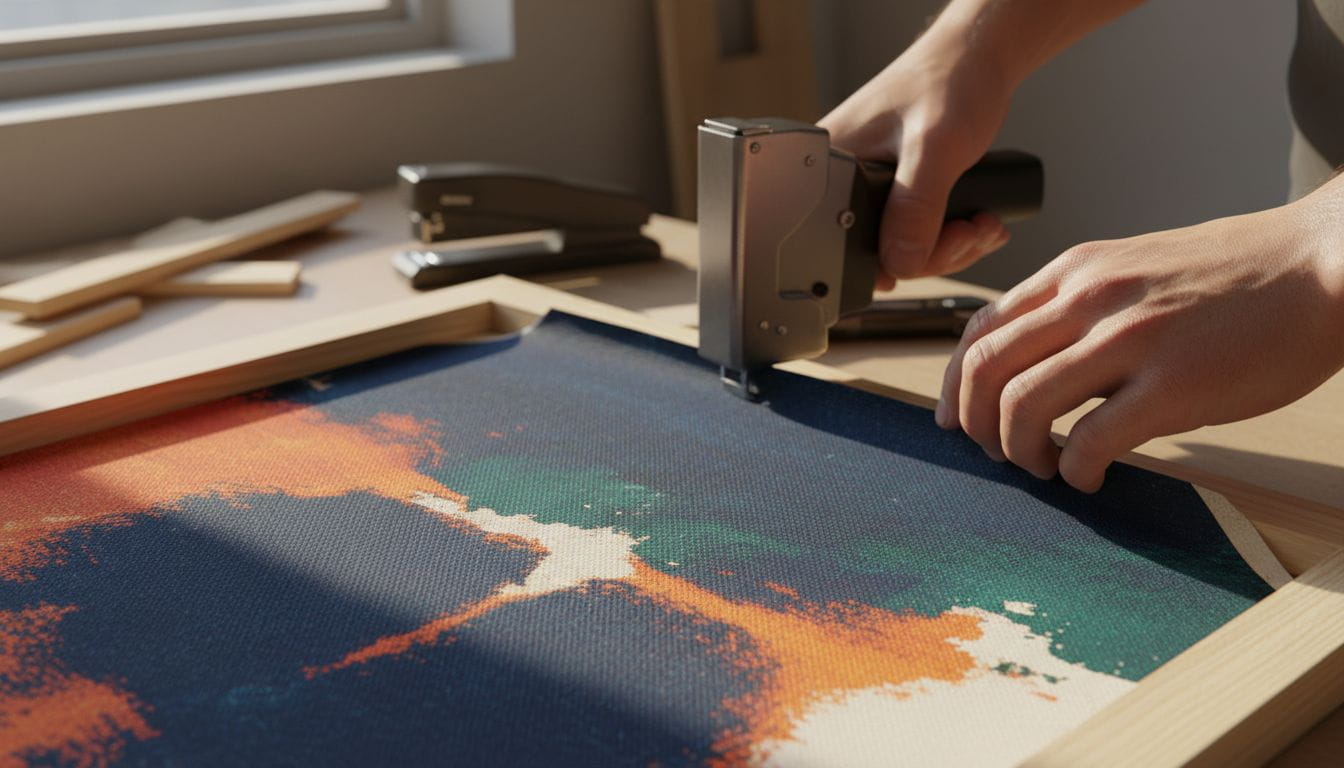
After the printing process, the canvas is carefully stretched onto a sturdy stretcher frame. This step is crucial for giving the artwork structure and stability. The choice of motif plays a vital role in the impact of the final product: A well-chosen motif, combined with perfect printing technique, can completely transform a room and create an emotional connection between the artwork and the viewer.
Quality features and material differences
The quality of a canvas print is determined by several crucial factors. The fabric's properties play a central role, with high-quality canvases guaranteeing a fine texture and long-lasting colors. Different materials, such as cotton , polyester , or blends, influence the texture and durability of the artwork, each offering unique characteristics.
Traditionally, canvas paintings can be based on various textiles such as jute, muslin, or silk , highlighting the complexity of material selection. The choice of fabric determines not only the visual appearance but also the durability and quality of the print. Cotton fabric, for example, is appealing due to its soft, natural texture, while polyester fabric offers greater resistance to environmental influences.
When it comes to art as wall decoration, subtle details such as fiber structure, color depth, and print resolution determine the quality of the final product. A high-quality canvas print is characterized by precise color reproduction, UV resistance, and an authentic texture that closely resembles the original. Professional providers use high-resolution printing technologies and premium materials to create a work of art that is both visually and tactilely compelling.
Canvas print vs. poster and other alternatives
Canvas printing differs fundamentally from conventional printing alternatives. Compared to posters, canvas prints offer a textured surface and significantly greater durability, giving photographs a painterly quality and protecting them from damage such as creases or tears. While posters are often printed on thin paper, a canvas print guarantees a robust and artistic presentation.
An interesting alternative is the Decoblock , where an art print is mounted and laminated onto a wooden panel to allow for a frameless presentation. This method differs from classic canvas prints in its smooth, modern appearance. Canvas prints, on the other hand, retain the characteristic texture and depth reminiscent of traditional paintings.
When choosing art prints, factors such as durability, aesthetic appeal, and personal taste play a crucial role. A canvas print impresses with its authenticity, quality, and ability to lend depth and character to a room – qualities that clearly distinguish it from standardized poster prints.
Avoid common mistakes when printing on canvas
There are numerous pitfalls in creating canvas prints that can significantly affect the quality of the final product. Using images with too low a resolution is a common mistake , leading to blurry and pixelated results. The higher the resolution of the original image, the more precise and detailed the canvas print will be.
Another critical aspect is image composition. Placing important image elements too close to the edge can be problematic, as they may be lost when the canvas is stretched onto the frame. Make sure to position relevant image details at least 1-2 centimeters from the edge to ensure optimal presentation.
Proper care of your artwork is another crucial aspect of ensuring the longevity of your canvas print. Avoid direct sunlight, extreme temperature fluctuations, and high humidity, all of which can damage the print. Careful selection of the motif, high-quality printing, and careful handling are key to a lasting, vibrant artwork.
Experience canvas prints with soul and perfection.
Printing on canvas offers a unique opportunity to view artworks not merely as decoration, but as expressions of emotion and depth. Often, challenges such as choosing the right motif and ensuring the highest print quality are crucial for a truly impressive result. This is precisely where Curiocanvas comes in: Using high-quality materials and state-of-the-art printing processes, we transform your favorite images into works of art with emotional resonance and poetic expression.
Discover captivating canvas prints that transform your walls into vibrant stories at Curiocanvas – Artwork as a mirror of your soul . Whether delicate textures, powerful color depths, or symbolic motifs – Curiocanvas combines aesthetics with meaning at the highest level. Be inspired by the diversity of our Wall Art Gallery, Flames Kisses Time and Compass – Curiocanvas , and transform rooms into spaces filled with poetry. Start your journey to a unique work of art today at Curiocanvas.de !
Frequently Asked Questions
What is printing on canvas?
Canvas printing is a process in which digital or photographic images are transferred onto a textile fabric to create a painterly look.
How do canvas prints differ from posters?
Canvas prints have a textured surface and greater durability, giving photographs a painterly quality, while posters are often printed on thin paper.
What materials are used for canvas prints?
Canvas prints often use materials such as cotton, polyester or blended fabrics, each offering different properties in terms of texture and durability.
How can I ensure the quality of my canvas print?
To ensure quality, you should use high-resolution images and make sure that important image content is not placed too close to the edge to avoid loss when stretching the canvas onto the stretcher frame.