


What is high-quality canvas? The comprehensive guide
Over 80 percent of all paintings on the art market visibly lose color and texture over the years. Choosing the right canvas is crucial if a work of art is to last for generations and retain its vibrancy. Those familiar with high-quality materials and meticulous craftsmanship know how to recognize true quality and how canvas can fully unlock a painting's potential.
Table of contents
- What exactly does high-quality canvas mean?
- Materials: Cotton, linen, polyester compared
- Special features: structure, grammage, primer
- Tension frame and stability requirements
- Printing techniques and ink quality
- Care, durability and quality features
Key findings
| Point | Details |
|---|---|
| Canvas quality | High-quality canvases are made from high-quality materials such as linen or cotton and require professional priming. |
| Material selection | The choice between cotton, linen and polyester affects the durability and aesthetic properties of the canvas. |
| Structure and Grammar | The fabric structure and weight are crucial for its suitability with various artistic techniques. |
| Care and longevity | Conscious care and avoidance of direct sunlight are important for maintaining color brilliance and structure. |
What exactly does high-quality canvas mean?
High-quality canvas is more than just a support material for art – it is a carefully crafted work of art in itself. According to Wikipedia , a high-quality canvas is characterized by the use of high-quality fabrics such as linen or cotton, which have a uniform structure and density.
The quality of a canvas is determined by several crucial factors. Kremer Pigmente emphasizes that high-quality canvases are often made from pure linen, which is produced from flax fibers. The technical properties vary depending on the requirements, with important aspects such as thread count per centimeter and weight per square meter playing a central role.
Other key features of high-quality canvases are:
- A professional primer that enhances color brilliance
- Uniform and stable tissue structure
- High resistance to aging
- Optimal absorption and reflection of colors
The primer is particularly crucial: it not only protects the fabric but also improves the vibrancy and durability of the artwork. Unprimed fabrics tend to become brittle more quickly, which underscores the importance of careful preparation.
Materials: Cotton, linen, polyester compared
The choice of canvas material is crucial for the quality and longevity of a work of art. Wikipedia shows that canvas fabric can be made from various materials such as cotton , linen , hemp , and polyester , each with its own unique properties.
Kremer Pigmente emphasizes that canvases can be made not only from single materials, but also as blends such as half-linen. These blends combine the advantages of different fibers – for example, a cotton warp with linen weft threads.
Here is a detailed comparison of the materials:
Cotton
- Soft and comfortable to handle
- Good breathability
- Cheaper to manufacture
- Lower durability compared to linen
Linen
- Extremely durable and robust
- Excellent aging resistance
- Natural stiffness
- More expensive to purchase
polyester
- Very durable
- Resistant to stretching
- Cost-effective
- Less natural radiance
The choice of material ultimately depends on individual artistic requirements, budget, and desired aesthetics.
While natural fibers like linen offer a timeless elegance, synthetic fibers like polyester score points with their practicality and durability.
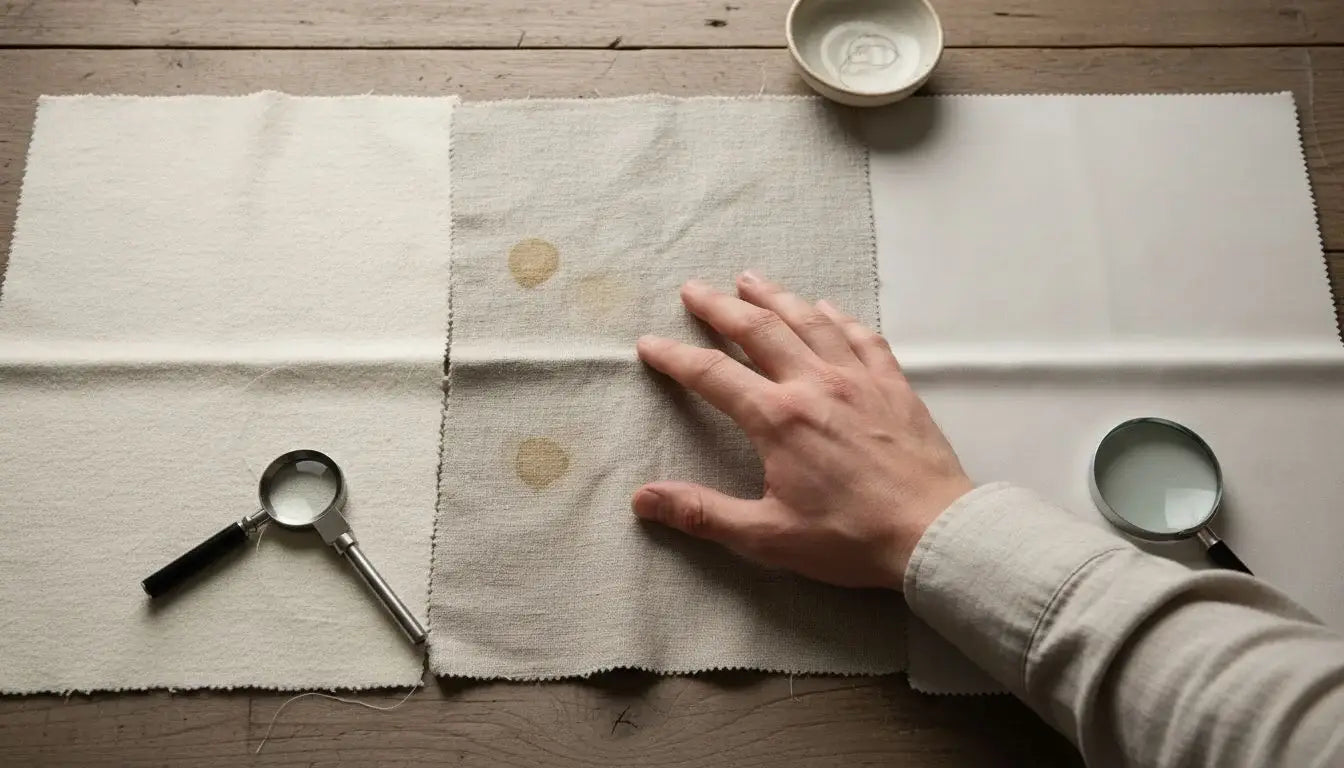
Special features: structure, grammage, primer
Wikipedia explains that the structure of a canvas is decisively shaped by the weaving technique and type of fabric. These technical details determine not only the visual appearance, but also the tactile quality and suitability for various artistic techniques.
Kremer Pigmente emphasizes the importance of technical specifications such as basis weight and thread count. These parameters vary depending on the intended use and directly influence the canvas's performance for different painting techniques.
Structural features
- Fineness of the fabric
- Uniformity of thread tension
- Surface texture
- Transparency and light transmission
Grammar categories
- Lightweight: 100-200 g/m²
- Medium: 200-300 g/m²
- Heavy: 300-500 g/m²
Priming is the crucial final step in canvas preparation. It not only protects the canvas but also optimizes paint absorption and reproduction. Professional priming increases the artwork's lifespan and ensures a smooth, receptive surface, offering artists maximum creative freedom.
Tension frame and stability requirements
Wikipedia emphasizes the crucial importance of a high-quality stretcher frame for the longevity of a canvas. A professional frame made of warp-resistant wood ensures even tension of the fabric and prevents potential deformation or cracking.
Kremer Pigmente emphasizes that the stability of a canvas depends directly on the choice of fabric and its technical properties. The interplay of frame material, fabric density, and tension determines the structural integrity of the artwork.
Criteria for optimal tension frames
- Warp-free, stable wood
- Precise angle connections
- Uniform tissue tension
- Resistance to deformation
Tension techniques
- Classic stretcher frame tensioning
- System frame with clamping wedges
- Frame with adjustable metal eyelets
- Digital voltage measurement
Choosing the right stretcher frame is more than a technical decision – it's an artistic act. A perfect frame not only supports the physical structure but also respects and enhances the artist's vision.
Printing techniques and ink quality
Wikipedia explains that canvas fabric is woven, finished, and coated depending on its intended use to create optimal conditions for various printing techniques . Choosing the right printing method is crucial for the quality and longevity of the artwork.
Kremer Pigmente emphasizes that technical properties such as thread count and fabric weight directly influence printability. The combination of precise printing technology and high-quality inks ultimately determines the brilliance and durability of the final product.
Modern printing techniques
- Digital printing
- screen printing
- Pigment print
- Giclée print
Ink quality criteria
- Color fidelity
- UV resistance
- Aging resistance
- Pigment concentration
What matters is not just the technique, but also the interplay of canvas, ink, and printing process. A high-quality art print is only created when all components are perfectly coordinated and respect the artist's vision.
Care, durability and quality features
Wikipedia emphasizes that the longevity of a canvas depends crucially on its care. Direct sunlight and high humidity can quickly impair the structure and color brilliance of a work of art, which is why conscious conservation is essential.
Kremer Pigmente emphasizes the importance of technical properties for quality assurance . Selecting canvases with optimal thread count and weight is the first step towards a long-lasting work of art.
Care instructions
- Avoid direct sunlight
- Constant humidity between 45-55%
- Clean gently with a soft, dry cloth.
- Avoidance of touching the image surface
Quality features
- Uniform tissue structure
- Careful priming
- Age-resistant materials
- Precise workmanship
A high-quality canvas print is more than an object - it is a living testament to artistic vision that, with respectful care, can preserve its beauty and meaning for generations to come.
Experience the magic of high-quality canvas art at Curiocanvas
The quality of a canvas directly influences the soul of your artwork. As described in the guide, the right structure, primer, and choice of material determine durability and expressiveness. This is precisely where we at Curiocanvas come in. Our carefully selected premium canvases combine technical standards for longevity with a poetic aesthetic that transforms your walls into vibrant stories.
Experience the depth and understated luxury of our collection “ Artwork as a mirror of your soul” (Discover Homepage ) and discover art that transcends mere decor. Immerse yourself in emotional worlds on unparalleled materials with vibrant colors and a flawless finish. Take this opportunity to transform your spaces with art from Curiocanvas. Explore the fusion of materials and poignant symbolism at curiocanvas.de and find inspiration in the Wall Art Gallery collection “Flames Kisses Time and Compass” – Curiocanvas .
Start today and give your wall an unforgettable life full of poetry and meaning.
Frequently Asked Questions
What is high-quality canvas?
High-quality canvas is a support material for artworks, made from high-quality fabrics such as linen or cotton, which offer a uniform structure and high resistance to aging.
What materials are used for high-quality canvas?
High-quality canvases are primarily made from cotton, linen, or blended fabrics. Each material has its own properties, such as durability and longevity.
Why is priming the canvas important?
The primer protects the fabric, improves color absorption and reproduction, and increases the lifespan of the artwork by providing a smooth and receptive surface.
How can I best care for my canvas?
To ensure the longevity of a canvas, direct sunlight should be avoided, the humidity should be kept constant between 45-55%, and the surface should be carefully cleaned with a soft, dry cloth.