


Poster Art Styles Explained: Emotions and Aesthetics for the Home
In search of art that not only adorns walls but also touches the heart and soul, many enthusiasts in Germany are discovering the diversity of poster art styles. Posters today are much more than mere advertising; they are cultural objects with aesthetic and emotional value . They tell stories, reflect one's personality, and transform spaces into inspiring places of expression. This overview shows how different art styles and emotional aspects can enrich your spiritual journey and individual aesthetic.
Table of contents
- What poster art styles mean and what they achieve
- Overview of key art styles for posters
- Typical characteristics of emotional art in interior design
- How to choose the right art style for you
- Mistakes when buying posters and how to avoid them
Key findings
| Point | Details |
|---|---|
| Poster art as expression | Posters are more than decoration; they convey emotions and tell stories. |
| Diversity of art styles | Posters can represent various styles, from abstract to realistic, all creating different atmospheric effects. |
| Emotional Resonance | Art should create a personal connection and emotionally charge the space. |
| Important purchasing criteria | Pay attention to size, quality, and color harmony to achieve an ideal effect in the room. |
What poster art styles mean and what they achieve
Art prints and posters are far more than simple wall decorations. They are emotional messengers that enchant rooms and tell stories. The history of poster art has evolved from a purely advertising tool to an independent art form with profound cultural significance.
In Germany and Austria, posters only gained importance towards the end of the 19th century due to industrialization. The artistic development of posters shows that they are not merely decorative, but also serve as a medium for mass communication and cultural dissemination.
Poster art styles can be divided into different categories:
- Historical posters : Documents of their time with artistic value
- Modern art prints : Abstract and minimalist designs
- Photographic posters : Realistic images and snapshots
- Illustrative Posters : Creative and imaginative designs
Important artists such as Henri de Toulouse-Lautrec and Alfons Mucha shaped the visual language of posters with dynamic compositions and vibrant colors. Today, posters are no longer just advertising tools, but cultural objects with aesthetic value .
Pro tip: Choose posters that not only decorate your walls but also reflect your personality and emotions.
Overview of key art styles for posters
Art styles are more than just visual categories – they are expressions of human creativity and emotion. Art movements help us understand diverse works by highlighting common aesthetic features and emotional dimensions.
The most important art styles for posters can be divided into the following categories:
- Abstract art : a focus on shapes and colors
- Realistic art : Detailed depictions of reality
- Expressionism : Emotional and subjective mode of representation
- Art Deco : Geometric shapes and clean lines
- Minimalism : Reduction to the essentials
Every art style carries its own emotional signature. Art Nouveau , for example, is characterized by flowing lines and organic forms, while Expressionism focuses on intense emotions and strong color contrasts.
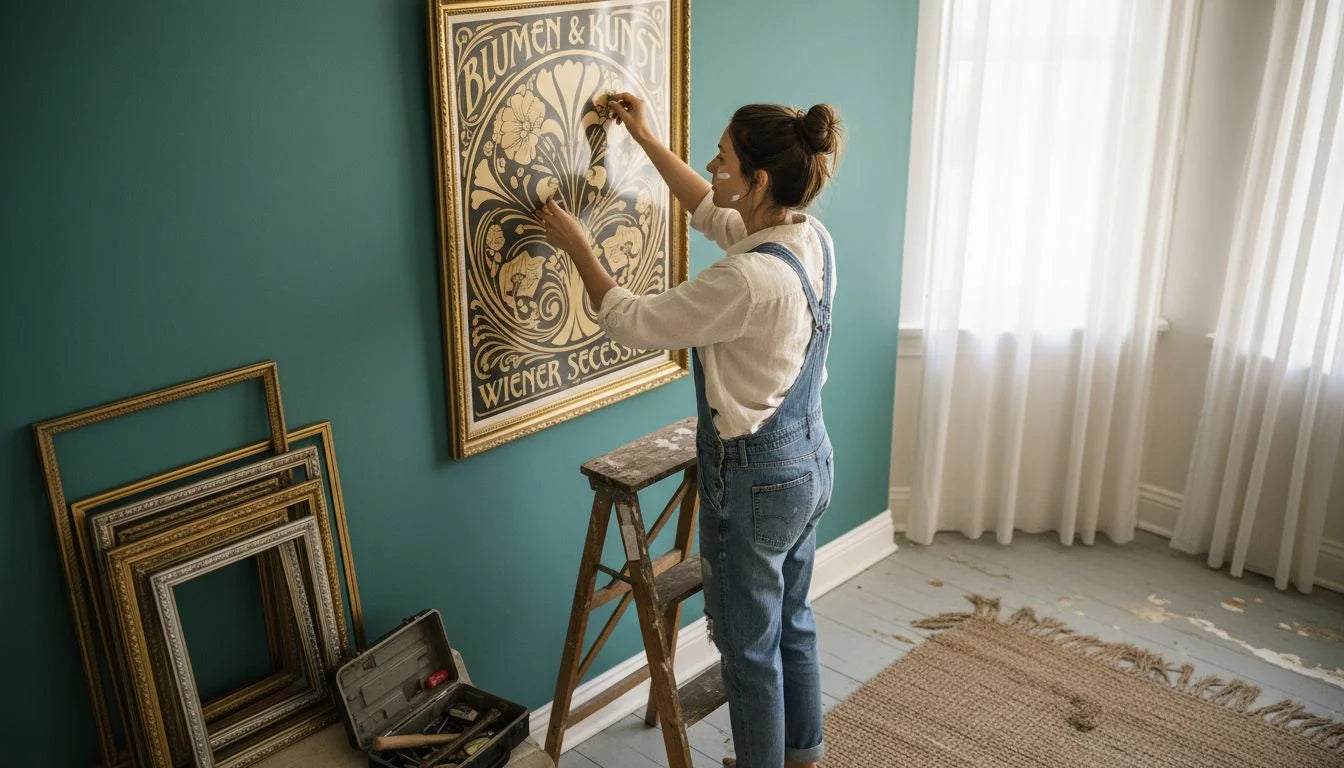
Here you can see a comparison of important poster art styles and their effect on the room:
| Art style | Characteristic feature | Effect on the ambience |
|---|---|---|
| Abstract art | Focus on form and color | Modern, inspired, open |
| expressionism | Emotional color contrasts | Lively, energetic, moving |
| Art Nouveau | Organic lines and shapes | Playful, elegant, harmonious |
| Minimalism | Simple design, reduction | Calm, clear, ordering |
| Art deco | Geometric patterns and symmetry | Stylish, elegant, structured |
Pro tip: Choose posters in art styles that not only decorate your walls but also reflect your personal feelings.
Typical characteristics of emotional art in interior design
Art in the home is far more than just decorative wall art – it's an emotional sounding board that directly touches our feelings. Emotional art in the home transforms spaces into personal power places that reflect and amplify our deepest emotions.
The characteristic features of emotional art can be divided into the following dimensions:
- Color psychology : Color choice as an emotional key
- Compositional dynamics : movement and tension in image structure
- Symbolic depth : Hidden levels of meaning
- Personal response : Individual emotional appeal
- Contextual integration : Harmony with the space
Emotional art is defined by its ability not only to show, but also to touch. It breaks down the boundaries between visual perception and inner experience by visualizing and transforming complex emotional states.
This table summarizes how colors affect the emotional atmosphere of art:
| Color | Typical emotion | Ideally suited for rooms |
|---|---|---|
| Blue | Peace, clarity | bedroom, study |
| Red | Energy, passion | Living room, creative spaces |
| Green | Balance, freshness | Kitchen, bathroom |
| Yellow | Joy, optimism | Dining room, entrance area |
| Gray | Neutrality, elegance | Hallway, modern living concepts |
Art is emotional when it tells a story that goes beyond what is visible.
Pro tip: Choose artworks that not only decorate your walls, but also tell a story that touches your soul.
How to choose the right art style for you
The art of choosing an art style is a deeply personal journey of self-discovery. Mixing and adapting art styles means finding a balance between individual preference and harmonious overall design.
To discover the perfect art style for your home, I recommend the following steps:
- Self-reflection : Understand your emotional needs
- Room analysis : Observe the existing interior design style.
- Color harmony : Pay attention to color coordination.
- Personal resonance : Choose art that touches you
- Be adventurous : Dare to combine things!
The eclectic approach allows you to creatively mix different art styles. It is important that colors and textures serve as unifying elements, resulting in a harmonious overall composition.
Art is personal. It doesn't have to fit perfectly, but it has to touch you.
Pro tip: Trust your intuition and choose artworks that create an emotional connection with you.
Mistakes when buying posters and how to avoid them
Buying posters is an art in itself, and several key mistakes are often underestimated. Differences between art prints can be crucial to the overall effect in a room.
Here are the most common mistakes when buying posters and how to avoid them:
- Incorrect size selection : Measure your wall area before purchasing.
- Ignoring spatial aesthetics : Pay attention to existing furnishings
- Don't underestimate quality : Invest in high-quality prints.
- Neglecting color harmony : Check the color coordination
- Overlooked emotional resonance : Choose art that touches you.
The quality of a poster is defined not only by its visual appearance, but also by its effect on a room. A well-chosen poster can completely transform a space and create an emotional atmosphere.
A poster is more than a picture - it's an extension of your personality.
Pro tip: Take your time with the selection and let your intuition guide you.
Discover art styles that touch your walls and your soul.
Choosing the right poster art style is crucial for filling spaces with emotional depth and aesthetic harmony. This understanding is the foundation for creating not just decoration, but for making a personal story and a world of feelings visible. If you're wondering how to find art that unfolds precisely this magic, you've come to the right place at Curiocanvas.
Let our Artwork collection inspire you as a reflection of your soul and discover how minimalist-luxurious posters with spiritual symbolism can transform your living space. Feel the power of our soulful and mystical symbols and give your walls a unique emotional resonance. Start your journey today to a home that is more than just beautiful – it tells your story. Discover Curiocanvas now and choose art that touches you and is meaningful.
Frequently Asked Questions
What are the most important art styles for posters?
The most important art styles for posters are abstract art, realistic art, expressionism, art deco, and minimalism. Each style has its own emotional signature and aesthetic influence on the space.
How do I choose the right art style for my apartment?
To choose the right art style, reflect on your emotional needs, analyze the existing interior design, pay attention to color harmony, and select artworks that resonate with you. Experiment with different styles as well.
What role does color psychology play in the selection of posters?
Color psychology is crucial, as different colors evoke different emotions. For example, blue conveys calmness, red energy, and yellow joy. Choose colors that support the desired mood in your room.
What mistakes should I avoid when buying posters?
Common mistakes include choosing the wrong size, ignoring the room's aesthetics, underestimating quality, neglecting color harmony, and overlooking emotional impact. Take your time with the selection process and carefully consider all aspects.
Recommendation
- Emotional Art in the Home: The Complete Guide – Curiocanvas
- Why Art Has Meaning – Effect on Soul and Space – Curiocanvas
- Art and interior design: Everything you need to know – Curiocanvas
- Creating a gallery at home: Art as an expression of the soul – Curiocanvas
- Fashion psychology: Why clothing shapes our behavior – LM Fashion Online Store