


Art and personal development – Why it moves us
Those seeking true self-realization often feel a longing to make the invisible tangible with their own hands. Art becomes more than mere decoration – it is a living, transformative bridge to inner healing and personal growth. Scientific studies from Germany demonstrate that creative processes not only reduce stress but also reveal emotional depths. This connection helps create authentic spaces where personal growth and genuine experience can flourish.
Table of contents
- What connects art and personal development
- Forms of artistic self-experience and impact
- Emotional and spiritual facets of art
- Art as a path to self-discovery and healing
- Common misunderstandings and realistic opportunities
Key findings
| Point | Details |
|---|---|
| Art as a transformation process | Art is an active process of self-exploration and emotional healing that goes beyond aesthetic considerations. |
| Diversity of art forms | Various art forms support personal development and promote individual as well as collective forms of expression. |
| Emotional and spiritual dimensions | Art enables emotional self-regulation and creates spiritual spaces for experience that lead to deeper inner reflection. |
| Misunderstandings about art | Art is often viewed as mere decoration, while its true potential lies in self-discovery and personal growth. |
What connects art and personal development
Art is not a passive experience, but an active process of transformation of the human psyche. It functions as a profound bridge to self-realization and healing that goes far beyond aesthetic considerations.
The creative process allows people to explore and understand their inner worlds. Through artistic expression, we can discover hidden aspects of our personality that would otherwise remain untouched. This journey of self-discovery helps us process complex emotions and develop new perspectives.
Artistic development offers several key dimensions of growth:
- Emotional self-regulation
- Strengthening resilience
- Promoting creativity and flexibility
- Deepening self-understanding
- Transformation of inner blockages
The connection between art and personal development is particularly evident in the ability to make inner states visible and tangible. Artistic processes activate those areas of our consciousness that are difficult to access rationally.
Pro tip: Start your personal art practice without pressure to perform - allow yourself to experiment playfully and without judgment.
Forms of artistic self-experience and impact
Artistic self-exploration offers a diverse landscape for personal development. Various art forms strengthen neural connections and enable people to explore their inner dimensions in unique ways.
The effects of artistic self-exploration can be divided into several categories:
-
Individual forms of expression
- Paint
- Draw
- Three-dimensional design
- Performing art
-
Collective art practices
- Group painting
- Interactive installations
- Community projects
- Participatory art formats
Collaborative art processes are particularly important, as they foster not only individual development but also social connection. Artistic practice thus becomes a medium for self-reflection and social interaction.
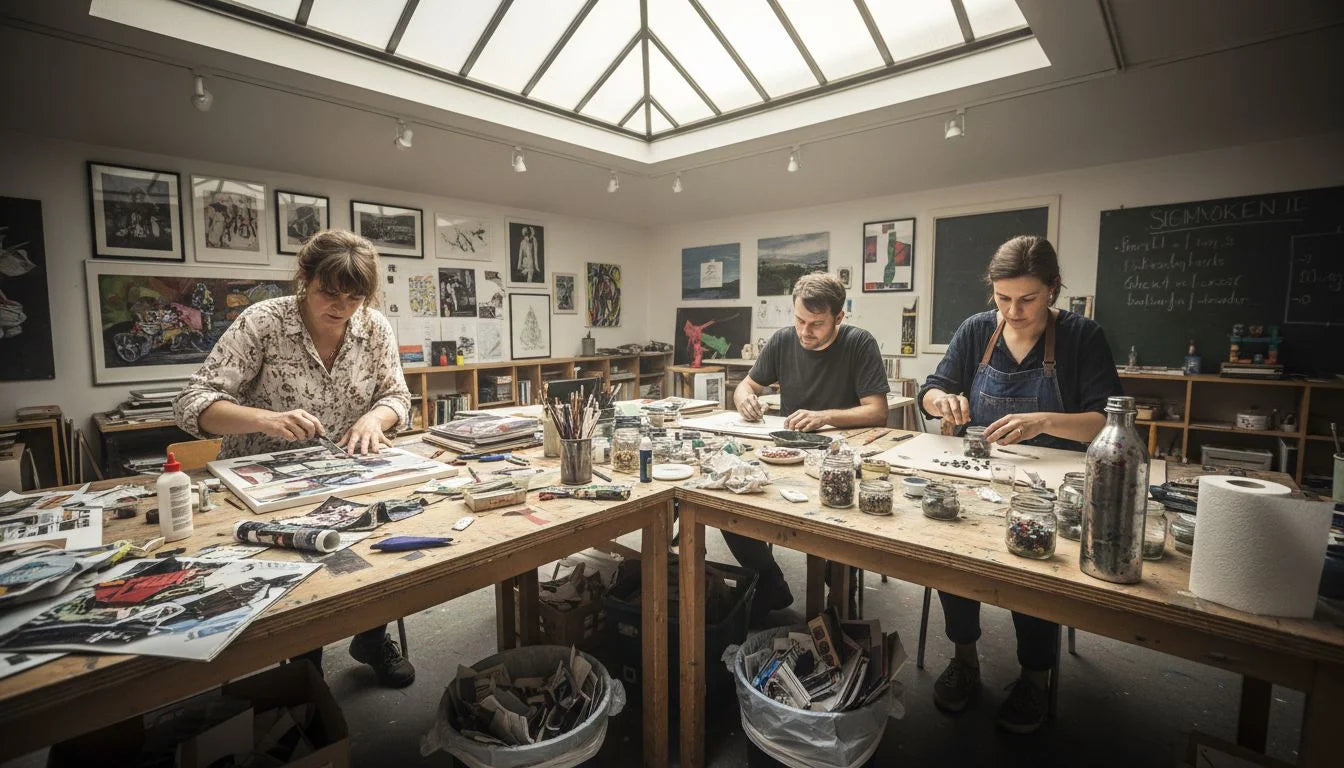
The different art forms influence personal development in a variety of ways:
| art form | Individual impact | Social impact | Potential challenges |
|---|---|---|---|
| painting | Strengthens emotional expressiveness | Fosters collaborative inspiration | Overcoming the pressure to be perfect |
| Three-dimensional design | Increased sensory self-awareness | Facilitates collaboration and exchange | Material selection as a creative hurdle |
| Performing art | Expands personal role models | Provides space for dialogue and participation | Fear of public judgment |
| Group painting | It opens up new perspectives | Strengthens group cohesion | Balance between individuality and teamwork |
The meaning lies not in the perfect artwork, but in the process of self-discovery and transformation. Every art form offers a unique opportunity to make inner states visible and tangible.
Pro tip: Choose an art form that appeals to you intuitively and practice it regularly without pressure to perform.
Emotional and spiritual facets of art
Art is more than a visual experience – it is a profound channel of communication between our inner worlds. Art enables emotional release and a connection to the unconscious, creating a space where hidden feelings become visible and tangible.
The emotional dimensions of artistic practice encompass various aspects:
-
Emotional self-regulation
- Expression of feelings
- Processing inner conflicts
- Emotional healing
- Stress reduction
-
Spiritual spaces for experience
- Inner contemplation
- Transcendence of the everyday
- Meaningful moments
- connection with the larger
The spiritual significance of art lies not in the perfection of the work, but in the depth of inner experience. It creates a space of resonance between our inner experience and the outer world, in which emotions find a new language.
Art acts as a transformative force that transcends the purely visual and can initiate profound psychological healing processes. It touches those areas of our soul for which words are often insufficient.
Pro tip: Take your time for a creative process without expectations - allow whatever wants to emerge to happen.
Art as a path to self-discovery and healing
Art is not a decorative exercise, but a transformative process of self-exploration. Creative processes enable the rediscovery of hidden resources and open pathways to inner healing that go far beyond traditional forms of therapy.
The journey of self-discovery through art manifests itself in various dimensions:
-
Emotional Cartography
- Visualizing inner conflicts
- Recognizing unconscious emotional patterns
- Processing traumatic experiences
- Resolving emotional blocks
-
Therapeutic transformation processes
- Promoting self-reflection
- Activate inner healing powers
- Reconstructing personal narratives
- Developing resilience
The scientific perspective underscores the healing effect of artistic practice. International research, such as that conducted by the World Health Organization, confirms the positive impact of creative activities on mental and physical health.
Here is an overview of how art can promote healing, self-awareness, and resilience:
| process | The effect on the psyche | Typical application areas |
|---|---|---|
| Emotional Cartography | Clarification of deep feelings | Art therapy, self-reflection |
| Therapeutic Transformation | Activation of inner healing powers | Trauma management, resilience training |
| Creative expression | Strengthening self-identity | Personal development |
| Narrative Reconstruction | Conscious re-evaluation of experiences | Life coaching, trauma processing |
Self-discovery through art means finding a language for what lies beyond words. It is a profoundly personal process of exploration, healing, and growth.
Pro tip: Regularly engage with artistic materials without expectations - let the process happen.
Common misunderstandings and realistic opportunities
Art is far more than a passive aesthetic experience – it is a dynamic process of self-exploration and social reflection. Many people underestimate the transformative potential of artistic practice and reduce it to mere decoration or entertainment.
Common misconceptions about art include:
-
Common misconceptions
- Art is only for the talented.
- Artistic practice is meaningless
- Creativity is a talent, not a learnable skill.
- Art has no therapeutic effect.
-
Realistic development opportunities
- Stress reduction through creative processes
- Promoting cognitive flexibility
- Emotional self-regulation
- Developing personal resilience
Scientific research shows that active artistic creation achieves far more than is commonly assumed. It strengthens neural connections, reduces stress, and opens up spaces for self-reflection that extend beyond purely aesthetic aspects.
Art is a tool for self-discovery – not a question of perfection, but of the willingness to engage in the process. It allows one to explore and transform hidden dimensions of one's own personality.
Pro tip: Let go of performance-oriented thinking and view artistic practice as a path of self-discovery, not as a competition.
Discover art as a path to personal transformation
Many people seek a deep connection between their inner selves and the outer world. The article “Art and Personal Development – Why It Moves Us” addresses this need and shows how artistic processes facilitate emotional self-regulation, self-awareness, and healing. Concepts such as “emotional mapping” and “therapeutic transformation processes” serve as key starting points for resolving inner blockages and discovering hidden resources.
Do you feel inspired to make your personal journey visible through art? Discover a unique collection on the Curiocanvas homepage that transforms your inner experiences into poetic works of art, as a mirror of your soul.
Immerse yourself in the world of symbolic and emotional art at Curiocanvas and let your walls speak. Combine your creative development with inspiring notebooks from Poetic Notebooks for Thoughts and Dreams – Curiocanvas to capture your thoughts and feelings. Begin now with art that not only beautifies spaces but also touches the heart and soul. Visit our website and experience how art supports your personal growth.
Frequently Asked Questions
What is the connection between art and personal development?
Art serves as a bridge to self-realization and healing by enabling people to explore their inner worlds and process complex emotions.
Which artistic practices promote personal development?
Individual forms of expression such as painting, drawing and performative art, as well as collective practices such as group painting and interactive installations, support personal growth and social connectedness.
How can art support emotional self-regulation?
Through artistic expression, people can visualize feelings, process inner conflicts and resolve emotional blockages, leading to better emotional stability.
To what extent is art therapeutically effective?
Art can promote therapeutic transformation processes by activating inner healing powers and strengthening personal resilience, and it is used in art therapy to process traumatic experiences.
Recommendation
- Why art inspires reflection – More depth in everyday life – Curiocanvas
- Art and the Transformation of Consciousness – How Art Shapes Our Inner Lives – Curiocanvas
- Art as a lifestyle explained: More meaning, more depth – Curiocanvas
- Why great works of art touch our inner selves – Curiocanvas
- Role of Art in Self-Expression for Luxury Spaces