


Why art inspires reflection – More depth in everyday life
Some works of art touch not only the eye, but also the heart and mind. For many people in Germany and the Netherlands, art is a mirror of their own emotional world and a source of new ideas. Art challenges us to reflect by opening up diverse social and emotional perspectives. In this article, you will discover how artistic expression and profound works lead to genuine reflection and inner growth.
Table of contents
- What does art that provokes thought mean?
- Emotional and cognitive mechanisms of art
- Diversity of artistic forms of expression and effects
- How art enables reflection and a change of perspective
- The impact of thoughtful art on personal growth
Key findings
| Point | Details |
|---|---|
| Art encourages reflection. | Art is a communication process that challenges people to reflect on themselves and society. |
| Emotional and cognitive mechanisms | Art triggers profound emotional reactions and activates various brain regions associated with perception and memory. |
| Diversity of artistic forms of expression | Different art forms each offer unique approaches and influence emotions and thoughts. |
| Personal growth through art | Art promotes the development of emotional intelligence and makes it possible to overcome rigid thought patterns. |
What does art that provokes thought mean?
Art is far more than visual decoration. It is a profound process of communication that challenges people to reflect on themselves and the world. Art can be understood as a human cultural product , consciously created to convey meaning and emotions.
What makes contemplative art special is its ambiguity. Such artworks are not rigid statements, but rather open invitations to interpretation. They encourage the development of one's own thoughts, the questioning of perspectives, and the exploration of emotional resonances.
The most important characteristics of thought-provoking art are:
- Surprising shifts in perspective
- Emotional depth and complexity
- Symbolic and metaphorical levels
- Socially critical dimensions
Works of art can broaden our perception by offering new perspectives on social developments . They reflect our collective and individual experiences.
Pro tip: Take your time not only to look at works of art, but to really let them affect you - without immediately making a judgment.
Emotional and cognitive mechanisms of art
Art is far more than a visual experience – it is a complex neurological process that triggers profound emotional and cognitive responses. Psychological research on art perception shows that artworks are not merely looked at, but experienced internally.
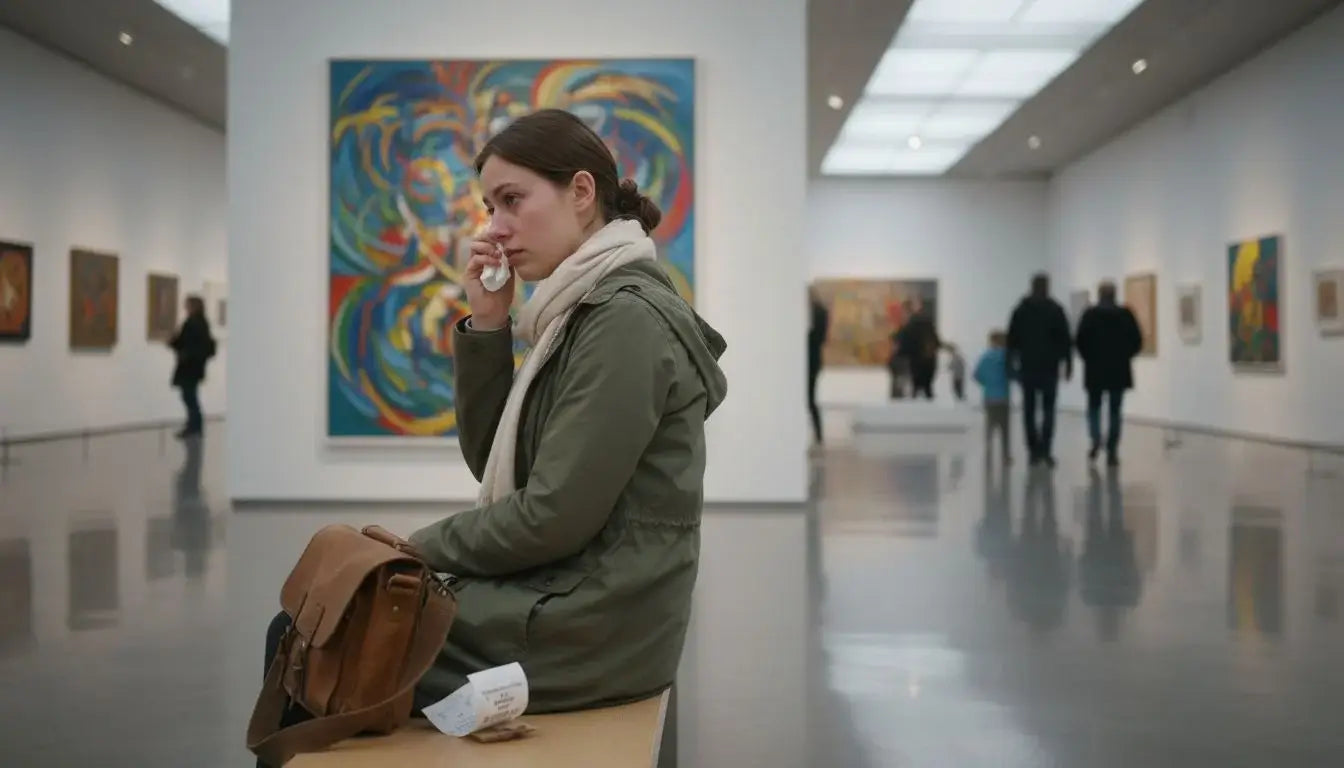
The neuroscientific perspective reveals fascinating connections. When viewing art, various brain regions are activated that are associated with emotions, perception, and memory. These complex neural networks enable us to process far more than just visual impressions.
The most important cognitive and emotional mechanisms include:
- Activation of the limbic system
- Increased empathy
- Emotional resonance and self-reflection
- Neuroplastic changes in the brain
In particular, studies on visual art therapy show that art can not only alleviate psychological pain but also increase emotional well-being. It acts as a catalyst for internal processes of self-regulation and emotional processing.
Pro tip: Take your time when looking at art and try to consciously perceive your first spontaneous feelings and thoughts.
Diversity of artistic forms of expression and effects
Artistic expression is a complex phenomenon that encompasses far more than just visual design. Artistic forms of expression range from fine art to music, theatre, dance, and literature, reflecting the boundless creativity of humankind.
Every art form possesses unique means of communication and emotional pathways. While a sculpture conveys physical presence, performances can generate immediate human interactions, and musical pieces can unlock the deepest emotional landscapes.
The most important artistic forms of expression include:
- Fine arts (painting, sculpture)
- Performing art (theater, dance)
- Musical forms of expression
- Literary works
- Digital and new media art
Contemporary art movements utilize a wide range of media and techniques to offer social commentary. They range from traditional techniques to digital and interactive formats that blur the boundaries between artist and audience.
Below is an overview of how different art forms produce different emotional and cognitive effects.
| art form | Typical emotional effect | Typical cognitive effects |
|---|---|---|
| Fine arts | Strengthens self-reflection | Promotes a change of perspective |
| Music | It evokes intense feelings | Supports pattern recognition |
| Theatre/Performance | It creates empathy with the characters. | It raises social issues |
| literature | It awakens compassion and insight | Trains language comprehension |
| Digital media art | Arouses curiosity and wonder | Promotes critical media literacy |
Pro tip: Remain open to different art forms and embrace unfamiliar artistic expressions.
How art enables reflection and a change of perspective
Changing perspectives is at the heart of artistic experience. Artistic perspectives allow us not only to see the world, but to reinterpret and understand it.
Art functions like a mental telescope, expanding and challenging our usual perspectives. It compels us to look beyond established thought patterns and view situations from unexpected angles. This process of uncertainty is not a disruption, but rather a creative mechanism for gaining knowledge.
The central mechanisms of perspective shifting through art include:
- Deconstruction of familiar perception patterns
- Questioning prevailing narratives
- Emotional distancing and reflection
- Developing empathic levels of understanding
- Overcoming cognitive comfort zones
Changing perspectives in art is like the metaphor of a dancer on a balcony – leaving their familiar surroundings to recognize new connections. This process requires flexibility, courage, and a willingness to abandon rigid thought patterns.
Pro tip: Don't view artworks as finished products, but as invitations to personal dialogue.
The impact of thoughtful art on personal growth
Personal growth is a dynamic process that is powerfully supported by art. Art as a therapeutic tool allows people to delve deeper into their own emotional world and discover new perspectives.
The transformative power of art lies in its ability to break down rigid thought patterns and dissolve inner blockages. It acts like a mirror, reflecting our hidden potential and emotional landscapes – sometimes gently, sometimes challenging, but always insightful.
The key dimensions of growth through art include:
- Developing emotional intelligence
- Strengthening self-reflection
- Expanding empathy skills
- Promoting creativity and flexibility
- Overcoming self-limitations
Neuroscientific studies show that aesthetic experiences enable people to communicate more authentically and freely. Art creates spaces beyond societal norms where we can explore our true selves.
This table summarizes key mechanisms by which art can contribute to personal growth.
| mechanism | Explanation of terms | Example from art |
|---|---|---|
| Self-reflection | Reflecting on one's own feelings | Diary drawing, portraits |
| Empathy | Empathy for other perspectives | Plays, novels |
| Promoting creativity | Developing new ways of thinking | Collage, abstract art |
| Overcoming blockages | Breaking up entrenched patterns | Improvisation, music |
Pro tip: Don't view art as a finished product, but as an invitation to self-discovery.
More depth and reflection in everyday life with art from Curiocanvas
The search for art that not only decorates spaces but also stimulates reflection demonstrates the importance of emotional resonance and shifts in perspective for our personal growth. If you desire more than mere decorative elements and wish to experience genuine reflection, the Curiocanvas Discover Homepage – Artwork as a mirror of your soul offers a collection of poetic artworks that fulfill precisely this longing.
Discover emotional artworks that enrich everyday life with meaning and depth. Immerse yourself in the symbolic language of Celestial Heads' art from stardust – Curiocanvas , which challenges your perception and invites self-reflection. For your own thoughts and dreams, you'll also find inspiring Poetic Notebooks for Thoughts and Dreams – Curiocanvas . Begin your personal journey of engaging with art and find your source of profound inspiration now at https://curiocanvas.de/ .
Frequently Asked Questions
What are the characteristics of art that makes you think?
Art that provokes thought is characterized by surprising shifts in perspective, emotional depth, symbolic layers, and socio-critical dimensions. It invites personal interpretation and reflection.
How does art influence our personal growth?
Art fosters personal growth by strengthening emotional intelligence, self-reflection, and empathy. Experiencing art allows people to develop creative ways of thinking and overcome inner blocks.
What emotional and cognitive mechanisms play a role in the perception of art?
Viewing art activates the limbic system in the brain, increases empathy, and triggers emotional responses. Artworks are not only experienced visually but also processed cognitively, leading to deeper insight.
How can different art forms have different effects?
Different art forms, such as visual arts, music, theatre, and literature, each offer unique means of communication. Each form produces different emotional and cognitive effects, ranging from self-reflection to the promotion of empathy.
Recommendation
- Why great works of art touch our inner selves – Curiocanvas
- Art and the Transformation of Consciousness – How Art Shapes Our Inner Lives – Curiocanvas
- Art as a lifestyle explained: More meaning, more depth – Curiocanvas
- Experiencing art as ritual: Step by step to conscious self-discovery – Curiocanvas
- Creative, sustainable gift packaging that will delight