


The role of wall art in interior design – where emotion meets style
Anyone who says wall art is just pretty decoration hasn't experienced its true power. It transforms your home into a place of genuine connection and directly influences how you feel in your rooms. The psychological impact of colors and motifs makes all the difference between ordinary wall decor and an emotional anchor that speaks to you every day. Here you'll learn how wall art can combine style, emotion, and spirituality in your interior.
Table of contents
- What makes wall art special in interior design
- Categories, materials and current trends
- How wall paintings shape the effect and atmosphere of a room
- Emotional and spiritual meaning of wall art
- Avoid common mistakes in selection and arrangement
Key findings
| Point | Details |
|---|---|
| Emotional meaning of murals | Wall murals influence the perception of space and can evoke emotional reactions by reflecting values and personal desires. |
| Choosing the right category | The choice of image category determines the emotional communication and the effect on the viewer, be it classical, abstract or photographic. |
| Material and surface finish | High-quality materials contribute to the visual impact and longevity of the mural and significantly influence the feeling of the room. |
| Planning the placement | A well-thought-out placement at the right height and in the right format optimizes the effect and ensures a harmonious room design. |
What makes wall art special in interior design
Wall art is far more than mere wall decoration. It's an emotional anchor point in your home, actively influencing how you feel in a room and how that room feels. A piece of wall art can transform the entire atmosphere of a room in seconds, without you having to move a single piece of furniture. This is because wall art communicates directly with your senses, speaking an emotional language that transcends words.
The psychological impact of colors and motifs plays a central role in how wall art influences your inner state. A warm, earthy image can promote calm and security, while bright, dynamic colors activate your creativity and energy. It's not just about hanging something beautiful on the wall. It's about consciously designing your environment so that it supports you daily. A motif that reflects your values or expresses an inner longing becomes a daily moment of connection with yourself.
The position of a piece of wall art in a room also greatly influences its effect. Wall art can enhance rooms and transform the entire atmosphere of a living space , especially when placed where your gaze naturally falls. The right picture in the right place not only creates stylistic coherence but also an inner order that feels calming. When you choose wall art that complements your space rather than working against it, something harmonious emerges. Your home becomes an extension of your personality, and that's what truly matters.
Choosing a piece of wall art is therefore both an emotional and stylistic decision. It's about the interplay of personal meaning, visual harmony, and the unconscious influence that colors and shapes have on your well-being. When you bring these dimensions together, your wall art becomes not simply an object on the wall, but a daily moment of reflection and expression.
Pro tip: Make sure to choose a mural that not only matches your interior design style but also the feeling you want to experience when entering the room. Trust your emotional response to the image.
Categories, materials and current trends
Wall art comes in many different forms, and each category brings its own aesthetic and impact. There are classic paintings, photographic art prints, minimalist line art, spiritual and symbolic works, and experimental mixed-media pieces. Each category speaks a different emotional language. An abstract work can leave room for your own interpretation and stimulate your creativity, while a figurative motif establishes a direct emotional connection. Choosing a category is therefore not just a stylistic decision, but also an emotional one. It determines how the image communicates with you and what feelings it evokes.
An overview of the most important categories of wall art and their emotional impact:
| category | Typical effect | Style features |
|---|---|---|
| Classical paintings | Peace, tradition, depth | Detail and color intensity |
| Photographic art | Authenticity, inspiration | High level of realism |
| Abstract works | Creativity, openness | Shapes and colors in focus |
| Line art/minimalism | Clarity, order | Reduced line design |
| Spiritual motives | Inner balance, search for meaning | Symbolism and signs |
| Mixed-media | Dynamism, modernity | Material and style mix |
There are also significant differences in the materials used. Canvas and posters have different effects in a room. Canvas prints appear more sophisticated and imposing, while posters exude a lighter, more contemporary aesthetic. The surface texture also plays a role: matte surfaces have a calming and subtle effect, while glossy or textured surfaces bring more dynamism to the room. Premium materials such as high-quality cotton fabrics or special paper grades influence not only the visual impact but also the feel and longevity of the artwork. A wall hanging made of inferior materials quickly loses its emotional appeal, while a carefully crafted piece retains its power for years to come.
Current trends in wall art show a move towards authenticity and meaningful aesthetics. Minimalist designs with clean lines and forms remain timelessly popular, but there's also a growing interest in spiritual and symbolic motifs that carry deeper meaning. Sustainable materials and conscious production are gaining importance, especially for those who want to decorate their living spaces with a clear conscience. Personalized artworks that tell individual stories are increasingly replacing mass-produced decorative items. Artistic independence and craftsmanship are once again valued. The journey is moving away from trends for their own sake and towards timeless works that resonate with your soul and truly transform your space.
Pro tip: Invest in a high-quality material that matches your emotional connection to the subject; a well-made piece will last longer and retain its impact.
How wall paintings shape the effect and atmosphere of a room
Wall art is the silent architect of a room's atmosphere. It doesn't work against the space, but rather in conjunction with it to create a feeling that resonates. The atmosphere in a room arises from the interplay of light, color, materials, and form , and wall art plays a crucial role in this. A single picture can transform the entire emotional quality of a room without you having to move a single piece of furniture. When you enter a room, your eye first perceives colors and shapes, and these visual impressions speak directly to your feelings before your mind has even had time to analyze them.
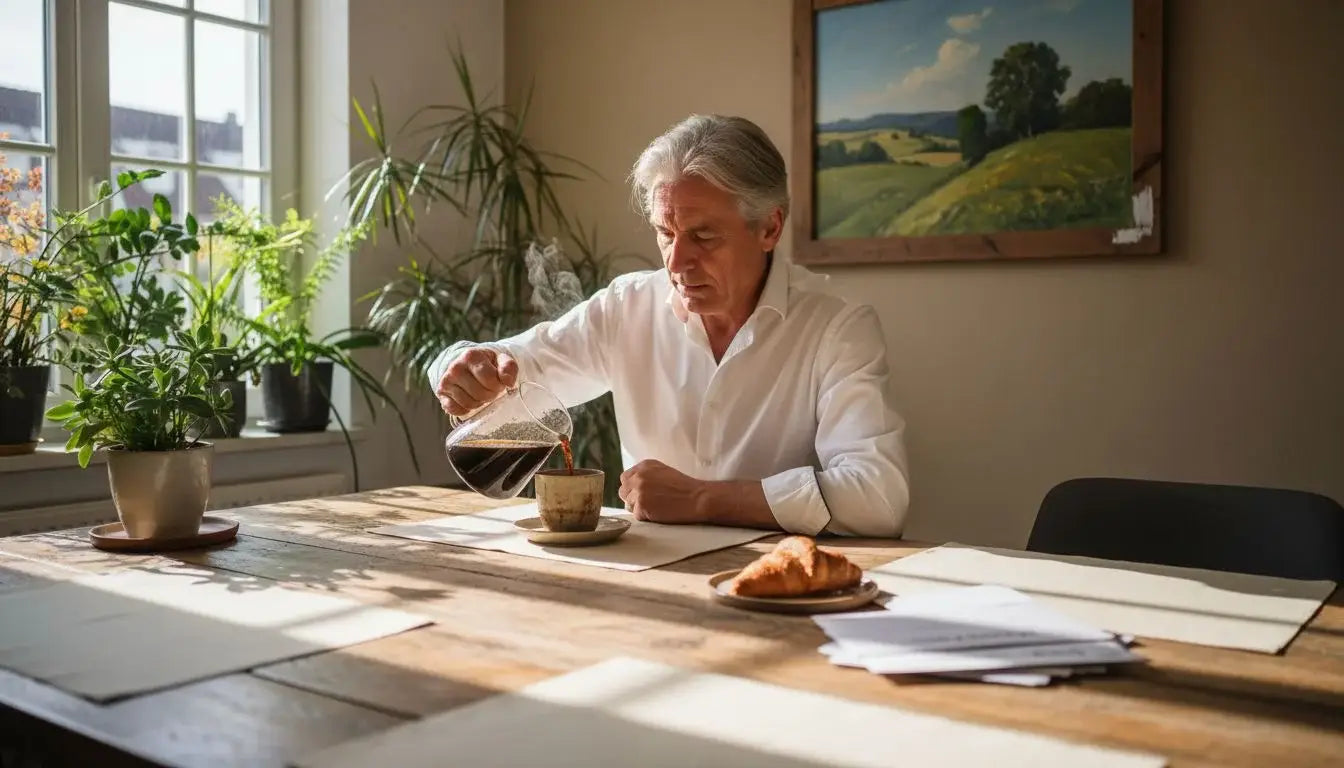
The conscious selection of imagery, format, and hanging creates more than mere decoration. A large, visually powerful piece can make a small room appear larger, while a central, calming motif brings order to a chaotic living room. The colors of a wall painting directly influence the perceived temperature and energy of the room. Warm tones create a sense of security and intimacy, while cool tones radiate tranquility and spaciousness. An abstract painting with dynamic lines brings movement to a static room, while a serene motif creates space for mental relaxation. The wall painting determines the position your gaze falls upon upon entering the room, and thus also how you perceive the entire space.
Furthermore, a mural shapes your experience of the room over time. It's not just a visual anchor, but also an emotional anchor point you encounter daily. A piece that resonates with your values or holds spiritual significance for you becomes part of your everyday connection to yourself. It influences how you wake up in the morning, how you concentrate during the day, and how you unwind in the evening. The subtle, subliminal effect of art in your living space accumulates over weeks and months. You may not always be consciously aware of its presence, but it continuously works to shape your inner mood and your relationship with the space itself.
Pro tip: Make sure the mural is the first visual stop when you enter a room; this gives the entire room an emotional direction and immediately shapes your perception of the space.
Emotional and spiritual meaning of wall art
Wall art speaks a language that goes deeper than aesthetics. It communicates with your inner self, with those parts of your soul that words cannot reach. Wall art can evoke emotions, awaken memories, and fill spaces with emotional depth , and that is precisely what makes it more than mere decoration. A piece of wall art that resonates with your deepest values becomes a mirror to your inner world. It allows you to express your feelings without having to speak them aloud. For people seeking an emotional or spiritual connection to their living space, wall art is a direct portal to this depth. It creates space for contemplation, for inner peace, and for the feeling of truly being at home.
The spiritual dimension of wall art is often overlooked, yet it's central to its transformative potential. A piece with symbolic elements, mythological references, or spiritual motifs can remind you daily who you want to be. It can serve as an anchor when you feel lost, or as a compass guiding you back to your own values. Here, spirituality doesn't mean a belief system, but rather a conscious connection to what is meaningful and purposeful to you. An image that reflects this inner truth becomes a silent companion in your daily life. You can pass by it each day and experience a sense of continuity, belonging, and inner alignment.
Art acts as a medium for emotional exploration and self-expression. This means that a piece of wall art not only expresses your feelings but also helps you process and understand them. Choosing a work that reflects your inner experiences allows you to see yourself more clearly. It creates a safe space for emotional authenticity. This is especially valuable in our hectic world, where genuine emotional depth is often lost. A consciously chosen piece of wall art becomes a daily ritual of self-reflection. It reminds you that your inner world is just as important as the outer one, and that it's possible to express both in your home.
Pro tip: Don't choose a wall mural based on external trends, but rather on how it feels in your body when you look at it; you can recognize true emotional and spiritual resonance by the immediate inner feeling.
Avoid common mistakes in selection and arrangement
Most people make the same mistake with wall art: they choose a piece they like and hang it up somewhere. This sounds logical, but often leads to results that feel incomplete. The first common mistake is a lack of planning. Before you buy wall art, analyze the room: How big is the wall? What other elements are present in the room? Where is the natural line of sight? A piece that looked wonderful in another home can look completely out of place in your room if it doesn't suit its size and style. The emotional response when looking at a picture is important, but without spatial planning, it won't have its full impact.
Another critical mistake is incorrect positioning. Placing a picture too high or too low, or lacking reference points to furniture, can significantly diminish its impact . Ideally, the center of the picture should hang at eye level, approximately 150 to 160 centimeters from the floor. This isn't meant to be rigid, but it's a good starting point. When arranging multiple pictures, it's best to avoid chaotic arrangements without a clear composition. Harmony is achieved by maintaining consistent spacing between the works and by selecting pictures that are thematically or formally related. A careless mix of different frames, sizes, and subjects can make a room feel restless and fragmented, rather than unifying it.
The choice of frame and size should also be made deliberately. A picture that's too small will look lost on a large wall, while an oversized piece can be overwhelming in a small room. The frame should complement your interior design style, but also the subject matter of the picture. A minimalist work often needs a subtle, thin frame, while a bold, colorful picture can handle a more substantial one. Also, make sure the picture doesn't compete with other wall elements. If your wall already has a lot of pattern or texture, a calm, minimalist piece might be better than a visually complex one. The goal is balance and inner harmony in the room, not constant visual conflict.
Recommendations for the ideal placement and selection of wall art:
| aspect | Recommendation | Result |
|---|---|---|
| Image height | 150–160 cm from the floor | Harmonious alignment |
| Image size | Appropriate to the wall surface | Balanced effect |
| Choice of motif | Consider personal significance | Deeper well-being |
| Framework selection | Coordinate style and motif | A coherent overall picture |
Pro tip: Take a photo of your room and use the photo app on your smartphone to virtually try out different image sections and positions before you finally hang up your work.
Add emotional depth to your home with wall art from Curiocanvas
Choosing the right wall art is about more than just aesthetics. As described in the article, wall art serves as emotional anchors and silent companions, shaping the ambiance of your space and reflecting your inner world. If you're looking for art that speaks to you and doesn't just decorate walls, at Curiocanvas you'll find a unique selection of works that combine spirituality, symbolism, and understated luxury.
Discover our Wall Art Gallery Flames Kisses Time and Compass – Curiocanvas and be inspired by artistic wall murals that lend your interior a poetic voice. Find artworks that truly resonate with you and transform your home into a haven of tranquility and personal expression. Don't wait any longer and bring emotional resonance to your spaces with art that touches your soul. Discover it now on Curiocanvas.
Frequently Asked Questions
What are the psychological effects of wall art in interior design?
Wall art has a direct influence on the atmosphere of a room and can evoke emotions such as calmness, creativity or security, depending on the colors and motifs.
How do I choose the right wall art for my room?
Make sure the wall art not only matches your interior design style, but also evokes the feelings you want to experience when entering the room. Consider the size and positioning of the artwork as well.
What types of wall art are there, and which style suits me?
There are many categories such as classic paintings, photographic art, abstract works, line art, and more. The choice depends on your personal taste and the emotional effect you wish to achieve.
How do the materials used in wall art affect the atmosphere of a room?
Materials like canvas or posters have different effects. Canvas appears more sophisticated, while posters exude a lighter aesthetic. The surface texture also influences the dynamics within the room.
Recommendation
- Emotional Art in the Home: The Complete Guide – Curiocanvas
- Discover 7 benefits of wall art for the soul and home – Curiocanvas
- Instructions for creating a gallery wall: Designing creative walls with depth – Curiocanvas
- Motif selection for canvas prints: Your personal soul art – Curiocanvas
- Why emotional gifts are important for relationships – a passion project in manufacturing