


Art prints: Everything you need to know about quality and meaning
Over 80 percent of all households already decorate their walls with art prints. But how can you recognize truly high-quality prints, and why does their impact extend far beyond mere decoration? The right combination of technique, material, and artistic authenticity determines whether an art print becomes a striking highlight. Those who understand the difference between mass-produced goods and quality products discover new possibilities for stylish living and genuine artistic enjoyment.
Table of contents
- What exactly are high-quality art prints?
- Types and printing techniques compared
- How quality determines the value of the art print
- Unlocking emotional meaning and symbolism
- Costs, risks and comparison to mass-produced goods
Key findings
| Point | Details |
|---|---|
| High-quality art prints | A high-quality art print is characterized by precise color reproduction and the use of at least 8 printing colors. |
| Printing techniques | The choice of printing technique, such as relief printing or aquatint, influences the aesthetic possibilities and the character of the artwork. |
| Value factors | The quality of the materials and reproduction methods are crucial for the value of an art print and its longevity. |
| Emotional significance | Art prints convey deeper emotional and symbolic messages that go beyond mere aesthetics. |
What exactly are high-quality art prints?
Art prints are more than just simple wall decoration – they bridge the gap between artistic originality and affordable aesthetics. A high-quality art print is characterized by precise reproduction techniques and careful color selection.
The quality of an art print is largely determined by the number of printing inks used. According to experts, a palette of 8 to 12 colors is considered a crucial quality indicator. This broad color range allows for a faithful reproduction of the original artwork and captures subtle nuances and shades that preserve the character of the original.
If you are looking for a high-quality art print , you should pay attention to the following criteria:
- High-quality printing technology
- Precise color reproduction
- Use of at least 8 printing colors
- Quality of the substrate material
- Professional reproduction techniques
Our art print reproduction processes guarantee that each artwork retains its original soul and intention. A truly high-quality art print is more than a copy – it is a tribute to the artist's vision.
Types and printing techniques compared
Art prints are a fascinating world of diverse techniques, each offering unique aesthetic possibilities. Traditional artistic printing techniques comprise four main categories: relief printing, intaglio printing, planographic printing, and stencil printing, which are continuously refined by artists.
One particularly interesting technique is aquatint , an intaglio printing method with exceptional properties. Developed between 1765 and 1768 by Jean Baptiste Leprince , this technique allows for the creation of prints that come remarkably close to wash drawings. Aquatint produces halftones through precise surface etching and is considered one of the most painterly printing techniques of all.
The various printing techniques differ fundamentally in their characteristics:
- High pressure : Printing areas are raised above non-printing areas.
- Intaglio printing : Image information is transferred into recesses.
- Flat printing : Works with the repulsion of water and oil
- Stencil : Uses a screen fabric to transfer the design.
Each technique offers unique expressive possibilities for artists and art lovers. Our art print reproduction processes utilize state-of-the-art technologies to preserve and reinterpret the essence of these traditional printing methods.
How quality determines the value of the art print
The value of an art print is determined by a multitude of subtle and significant factors that go far beyond mere visual appearance. Crucial aspects include the reproduction method, material quality, and artistic authenticity.
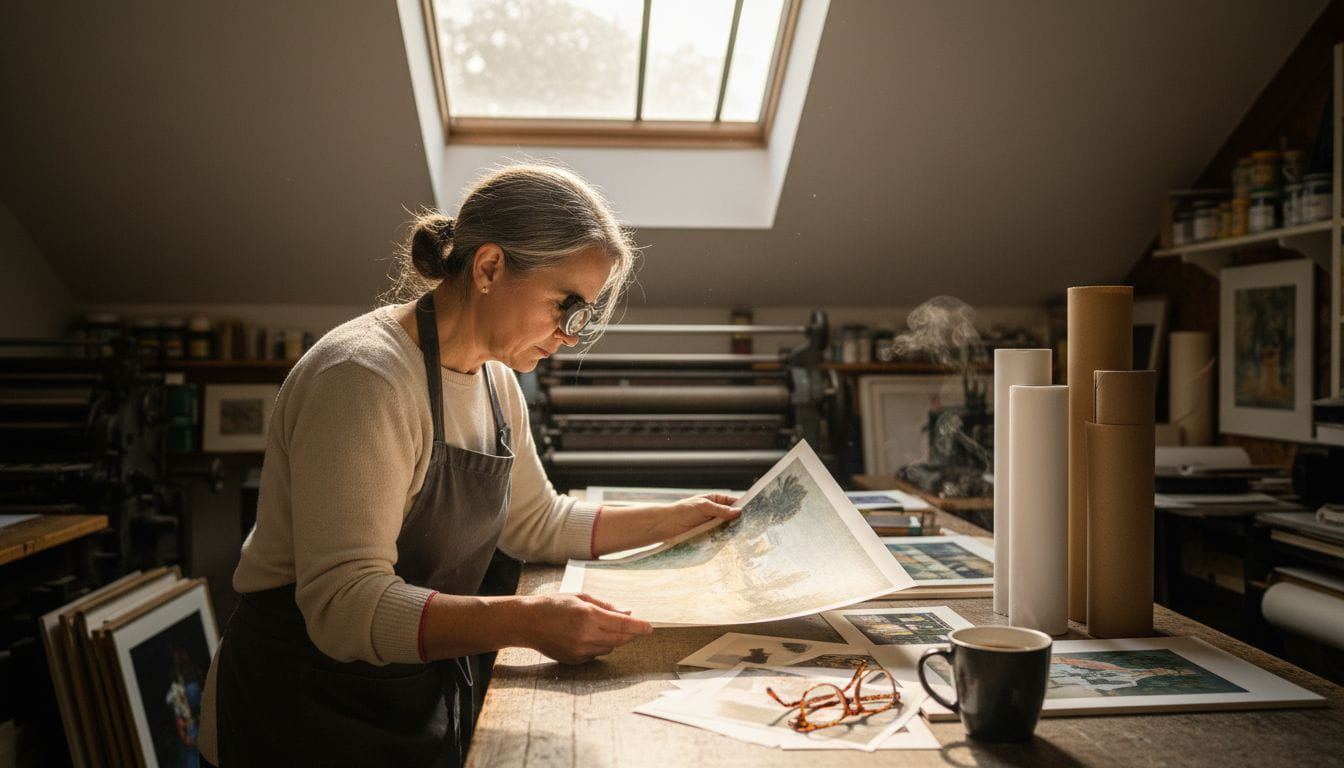
Professional inkjet printing systems and exclusive printing media play a central role in determining value. High-quality artist papers and canvases can significantly increase the aesthetic and monetary value of an art print. The choice of materials influences not only the visual quality but also the print's durability and originality.
For art lovers and collectors, the following quality criteria are crucial:
- Precision of color reproduction
- Long-term color stability
- Use of acid-free materials
- Archiving capability
- Originality of the reproduction technique
Our art print effect guide shows that a high-quality art print is more than just a simple wall picture - it is a carrier of emotion, meaning and artistic intention.
Unlocking emotional meaning and symbolism
Art prints are more than aesthetic objects – they are emotional windows that allow us access to deeper levels of meaning. They convey stories, feelings, and symbolic messages that extend far beyond their visual appearance.
For over 500 years, artistic printing techniques have been an integral part of European culture and knowledge societies . They function as emotional channels of communication through which artists can convey complex feelings and symbolic narratives. Every art print carries a unique DNA of intention, emotion, and cultural context.
There are several key elements in deciphering emotional meaning:
- Color choice and its psychological effect
- Compositional elements and their symbolic meaning
- Cultural and historical contexts
- Personal associations and memories
- Emotional response of the viewer
Symbolic artworks often contain hidden messages that only become apparent to those willing to look beneath the surface. They invite us to pause, reflect, and develop our own interpretation.
Costs, risks and comparison to mass-produced goods
The art print market is a vast array of offerings, ranging from high-quality individual pieces to mass-produced wall decorations. Understandably, art lovers seek solutions that perfectly balance quality and affordability.
Giclée prints using pigment-based inks on acid-free archival paper represent a superior alternative to mass-produced prints. This printing technique offers significantly higher quality and durability, which is reflected in a higher price. The investment is worthwhile for those who value authenticity and artistic reproduction.
Cost differences between art prints and mass-produced goods:
- Mass-produced goods : Cheap, standardized, short lifespan
- High-quality art print : Precise color reproduction, archival quality, durable
- Giclée printing : Premium quality, custom-made, higher price
What art prints can truly achieve goes far beyond mere wall decoration. They are investments in emotional experiences, artistic meaning, and personal expression.
Discover art prints with soul and experience spaces anew.
Are you looking for an art print that is more than just decoration and meets the highest quality standards? Then it's crucial to choose an art print that combines precise color reproduction and emotional depth. As described in the article, high-quality printing processes and meaningful symbolism are the basis for a work of art that truly touches the heart.
Discover art as a mirror of your soul. Discover Curiocanvas' artistic wall art that harmonizes emotion and aesthetics. Our collections, such as Wall Art Gallery Flames Kisses Time and Compass, offer art prints with poetic depth and spiritual resonance. Choose longevity and expressiveness with individually crafted prints from our workshop. Transform your walls into vibrant stories with every piece and experience the power of true meaning. Visit curiocanvas.de now and begin your personal, meaningful art experience.
Frequently Asked Questions
What are the most important characteristics of a high-quality art print?
A high-quality art print is characterized by precise reproduction techniques, careful color selection, the use of at least 8 printing colors, and high-quality substrate material.
What printing techniques are available for art prints?
The main categories of printing techniques are relief printing, intaglio printing, planographic printing, and stencil printing. Each technique offers unique possibilities for aesthetic design.
How does the choice of material affect the quality of art prints?
The quality of the substrate, such as artist papers or canvases, has a significant influence on the optical quality, durability and value of an art print.
Why are giclée prints a better choice than mass-produced prints?
Giclée prints offer higher precision in color reproduction and greater durability, making them a superior alternative to mass-produced prints. They are an investment in true art and emotional expression.
Recommendation
- Art Print: Everything You Need to Know About the Art Reproduction Process – Curiocanvas
- What is high-quality canvas? The comprehensive guide – Curiocanvas
- What do art prints achieve? A complete guide to their effects. – Curiocanvas
- Best 7 art as wall decor comparison – Expert Comparison 2025 – Curiocanvas