


Proper care of artworks: Make your art shine
Even minor storage errors can permanently diminish the value and beauty of artworks. Anyone who cherishes their paintings or drawings knows how quickly light, humidity, or improper care can cause damage. More than 80 percent of all damage to private collections results from unsuitable environmental conditions and incorrect handling. With practical tips and easy-to-understand steps, you'll learn how to preserve your art treasures safely and for the long term.
Table of contents
- Step 1: Prepare your environment and materials
- Step 2: Gently clean the surface and frame
- Step 3: Protect artwork from light and moisture
- Step 4: Regularly check the condition of your art
- Step 5: Store and present artworks professionally
Quick overview
| Important point | Explanation |
|---|---|
| 1. Create stable environmental conditions | Choose a room with constant temperature and humidity to protect artwork. |
| 2. Use gentle cleaning. | Use soft brushes and cloths to gently remove dust and dirt. |
| 3. Protect artworks from light and moisture | Position your artwork away from direct sunlight and use UV-protective glass. |
| 4. Conduct regular condition checks | Check your artwork every six months for changes such as cracks or discoloration. |
| 5. Professional storage and presentation | Use special materials and techniques to preserve the integrity of your artwork during storage and transport. |
Step 1: Prepare your environment and materials
Preparing your environment is crucial for the long-term preservation of your cherished artworks. Before you begin any care, you must create a safe and controlled space that protects your artworks from potential damage.
According to the Humboldt Forum, preventive conservation plays a central role in slowing down aging processes. Pay particular attention to three critical factors: temperature, humidity, and lighting conditions. Choose a room with stable conditions, ideally with a constant temperature between 18 and 22 degrees Celsius and a relative humidity of 50 to 55 percent.
Prepare your materials carefully. Gather soft cotton gloves to avoid direct contact with the artwork, a clean workspace with a smooth surface, and specialized cleaning supplies such as soft brushes and microfiber cloths. Avoid rooms with direct sunlight or near heaters or air conditioners.
A tip from the experts at the Cultural Foundation : Keep water pipes away from exhibition spaces and storage areas. Water-bearing systems in ceilings or walls can pose an incalculable risk to your valuable works of art.
Now that you have prepared your surroundings, you are ready for the next step in artwork care.
Step 2: Gently clean the surface and frame
Cleaning artwork carefully requires patience and a gentle touch. In this step, you will learn how to gently remove dust and light dirt from your precious artwork.
According to CA-RA, artworks are particularly sensitive to improper handling. Use only soft brushes with natural bristles or microfiber cloths. Always begin with light, downward strokes and work carefully and evenly. Do not apply pressure and avoid circular motions that could rub dirt into the surface.
For wooden frames, a soft cotton duster is recommended. Clean metal frame parts only with special metal cleaners and avoid moisture. For paintings: Never use liquids or chemical cleaning agents. According to the Humboldt Forum, stable exhibition conditions are crucial for the preservation of artworks.
A little insider tip: Always wear soft cotton gloves when cleaning to avoid direct skin contact. Oils and sweat from your skin can permanently damage the artwork's surface.
After the gentle cleaning, you are now ready for the next phase of artwork care.
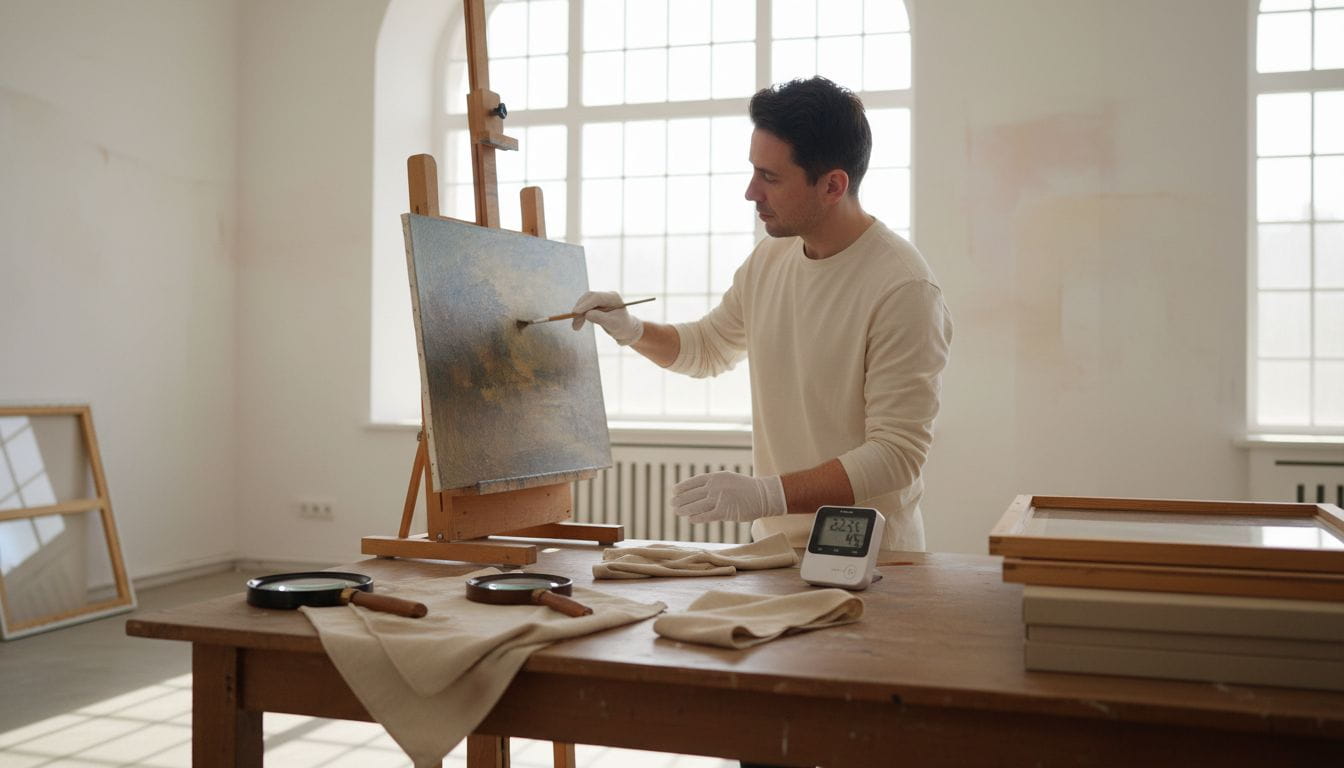
Step 3: Protect artwork from light and moisture
Preserving your artwork requires a careful balance between environmental conditions and preventative protection. In this section, you will learn how to protect your precious art treasures from the harmful effects of light and humidity.
According to the Humboldt Forum, excessive humidity and intense light exposure can cause significant damage to works of art. Position your artwork away from direct sunlight and choose rooms with stable climate conditions. Ideally, you should aim for a constant relative humidity between 45 and 55 percent and a consistent room temperature of 18 to 22 degrees Celsius.
Special care is required when storing artwork. The cultural foundation explicitly warns against damp cellars and overheated attics. Use UV-protective glass for frames and position artworks on walls away from direct sunlight. Install dimmed lighting with special artificial light sources that emit less heat radiation and UV light.
Insider tip: Use a hygrometer to monitor humidity and invest in a dehumidifier or humidifier for a consistent environment. Avoid rooms with large temperature fluctuations.
After taking these protective measures, you can be sure that your artworks will retain their beauty and integrity in the long term.
Step 4: Regularly check the condition of your art
Regular condition checks of your artworks are crucial for their long-term preservation. This section will show you how to systematically and carefully monitor the condition of your valuable art treasures.
As recommended by cultural heritage rescue organizations, regular inspections of the storage space and artworks are essential. Conduct a thorough examination at least every six months. Pay close attention to subtle changes such as fine cracks, discoloration, or delamination. Use good lighting and a magnifying glass for detailed close-up views.
According to the cultural foundation, you should pay particular attention during the winter months. When the heating is on, the air can become very dry. Use a hygrometer to monitor the humidity and document your observations in a log. Note the date, observations, and any changes.
Insider tip: Wear cotton gloves when examining the artwork and only touch the edges. Avoid direct contact with the delicate surfaces.
These systematic checks protect your artwork from unnoticed damage and preserve its beauty for future generations.
Step 5: Store and present artworks professionally
The professional storage and presentation of artworks requires precision and care. In this section, you will learn how to best preserve your valuable art treasures and display them attractively.
According to the Cultural Heritage Rescue Association, paintings must be given special protection during storage. Use special wooden strips as a base and ensure that no paintings are placed directly on the floor. For damp works, it is also important to place each painting individually to prevent damage.
The cultural foundation emphasizes the importance of protection during exhibitions and transport. Use protective glass for your artworks and ensure adequate padding during handling. Choose locations with a stable climate, away from direct sunlight and radiators.
Insider tip: Invest in acid-free tissue paper and special transport boxes with foam inserts for maximum protection of your artwork during movement and storage.
These expert tips will help you preserve the integrity and beauty of your art collection.
Your artwork deserves the best protection and a unique stage.
Caring for artworks requires careful protection against dust, light, and moisture. Especially if you wish to preserve the fragility and essence of your art, it is essential to create the right environmental conditions while also paying attention to its presentation. A delicate work of art demands gentle care so that its beauty and meaning can shine brightly for as long as possible.
Discover artistic works on Curiocanvas that not only decorate rooms but also evoke emotions and tell stories. Our Wall Art Gallery collection, Flames Kisses Time and Compass, offers minimalist masterpieces inspired by mythology and inner depth. These artworks are printed with the utmost care on premium canvas and come with sturdy frames that are ideal for healthy art care.
Give your collection the stage it deserves and protect your art from mistreatment with works that reveal its soul. Visit our website and treat yourself to art that not only transforms your space but also touches your senses. Start your discovery now on Artwork as a mirror of your soul Discover Homepage – Curiocanvas and let your walls become poems.
Frequently Asked Questions
How do I prepare my environment for the care of works of art?
To optimally care for your artwork, create a controlled environment with stable conditions. Ensure that the temperature is between 18 and 22 degrees Celsius and the humidity is between 50 and 55 percent.
Which cleaning methods are recommended for works of art?
Use soft brushes or microfiber cloths to gently remove dust. Always start with light strokes from top to bottom and avoid applying pressure to prevent damaging the surface.
How do I protect my artwork from light and moisture?
Position artworks far away from direct sunlight and use UV-protective glass. Monitor humidity with a hygrometer and keep it between 45 and 55 percent to prevent damage.
How often should I check the condition of my artwork?
Conduct a thorough inspection of your artwork every six months to detect changes such as cracks or discoloration early. Document your observations in a condition log to keep track of their condition.
How should I properly store and present my artwork?
Storage should be on special wooden slats to avoid direct contact with the floor. Ensure stable climatic conditions are maintained during the presentation and use protective glass to safeguard the artworks during the exhibition.
Recommendation
- Beautify your living room with art: Your unique style – Curiocanvas
- What is Art History? Complete Guide 2025 – Curiocanvas
- Selecting Canvas Prints: A Step-by-Step Guide to the Perfect Curiocanvas
- Emotional Art in the Home: The Complete Guide – Curiocanvas
- Home Art Guide: Creating Unique Spaces
- Why Hand-Painted Artwork: Everything That Counts