


What is art in everyday life – emotion and meaning
More than 80 percent of Germans say that art has a positive influence on their well-being . Yet its value in everyday life is often underestimated or reduced to mere decoration. However, art can offer emotional depth and spiritual resonance when consciously integrated into personal spaces. This article shows you how everyday art can broaden your perception and give your home a touching, individual meaning.
Table of contents
- Art in everyday life: Definition and misunderstandings
- Forms and modes of expression of everyday art
- Emotional and spiritual impact on daily life
- Art as a medium for designing personal spaces
- Opportunities, challenges and conscious enjoyment of art
Key findings
| Point | Details |
|---|---|
| Art as human expression | Art expands our perception and is a vibrant form of expression that goes beyond visual beauty. |
| Diversity of everyday art | Everyday art manifests itself in many forms and is present everywhere in our lives, from fashion to urban murals. |
| Emotional and spiritual impact | Art has the power to influence our emotions and promote spiritual experiences, even in everyday life. |
| Conscious enjoyment of art | The conscious enjoyment of art can open up new perspectives and promote our empathy and understanding. |
Art in everyday life: Definition and misunderstandings
Art is more than just aesthetic decoration—it is a profoundly human form of expression that expands our perception and understanding of the world. In the broadest sense, art encompasses any developed human activity based on knowledge, practice, perception, and intuition. Traditional definitions include a wide range of creative activities , from visual arts and music to literature and performing arts.
The most common misunderstandings arise from an overly narrow or rigid understanding of what art can actually be. Many people reduce art to mere visual beauty or decorative elements, overlooking its deeper meaning as a means of communication and an expression of human emotion. Art is dynamic and culture-specific—it is constantly changing and reflects the complexity of human experience.
To truly understand art in everyday life, it is important not to view it as a static construct, but as a living, constantly evolving process. Works of art are the results of creative human activity that are not solely defined by function. They can evoke emotions, provoke thought, and fundamentally change our perspective on the world.
Pro tip: Don't think of art as something elitist or only found in museums, but as an everyday form of expression that exists all around us.
Forms and modes of expression of everyday art
Art permeates our everyday lives in diverse and surprising forms. Artistic expressions arise from creative processes and are not always true to nature, but can create their own unique expression through individual variations in color and form. From coffee mugs with artfully decorated designs to street music that enlivens our cityscapes – art exists all around us.
The various forms of everyday art range from visual to performative expressions. Forms can have clear silhouettes or blend into one another, influencing the impact and legibility of the artwork . Fashion, architecture, photography, graphic design, and even culinary arts can be considered art forms that expand our perception and enrich our experiential world.
The significance of art in everyday life lies not only in its aesthetic dimension, but above all in its ability to evoke emotions, tell stories, and initiate social discourse. Whether it's a handcrafted ceramic vessel, an urban mural, or an improvised dance performance – every form contributes to the collective cultural narrative.

Pro tip: Open your senses to the art forms that exist around you every day, and look at everyday objects with a new, appreciative perspective.
The following table provides an overview of common everyday art forms and their respective effects:
| art form | everyday life | Typical effects on people |
|---|---|---|
| street musician | Public spaces | It lifts the mood, revitalizes the surroundings |
| fashion | Personal clothing | Expression of individuality |
| Coffee mug design | Kitchen/Office | Increased appreciation of routine |
| Urban mural | Urban landscapes | It makes you think |
| ceramic vessel | Household | Creates emotional bonding |
| photography | Home/Social Media | Preserves memories, inspires |
Emotional and spiritual impact on daily life
Art offers a greater unity and individuality that can enrich our daily lives by addressing our emotions and spiritual awareness in a profound way. The emotional power of art lies in its ability to lift us out of the everyday and connect us with our deepest feelings and experiences.
The spiritual dimension of art manifests not only in grand museum works, but also in the subtle moments of our daily lives. Studies show that the emotional experience of art activates our psycho-physiological responses and fosters a deeper emotional connection . A work of art on the wall, a melody heard by chance, or a fleeting street performance can suddenly create a space for contemplation and inner resonance.
The transformative power of art lies in its ability to expand our perception and connect us with our inner landscape. It allows us to look beyond our immediate horizon of experience and discover new perspectives. Art is not merely a visual phenomenon, but a holistic experience that simultaneously engages our senses, emotions, and spiritual intuition.
Pro tip: Take a moment each day to consciously perceive an art form - be it a picture, a piece of music or a movement - and feel what inner resonances it triggers in you.
Art as a medium for designing personal spaces
Spatial art encompasses the artistic design of spatial planes, creating a harmonious Gesamtkunstwerk (total work of art) that unites environment and art . Our personal spaces are more than just functional areas—they are an expression of our identity, our emotions, and our individual aesthetic. Art thus becomes a transformative medium, imbuing every space with meaning and a personal atmosphere.
Various art media offer diverse possibilities for interior design. Whether painting, sculpture, or digital installations – each medium can emotionally shape the atmosphere and functionality of personal spaces. A carefully chosen mural can illuminate a room, a sculpture can create dynamism, or a spatial installation can open up a completely new perspective.
The art of interior design lies not only in the selection of artworks, but also in their deliberate placement and interaction with the existing space. It requires a sensitive understanding of light, color, proportion, and the emotional impact of various artistic elements. A well-designed space tells a story, evokes emotions, and invites one to linger.
Pro tip: Think of your space as a canvas and choose artwork that is not just decorative, but has a deeper personal meaning for you.
Opportunities, challenges and conscious enjoyment of art
Current studies identify seven dimensions of artistic experience that influence the overall experiential value and the behavior of art enthusiasts . These dimensions encompass emotional, aesthetic, rhetorical, cognitive, symbolic, social, and temporal aspects, making our perception of art complex and multifaceted. Conscious art appreciation means becoming aware of these dimensions and actively exploring them.
The greatest challenges to experiencing art lie in individual and societal prejudices and barriers. Inclusive art appreciation opens up new perspectives by making art accessible to diverse groups and promoting social awareness . It's not just about consuming art, but about understanding it, reflecting on it, and grasping it as a transformative experience.
The benefits of consciously appreciating art are manifold: it can enhance our empathy, open up new ways of thinking, and help us view the world from different perspectives. Art thus becomes a means of communication that connects across linguistic and cultural boundaries and conveys deeper human experiences.
Pro tip: Take your time to look at works of art slowly and without prejudice - let them have an effect without immediately judging them.
The following is a comparative presentation of how different dimensions of artistic experience influence the enjoyment of art:
| dimension | Description | Contribution to the art experience |
|---|---|---|
| Emotionally | It evokes feelings and moods | Promotes empathy and understanding |
| Esthetic | Effective through form and design | Enhances sensory perception |
| Cognitive | It stimulates thinking and interpretation | Stimulates intellect and reflection |
| Social | Enables exchange and community | Strengthens social bonds |
| Symbolic | Conveys meanings and values | Broadens cultural horizons |
| Rhetorical | Use expression and communication | It facilitates participation in the discourse. |
| Time | Requires a conscious investment of time | Intensifies the overall experience |
Consciously experiencing and shaping art in everyday life
Art accompanies us daily, touching us deeply in our emotions and spirituality. Just as described in the article, art is not mere decoration but a vibrant expression that fills our spaces with meaning and reflects our personal identity. If you wish to actively integrate this experience into your home or work environment, Curiocanvas offers artistic works that are far more than mere visual embellishment – they speak to your soul and create an atmosphere full of poetry and symbolism.
Discover expressive artworks on canvas such as the Ballerinas poetry in motion as art on canvas – Curiocanvas or inspiring motifs from our Wall Art Gallery Flames Kisses Time and Compass – Curiocanvas that enrich your everyday life and support you in your inner experience.
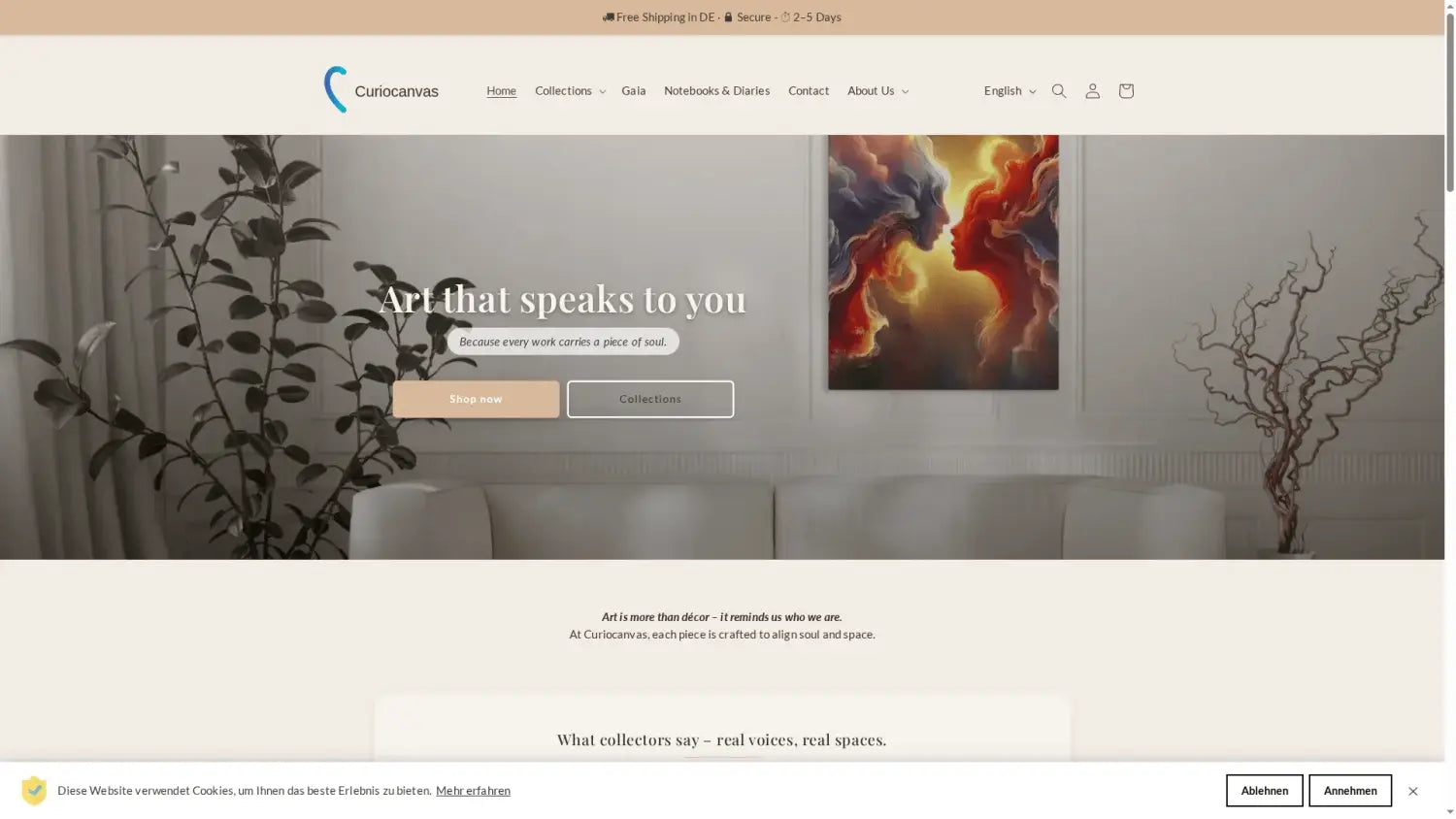
Don't let your rooms remain empty backdrops; transform your walls into living stories. Begin your conscious appreciation of art now and experience how the interplay of aesthetics and emotion enriches your personal world. Visit Curiocanvas and discover artworks that reflect your soul and enchant your everyday life.
Frequently Asked Questions
What is meant by art in everyday life?
Art in everyday life refers to the diverse forms of expression present in our daily lives, from visual art to music. It enriches our experiences and broadens our understanding of emotions and social issues.
How can art influence emotions in everyday life?
Art has the power to express and evoke strong emotions. By experiencing artworks, people can reflect on their feelings, find inspiration, and forge a deeper connection to their own experiences.
To what extent can art influence the design of personal spaces?
Art can significantly shape personal spaces by lending them atmosphere and meaning. Carefully selected artworks can emotionally charge a room and contribute to an individual's identity and aesthetic.
What role does art play in social interaction?
Art functions as a means of communication and promotes exchange between people. It can help initiate social discourse and foster a sense of community, regardless of cultural or linguistic differences.