


Art and Society – How Images Transform Spaces and People
Sometimes a painting or sculpture touches us more deeply than words ever could. Art is not merely decorative; it reveals itself as a socially formative force , creating emotional resonance between individuals and communities. Those who understand art as a mirror of their own longings and as a tool for creating genuine, meaningful living spaces discover ways to experience themselves and social processes anew and to shape them in a meaningful way.
Table of contents
- What art means in a social context
- Emotional resonance and mirror of identity
- Art forms: From classical to digital
- Experiencing spiritual and symbolic dimensions
- Social responsibility and impact on communities
Key findings
| Point | Details |
|---|---|
| Art as a social tool | Art actively influences social processes and promotes critical thinking and transformation. |
| Emotional Resonance | Art reflects individual and collective identities and promotes empathy between people. |
| Diversity of art forms | Digital and traditional art forms creatively expand the possibilities of expression and open up new spaces for dialogue. |
| Social responsibility | Artistic interventions contribute to democratic development and social justice. |
What art means in a social context
Art is far more than just decoration on the wall. It is a dynamic instrument of social transformation that fundamentally alters our perception and consciousness. Artistic activity can shape social developments by making deep-seated structures and relationships visible.
The expanded concept of art, as developed by Joseph Beuys, understands art as social sculpture . This means that artistic processes are not limited to the creation of objects, but actively influence societal processes of shaping society. Art is understood here as a living dialogue that:
- Emotional spaces open
- Critical thinking promotes
- Societal narratives questioned
- Transformation enables
The social significance of art lies not in the perfection of the work, but in its ability to express feelings and ideas beyond words . It functions as a mirror of our collective experience, revealing hidden structures and prompting people to reflect.
Pro tip: Don't view art as passive decoration, but as an active means of communication that can initiate social change processes.
Emotional resonance and mirror of identity
Art functions as a profoundly emotional medium that makes our inner landscapes visible and reflects social contexts. Emotional resonance arises as an ethical principle that enables empathy and mutual understanding between people.
From a cultural studies perspective , individual identity develops through artistic narratives that merge personal and collective experiences. Art acts as a mirror that reflects:
- depicts biographical experiences
- Social networks visualized
- Uncovers emotional depths
- Shared memories conveyed
The complexity of artistic identity formation is evident in the ability to reflect on societal memories . Through artistic forms of expression, individual experiences are embedded in a larger social context, enabling people to better understand and interpret their own identity.
Pro tip: Consider art as a personal mirror that helps you to explore and understand your own emotions and experiences more deeply.
Art forms: From classical to digital
The art world is constantly evolving and reflects technological advances. Digital art forms expand traditional modes of expression by creatively integrating new media and technologies.
Artistic developments encompass a wide range of forms of expression, spanning from classical to digital techniques:
- Traditional painting and sculpture
- Interactive digital installations
- Algorithmic art generation
- Virtual reality art projects
- Generative computer art
The transition between classical and digital art forms shows how art responds to technological innovations . While traditional methods embody craftsmanship and emotional depth, digital techniques open up entirely new dimensions of artistic creativity.
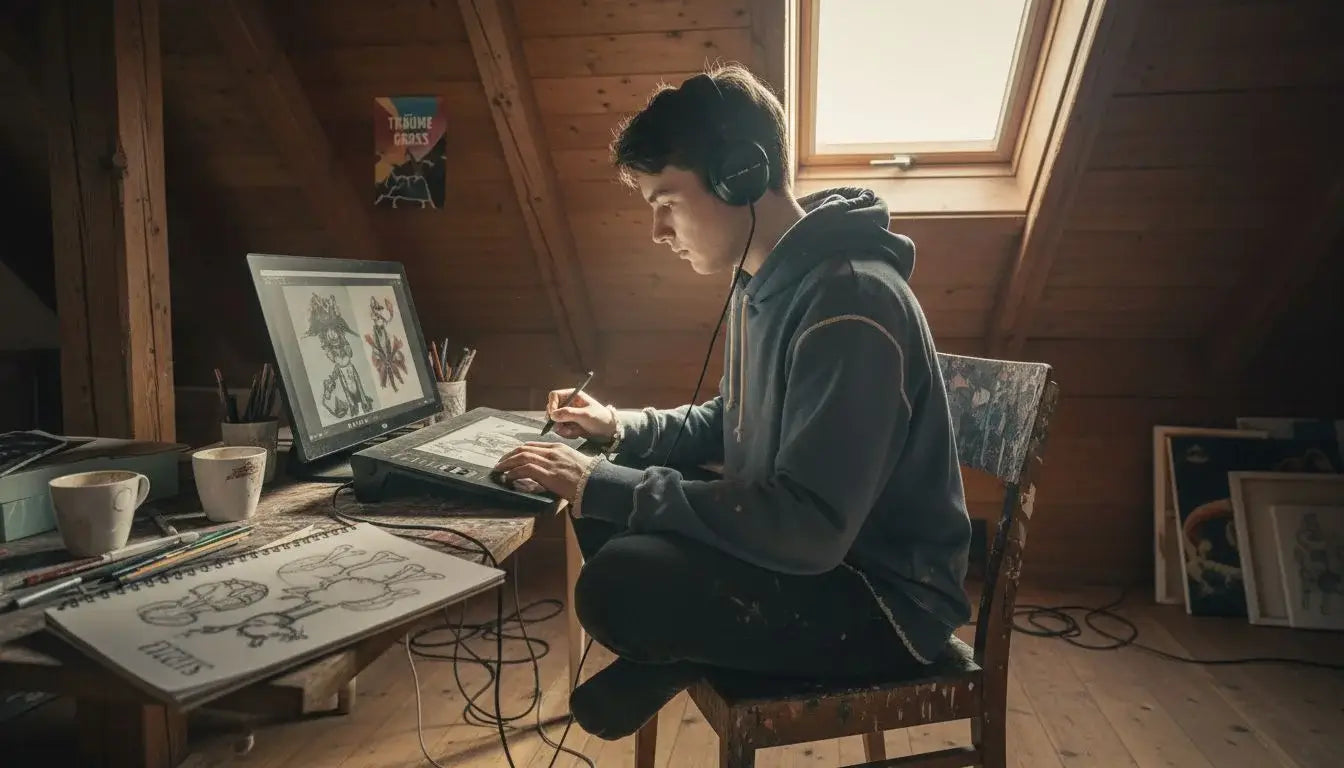
Technology is understood not as a replacement, but as an additional tool that expands and democratizes artistic expression. Digital platforms enable artists to overcome boundaries and initiate global dialogues.
Pro tip: Don't view different art forms as opposites, but as complementary ways of expressing human creativity.
Here is an overview of how different art forms influence society and the individual:
| art form | Impact on society | Influence on identity |
|---|---|---|
| Classical painting | Promotes cultural heritage | Reflects personal values |
| Digital art | Create new communication spaces | Allows experimental self-expression |
| Social Sculpture | Stimulates social change | Initiates collective identity formation |
| Symbolist art | Expands spiritual perspectives | Encounters archetypal themes |
Experiencing spiritual and symbolic dimensions
Art is more than a visual experience – it is a portal to the inner world, enabling spiritual self-reflection . Symbolic artworks transcend mere representation and open up spaces for deeper levels of meaning.
Spiritual languages exert their influence through various forms of expression:
- Allegorical visual metaphors
- Mystical color symbolism
- Archetypes of the collective imagination
- Abstract spiritual compositions
- Transformative visual narratives
Symbolism (as an art movement) understands art as a window to a deeper reality. Artworks become media that connect personal emotions with universal spiritual dimensions, thereby pointing beyond sensory perception.
Spiritual art builds bridges between individual experience and collective consciousness. It invites the viewer not only to see, but also to feel, reflect, and explore inner landscapes.
Pro tip: Take your time to look at works of art not just with your eyes, but with your heart, and to explore their symbolic depth.
Social responsibility and impact on communities
Art is more than an aesthetic phenomenon – it is a powerful instrument of social transformation. Social sculpture describes art as a social force for shaping society , in which creative action forms the basis for social change.
Artistic interventions can influence social processes in a variety of ways:
- Promoting democratic dialogue
- Making marginalized perspectives visible
- Creating inclusive meeting spaces
- Critical reflection on social structures
- Strengthening collective resilience
Art makes a significant contribution to the development of democracy by creating spaces for diversity, encounter, and social discourse. Artistic engagement thus becomes a tool for social responsibility that transcends aesthetic boundaries.
The impact of artistic projects lies in their ability to connect people, foster empathy, and challenge societal narratives. Art thus becomes a medium for collective self-understanding and social transformation.
The following overview summarizes the impact of art on social processes:
| aspect | Social impact | Exemplary implementation |
|---|---|---|
| Democratic Dialogue | Encourages open communication | Participatory workshops with art events |
| Inclusion | Promotes diversity and inclusion | Joint mural projects |
| Collective resilience | Strengthens community awareness | Art in public spaces |
| Critical reflection | It questions societal narratives. | Installations relating to current debates |
Pro tip: Don't view art as an isolated event, but as a living process of social shaping and communication.
Experience art as transformation in your own spaces
This article explores how art transforms emotions and social spaces, making identity and shared experiences tangible. The challenge often lies in finding works that are not merely decorative but possess deep emotional resonance and symbolic depth. Art must speak like a mirror to the soul and make social change visible. This is where Curiocanvas comes in, with a selection of artworks that address precisely these themes of emotion, mythology, and human awakening. Discover our collection of artworks that not only beautify spaces but also invite reflection and feeling.
Let your walls tell stories and create not just decoration, but vibrant spaces for dialogue and inner exploration with our art. Our Holiday Bundles 2025 Wall Stories Full of Light – Curiocanvas – bring together inspiring motifs that will transform your home into a powerful space of change. Don't wait for external change to happen; your personal transformation begins now at curiocanvas.de – choose art that is more than just art and fills your everyday life with meaning.
Frequently Asked Questions
What does Joseph Beuys' expanded concept of art mean?
Joseph Beuys' expanded concept of art understands art as social sculpture, which is not limited to the creation of objects but actively influences social design processes.
How does art promote an understanding of identity?
Art acts as a mirror, reflecting biographical experiences, visualizing social networks, and revealing emotional depths, allowing people to better understand their identity.
What role does digital art play in today's society?
Digital art expands traditional forms of expression, enables new forms of interaction and creates spaces for global dialogues, while integrating technological innovations.
How does art contribute to social transformation?
Art promotes democratic dialogue, makes marginalized perspectives visible and creates inclusive spaces for encounters, thus playing an important role in social change processes.
Recommendation
- Why great works of art touch our inner selves – Curiocanvas
- What is Art History? Complete Guide 2025 – Curiocanvas
- Art and interior design: Everything you need to know – Curiocanvas
- Symbolic power of images: How art spaces gain soul – Curiocanvas
- What Is Fashion Curation? Complete Expert Overview
- Origin of Streetwear Culture: Roots, Impact, Evolution – BlackWisp.Studio
- La Influencia de la Cultura Urbana en la Moda Masculina