


7 inspiring decorating ideas with art for your home
Over 60 percent of people in Germany desire individually designed living spaces that are more than just functional. Art with personal symbolism offers precisely this possibility, transforming familiar rooms into places of inner inspiration. Discover how selected artworks can not only reflect your aesthetic side but also your spiritual development, giving each room a unique character.
Table of contents
- 1. Personal symbolism: Choosing art with individual meaning
- 2. Spatial effect: Using art strategically to create atmosphere
- 3. Color harmony: Coordinating the colors of the art with the furnishings
- 4. Wall design: Pictures as a central design element
- 5. Mix of styles: Combining modern and mythological art
- 6. Minimal luxury: Place art selectively and in a reduced manner.
- 7. Spiritual Accents: Using Art for Mindfulness and Inspiration
Summary overview
| Key finding | Explanation |
|---|---|
| 1. Art reflects personal meaning | Choose artworks that create an emotional resonance with your identity and experiences. |
| 2. Art influences the atmosphere of a room | By strategically placing artworks, you can significantly change the atmosphere in a room. |
| 3. Color harmony requires planning. | Make sure to match the colors of your artwork to those of your decor to create a uniform look. |
| 4. A wall of pictures tells stories | Design your gallery wall with art that represents your personal values and experiences. |
| 5. Minimalism focuses the impression | Choose a few, but meaningful, works of art to achieve maximum expression and impact. |
1. Personal symbolism: Choosing art with individual meaning
Choosing art for your home is about more than just decoration. It's a deeply personal journey of self-discovery and self-expression. Art can be a window into your inner world, revealing your emotions, dreams, and hidden aspects of your personality.
The psychodynamic perspective shows that artworks are far more than aesthetic objects. They are an expression of our deeper, subjective meanings , reflecting our identity and life experiences. Every symbol in a work of art carries a specific meaning that arises from your personal context.
When selecting artwork, you should not only consider its visual aesthetics, but also the emotional resonance it evokes in you. Ask yourself: What memories does this artwork awaken? What feelings or dreams does it reflect? An authentic work of art should tell a story that only you fully understand.
Observe your initial emotional reaction. Do you feel an inexplicable connection? Does the image evoke a deep inner movement? These intuitive signals are signposts to a meaningful art selection that reflects your personal development and spirituality.
Pro tip: Have a short reflective conversation with yourself about the artwork and write down your spontaneous thoughts and feelings to explore its deeper personal meaning.
2. Spatial effect: Using art strategically to create atmosphere
Art is more than just a decorative addition to your home. It is a powerful tool for shaping emotions and atmosphere. The psychology of space shows that art can have a direct influence on our feelings and behavior .
Every room tells a story, and art can be the key to shaping that story. Through the thoughtful placement and selection of artwork, you can completely transform the mood and energy of a space. Warm colors can convey a sense of security, while bold contrasts create dynamism and vibrancy.
When selecting artwork to set the mood, pay particular attention to its color effect and subject matter. Soft, pastel-colored paintings with gentle forms create a calming atmosphere, ideal for bedrooms or workspaces. Intense, vibrant artwork with bold colors is perfect for areas where creativity and energy are needed.
Spatial perception is a complex process in which art not only serves a decorative purpose but also shapes the space as an experience. Experiment with different positions and combinations to achieve the desired emotional effect.
Pro tip: Photograph your room before and after placing the art to document and understand the subtle changes in the room's atmosphere.
3. Color harmony: Coordinating the colors of the art with the furnishings
Colors are more than just visual elements. They are a language of emotion and atmosphere that brings your living spaces to life. The art of color harmony is based on precise principles of color combination that go far beyond random juxtapositions.
The basic principle of color harmony lies in the deliberate coordination of artworks and furnishings. A painting with warm earth tones can perfectly complement furniture in similar shades. Complementary colors like blue and orange, or analogous colors like various shades of blue, create a balanced and inviting atmosphere.
When coordinating colors, consider the basic principles of the color wheel. Choose artwork that either picks up on the dominant colors of your decor or deliberately creates contrasting accents. A minimalist living room with gray tones gains vibrancy from a bright painting with bold colors.
Experiment with color intensities and pay attention to the interplay of hues. Subdued background colors make vibrant artworks stand out, while too many intense colors can overwhelm a room.
Pro tip: Take a photo of your room and use image editing software to test virtual color combinations before making final decisions.
4. Wall design: Pictures as a central design element
A gallery wall is more than just decoration. It's a personal narrative that brings your life story and aesthetic directly to your walls. The art of wall design can completely transform rooms, giving them structure and personality .
There are crucial principles to consider when designing a gallery wall. Ideally, the center of the artwork should be placed at eye level to ensure a harmonious visual experience. Experiment with different arrangement styles, from symmetrical to unconventionally dynamic.
Decorating your walls with pictures allows you to personalize rooms and create a unique, welcoming atmosphere. Choose artworks that complement each other and tell a visual story. Pay attention to a balanced color scheme and varying frame sizes to generate visual interest and create visual interest.
Remember that every picture carries meaning. A well-designed gallery wall speaks not only to your aesthetic, but also to your values, experiences, and dreams.
Pro tip: Before final assembly, create a paper template of the planned picture wall to visualize the composition and arrangement in advance.
5. Mix of styles: Combining modern and mythological art
Art thrives on dialogues between past and present. The fusion of modern art styles with mythological motifs creates a captivating visual language that fills spaces with depth and meaning.
Modern adaptations of ancient myths allow for a creative interpretation of cultural narratives. Imagine how a minimalist abstract painting would look next to a classical depiction of Prometheus or a modern retelling of Greek heroic tales. This combination creates a fascinating visual dialogue between tradition and innovation.
When combining images, pay attention to harmonious color palettes and complementary frame designs. A contemporary black and white photograph can perfectly complement a vividly colored mythological depiction. The key lies in the balance between contrast and unity.
Mythological art brings archetypal stories into your spaces. It symbolizes universal human experiences and lends your home a deeper emotional dimension. Choose pieces that are not only aesthetically pleasing but also resonate with you personally.
Pro tip: Experiment with picture frames in different materials such as wood, metal or acrylic to create additional moments of tension between modern and mythological artworks.
6. Minimal luxury: Place art selectively and in a reduced manner.
Minimalist luxury doesn't mean deprivation, but rather targeted perfection. The art of reduced design focuses on functionality and clean lines to create spaces with maximum impact.
The philosophy behind minimalist art placement is: less is more. Choose artworks with a precise intention. A single high-quality painting can convey more expression than a cluttered wall. Focus on works with strong message and a reduced formal language.
A neutral color palette plays a crucial role. Creamy white or light gray walls are brought to life by strategically placed artwork. A minimalist painting with bold colors can serve as a focal point and transform the entire room.
Pay attention to the lighting. Position artworks so that natural and artificial light optimally enhance their effect. A single piece in the right place can define the entire atmosphere of a room.
Pro tip: Create a deliberate contrast by placing a high-quality work of art in front of a completely neutral wall and highlighting it with targeted lighting.
7. Spiritual Accents: Using Art for Mindfulness and Inspiration
Art is more than a visual experience. It is a portal to inner peace and self-reflection. Mindfulness can be fostered through the conscious contemplation of artworks , by fully opening ourselves to the present moment.
By concentrating on and observing works of art, you activate a deep meditative practice. Let your gaze gently glide over lines, shapes, and colors. Feel how your attention calms down and thoughts drift by without judgment.
Consciously place artworks in locations where you want to practice mindfulness daily. An inspiring picture in your meditation corner or a symbolic artwork in your study can serve as an anchor for presence and inner peace.
Art can be a window to self-discovery. Choose works that tell a deeper story and touch you emotionally. These spiritual touches transform spaces from mere decoration into places of inspiration and reflection.
Pro tip: Take three minutes each day to consciously and without distraction observe a work of art and perceive what it evokes in you.
NO_TABLE
Art that transforms your spaces and soul
Experience how art not only adorns your walls but also reflects your personal story and inner resonance. The challenge of choosing art that unfolds both symbolic meaning and atmospheric effect can be mastered with Curiocanvas' carefully curated collection. Our works uniquely combine personal symbolism , harmonious color schemes , and spiritual touches .
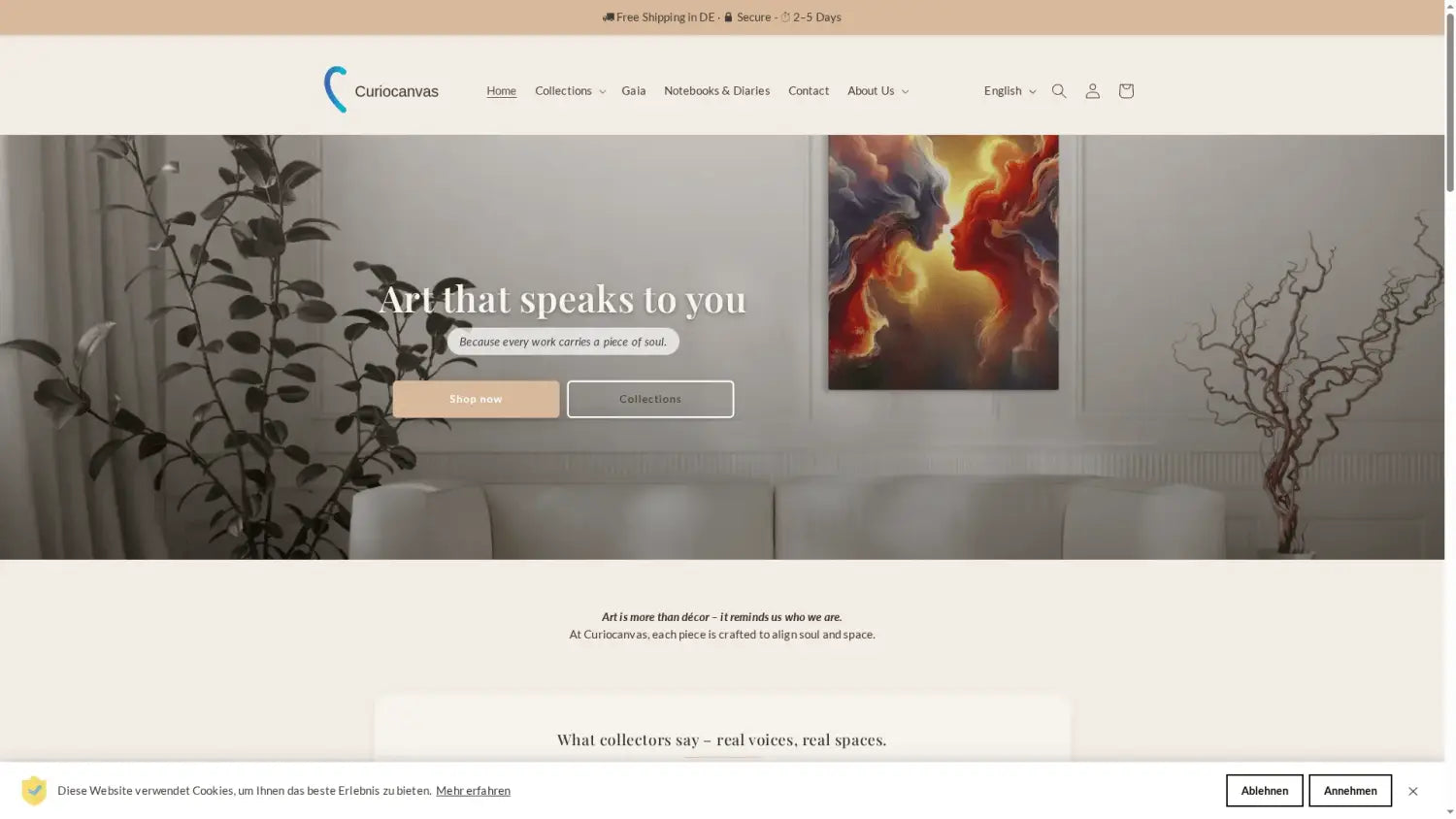
Immerse yourself in the world of artwork as a mirror of your soul. Discover the Curiocanvas homepage , where artworks resonate with your soul and fill spaces with meaning. Explore our Gaia Collection – Curiocanvas for inspiring wall stories, or let your thoughts flow in our Poetic Notebooks for Thoughts and Dreams – Curiocanvas . Visit https://www.curiocanvas.de/ now and transform spaces into personal art poetry with emotional depth and aesthetic elegance.
Frequently Asked Questions
How do I choose art that has personal meaning for me?
To choose art that holds personal meaning for you, ask yourself what emotions and memories a work of art evokes. Jot down your spontaneous thoughts while viewing it to uncover its deeper meaning.
Which color palettes should I consider when selecting art?
Make sure to select artwork that harmonizes with the colors of your decor. Use a color wheel to find matching or complementary colors, and experiment with different shades to create a harmonious atmosphere.
How do I create a gallery wall that tells my personal story?
To create an impressive gallery wall, choose artworks that interact with each other and form a visual narrative. Be sure to vary the arrangement and spacing of the pictures to achieve a dynamic overall effect.
How can I use art to specifically change the mood of a room?
To influence the mood of a room with art, choose pieces based on the emotions you wish to evoke. Place soft, calming images in bedrooms and vibrant, bold artwork in creative spaces to create the desired atmosphere.
What role does minimalism play in art placement?
Minimalism in art placement means selecting targeted, impactful pieces and avoiding clutter. Place a single, high-quality artwork on a neutral wall for maximum visual impact and to enliven the room.
Recommendation
- Beautify your living room with art: Your unique style – Curiocanvas
- Creating a gallery at home: Art as an expression of the soul – Curiocanvas
- Discover 7 benefits of wall art for the soul and home – Curiocanvas
- Art and interior design: Everything you need to know – Curiocanvas
- 7 Creative ideas for surprise parties: Inspiration and tips – Kadopapier.net