


Art as a search for meaning – paths to inner fulfillment
The rapid changes in society and culture are clearly reflected in art. Especially in times of upheaval, art becomes a voice for the individual and collective search for meaning. Over 60 percent of all art enthusiasts report using artworks as a gateway to their own feelings and questions about life. This article explores different perspectives on how painting, performance, photography, and other art forms can pave the way to deeper self-knowledge.
Table of contents
- Art as a search for meaning in changing times
- Emotion and symbolism as a mirror of the soul
- Personal and collective paths to self-discovery
- Which art forms enable the search for meaning
- Avoiding mistakes: Art as a mass-produced commodity versus expression
Key findings
| Point | Details |
|---|---|
| Meaning of art | Art serves as a medium for self-reflection and social transformation, especially during times of social upheaval. |
| Emotional Resonance | Works of art should evoke emotions and not just be decorative; true art conveys deeper human experiences. |
| Individual design | Creating a personal art space promotes self-discovery and emotional exploration. |
| Authenticity of art | Authentic art arises from inner necessity and offers an individual connection in contrast to mass-produced goods. |
Art as a search for meaning in changing times
Art has evolved over centuries as a dynamic medium for human self-reflection and societal transformation. Our perception of artistic expression is constantly changing, reflecting the complex transformations of our culture. Current research shows how artistic expression evolves in parallel with societal developments , underscoring the profound connection between art and human experience.
The significance of art as a search for meaning becomes particularly evident in times of social upheaval. Artists function not only as observers but also as active shapers of cultural discourse. In periods of intense social crisis, art becomes a critical instrument of reflection and transformation , helping us to understand and process complex emotional states.
Artistic change manifests itself not only in techniques and materials, but above all in the underlying intention. From the Renaissance to the digital present, artists have consistently sought to explore existential questions: Who are we? What does human existence mean? How do we navigate the complexity of our experiences? Art thus becomes a profoundly personal and simultaneously universal means of communication that transcends boundaries and conveys deep human experiences.
Pro tip for art lovers : Don't just look at artworks with your mind, but also open yourself up emotionally. Allow a work of art to touch you without immediately trying to analyze it rationally – often the deepest meaning lies beyond the initial visual impressions.
Emotion and symbolism as a mirror of the soul
Art is a profoundly emotional language that visualizes our innermost feelings and experiences. Recent research shows how colors in art can evoke specific emotional states and moods , highlighting the deep psychological dimension of artistic expression. Every nuance of color, every brushstroke carries an emotional message that goes deeper than mere visual perception.
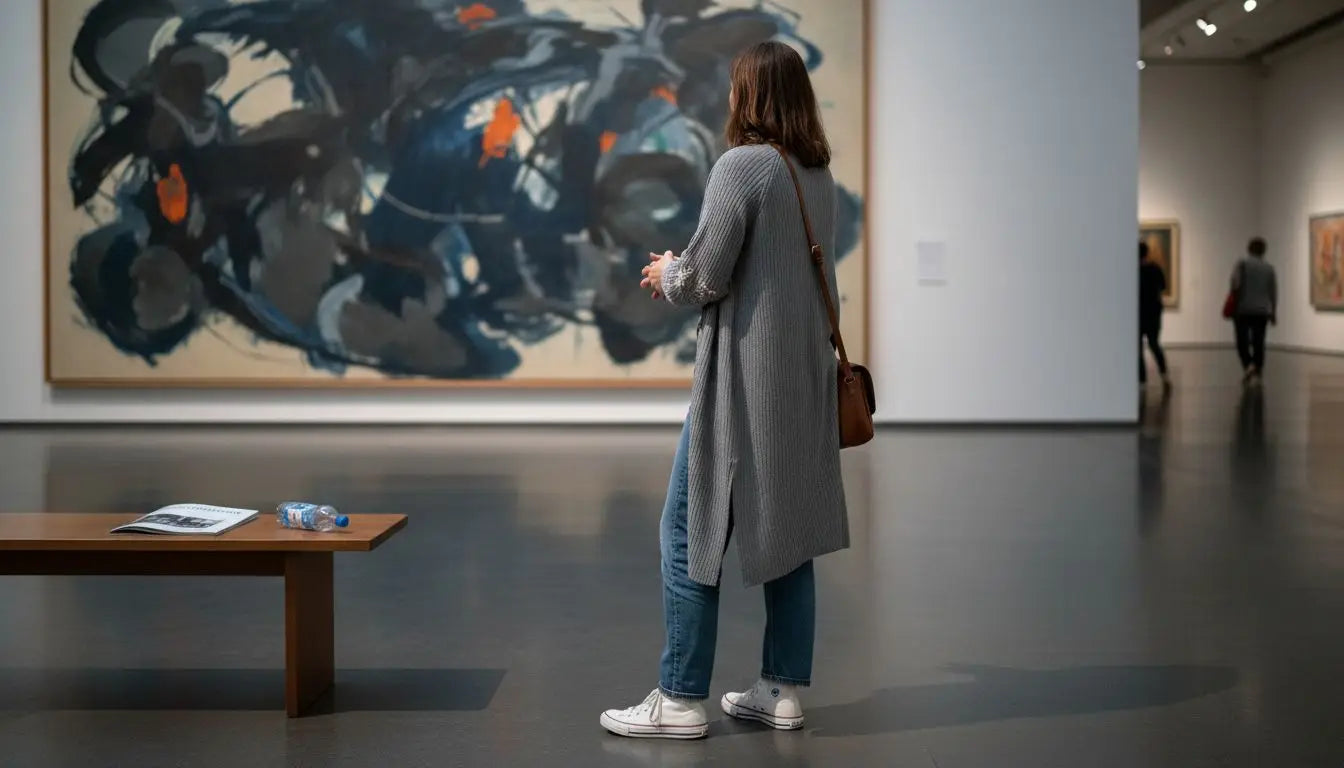
Symbols function as universal means of communication, conveying feelings and thoughts beyond linguistic boundaries. Modern vision-language models can now precisely analyze complex emotional content and symbolic meanings in artworks , highlighting the increasing fusion of technology and artistic interpretation. A work of art thus becomes a multidimensional experiential space in which emotions and symbols communicate with one another.
Symbolic expression in art allows us to explore hidden layers of our psyche. Whether abstract forms, mythological references, or metaphorical representations—every artistic element can provide access to our inner experience. Symbolic artworks offer a unique insight into the complexity of human emotions by expanding our perception beyond the visible.
Pro tip for art enthusiasts : When viewing a work of art, try to suspend your initial rational reaction. Instead, allow the emotional resonance of the image to affect you – often the deepest meanings are revealed beyond the first visual impressions.
Personal and collective paths to self-discovery
The search for self-knowledge is a profoundly human journey, encompassing both individual and collective dimensions. Art offers a unique space for reflection and transformation. Discovering the meaning of artworks can be a deeply personal process of self-discovery , in which we explore and understand our inner landscapes.
While individual art experiences are deeply private, collective narratives simultaneously emerge, connecting us to larger human experiences. Artistic expressions become bridges between personal experiences and universal human emotions. They allow us to understand our own emotions while also becoming part of a larger human story.
Creating a personal art space can be a powerful path to self-discovery. A custom-designed art niche becomes an intimate sanctuary for self-reflection , where we can explore our deepest feelings, dreams, and desires. Each artwork thus becomes a mirror to our inner world, helping us to better understand and accept ourselves.
Pro tip for self-discoverers : Create a personal art space where you can explore your inner landscapes undisturbed. Choose artworks that move you emotionally and aren't just decorative.
Which art forms enable the search for meaning
Every art form offers unique opportunities for self-exploration and spiritual navigation. Painting, for example, allows for a direct translation of inner states into visual landscapes. The conscious choice of subject matter in canvas paintings can become a profoundly personal act of soul art , in which every brushstroke represents a reflection of one's own inner self.
Performance art and dance offer a dynamic form of self-exploration in which the body becomes the medium for the search for meaning. Here, emotions are not merely portrayed, but directly experienced through movement and presence. Art can be understood as a form of mindfulness that helps us arrive in the present moment , observe and understand our inner processes.
Photography and visual arts enable a profound exploration of identity, memory, and transformation. By capturing moments, moods, and transitions, artists create spaces for contemplation. Art, as an expression of the soul, thus becomes a tool for self-knowledge, helping us to grasp and interpret the complexity of our inner worlds.
The following table provides an overview of how different art forms offer specific approaches to the search for meaning:
| art form | Typical characteristics | A contribution to the search for meaning |
|---|---|---|
| painting | Color choice, motif choice | Visualizes inner worlds of experience |
| Performance & Dance | Physical presence | Allows for immediate self-expression |
| photography | Snapshot, light | Captures changes and identity |
| Fine arts | Sculpture, Collage | It opens up new perspectives on the self. |
Pro tip for art lovers : Experiment with different art forms and let the art guide you. Be open to surprising insights and trust the creative process as a path to self-discovery.
Avoiding mistakes: Art as a mass-produced commodity versus expression
The yearning for authentic artistic expression exists at the intersection of industrial reproduction and individual creativity . Mass-produced goods reduce art to decorative objects devoid of deeper meaning, while genuine artistic expression reflects human experience. A work of art should be more than a replaceable wall decoration—it must evoke an emotional response.
Wilhelm Worringer's analyses highlight the fundamental difference between an abstract understanding of art and individual empathy , demonstrating how true art is more than a superficial visual representation. Authentic works of art are not conceived according to marketing strategies or sales figures, but rather spring from a deep inner necessity of the artist.
A personal gallery at home can be a counterpoint to mass-produced art by selecting works that hold personal meaning. It's important to understand art not as decoration, but as a window to the soul – as an expression of emotions, thoughts, and inner landscapes.
This comparison table shows the differences between authentic art and mass-produced goods at a glance:
| criterion | Authentic art | Mass-produced goods |
|---|---|---|
| Motivation for creation | expression of inner necessity | Commercial benefit |
| Emotional impact | Individual response | Superficial decoration |
| Artistic uniqueness | Unique, one-of-a-kind item | Industrialized reproduction |
| Significance for the buyer | Deep personal connection | Short-term optical selection |
Pro tip for art lovers : Buy art with your heart, not your calculator. Choose works that move you emotionally and tell a story, rather than just looking beautiful.
Discover art as a path to inner fulfillment
The search for meaning and self-discovery is a profound human challenge. As described in the article, art offers a unique opportunity to experience emotions and explore hidden layers of our soul. If you yearn for an expression that transcends mere decoration, you'll find artistic works at Curiocanvas that create precisely this connection. Our wall art gallery, Flames Kisses Time and Compass – Curiocanvas, combines symbolic motifs with aesthetic depth and invites you to transform your spaces into personal sanctuaries for self-reflection.

Feel the difference when art not only adorns your wall but touches your heart. Be inspired by artwork as a mirror of your soul. Discover the Curiocanvas homepage and find the artwork that accompanies your inner journey. Don't wait for the perfect moment to create your personal art world. Begin your search for expression and meaning now at https://www.curiocanvas.de/ and immerse yourself in a world where visual beauty meets emotional resonance.
Frequently Asked Questions
How can art be used as a tool for self-discovery?
Art allows us to explore and reflect on our inner landscapes. Through creative expression, we can visualize and better understand emotional states.
Which art forms are best suited for an emotional exploration?
Painting, performance art, dance and photography are particularly effective because they offer different approaches to the search for meaning and enable deeper emotional experiences.
What are the differences between authentic art and mass-produced goods?
True art arises from an inner necessity of the artist and has an emotional resonance, while mass-produced goods are often merely decorative objects without deeper meaning.
How can I design my own art environment to encourage self-discovery?
Create a personal art space that speaks to your emotional needs. Choose artworks that move you and encourage self-reflection.