


Art as self-reflection: A guide to creative self-discovery
Only about 36 percent of Germans say that their interior design reflects their personality. Those who see art as a mirror of the soul and a path to inner balance often feel the need for a space that fosters individual creativity and genuine emotional depth. Discover how you can create a place where spirituality, self-reflection, and inspiration come alive every day through conscious design and authentic artwork.
Table of contents
- Step 1: Create a mindful space for your creativity
- Step 2: Consciously define your emotional starting point
- Step 3: Choose symbolic motifs that appeal to you.
- Step 4: Express your feelings artistically
- Step 5: Reflect on the resulting work with an open mind.
Quick summary
| Important point | Explanation |
|---|---|
| 1. Create a mindful creative space | Create a space that fosters your creativity and establishes an emotional connection. Pay attention to lighting and a calm atmosphere. |
| 2. Reflect on your emotional starting point | Notice your current feelings and write them down to use as a basis for creative work. |
| 3. Choose symbolic motifs for your art | Find motifs with personal meaning that reflect your emotions and experiment with forms of expression. |
| 4. Express your feelings artistically | Let your emotions run free when creating art, without being guided by perfectionism. |
| 5. Reflect on your artwork afterwards | Look at your work without judgment and record your impressions to gain new insights. |
Step 1: Create a mindful space for your creativity
To create a mindful space for your creativity, you need more than just a blank wall and some art supplies. It's about creating an area that fosters your inspiration and inner peace.
Start by finding a place in your home that gives you a sense of peace and retreat. Art and interior design offer numerous opportunities to consciously shape your creative space. Pay attention to natural light, a calm atmosphere, and minimal distractions. Make sure your space is not only functional but also creates an emotional connection to your creative practice.
Choose elements that appeal to your senses and stimulate your creativity. These could be soft textiles, calming colors, or personal artwork that reflects your inner journey. Perhaps place a seat near a window or set up an easel in a spot where you feel comfortable and inspired.
Pro tip: Regularly cleanse your creative space energetically by using incense or essential oils and consciously breathing for a minute before you begin your creative work.
Here you will find typical room elements and their effect on creativity:
| Spatial element | Emotional impact | Creative Use |
|---|---|---|
| Natural light | Promotes calm and clarity | Increases concentration and inspiration |
| Soft textiles | Provides a sense of security | Supports relaxed working |
| My own artwork | Creates identification | Stimulates personal expression |
Step 2: Consciously define your emotional starting point
This step involves consciously perceiving and reflecting on your current feelings and emotional states. Developing socio-emotional skills is crucial for a deep, creative process of self-discovery.
Take time for an honest assessment of your current emotional state. Use a notebook or journal and write down your feelings without judgment. Ask yourself: Which emotions are currently dominating my daily life? Where do I feel inner tension or blockages? What issues are currently on my mind? Pay attention to bodily sensations and subtle emotional signals.
A deliberate moment of self-reflection can help you understand your inner states and use them as a starting point for your artistic work. Don't forget that emotions are dynamic and constantly changing.
Pro tip: Introduce a daily five-minute meditation to explore your emotional map and consciously perceive feelings without judging them.
Step 3: Choose symbolic motifs that appeal to you.
This step involves finding visual motifs that hold deeper emotional meaning for you and reflect your inner journey. Symbolic artworks can visualize our inner landscape in a unique way .
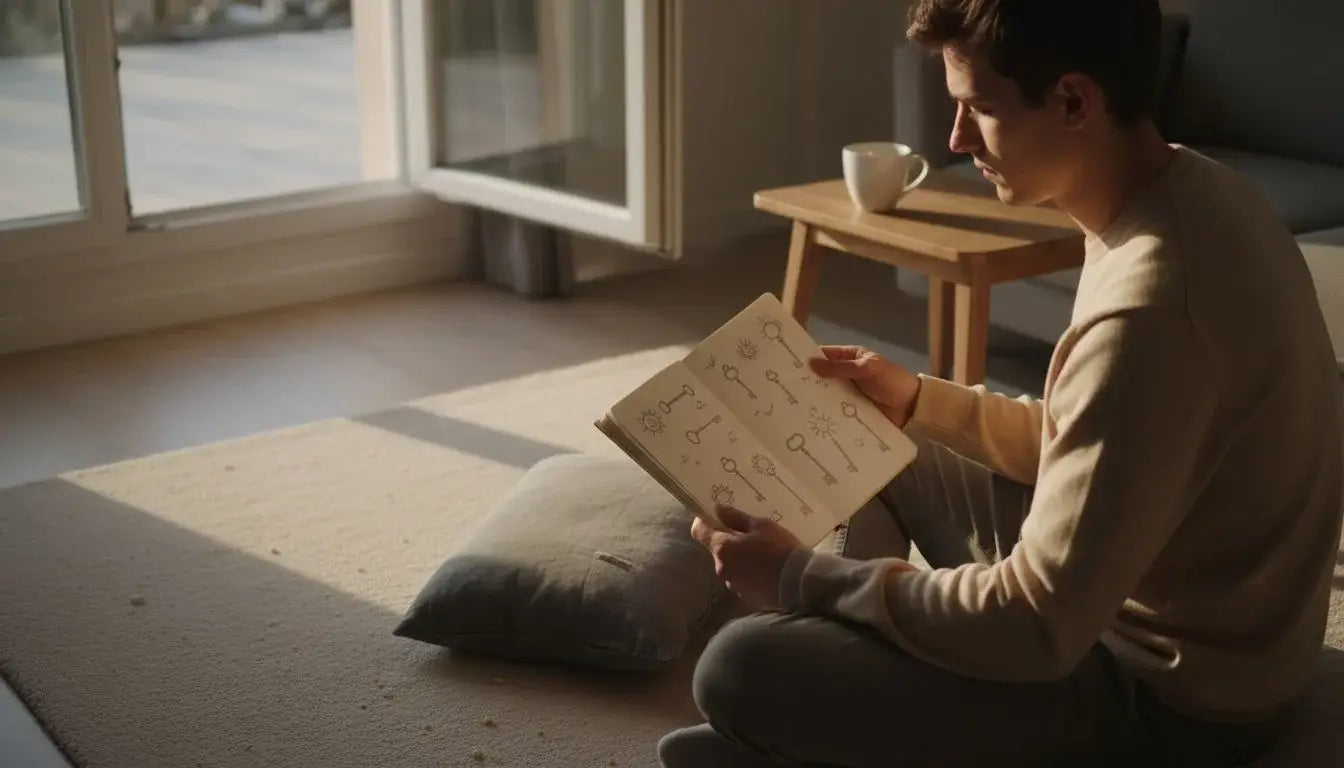
Begin by exploring your inner images and feelings. Close your eyes and visualize symbols or elements of nature that represent your current emotions. Perhaps it's a tree with deep roots for stability, a rising sun for hope, or a swirling hurricane for inner transformation. Note these symbols in your reflection journal and sketch out some initial outlines.
Don't let technical perfection or academic art standards limit you. It's about your authentic form of expression. Experiment with different materials and techniques that bring your symbolic motifs to life. Trust your intuitive perception and allow the motifs to emerge organically.
Pro tip: Collect inspirational visual elements in a visual portfolio or digital collage to develop and refine your symbolic visual language.
An overview of how typical symbols in art can be interpreted:
| symbol | Emotional significance | Artistic interpretation |
|---|---|---|
| Tree | Stability, growth | Layers, strong lines |
| Sun | Hope, new beginning | Bright colors, radiant shapes |
| hurricane | Change, inner movement | Dynamic brushstrokes |
Step 4: Express your feelings artistically
Now is the moment to translate your previously reflected emotions into a visible artistic form. A meaningful gallery wall can be the perfect place to visualize your inner states .
Begin with an intuitive approach. Trust your initial impulses when painting, drawing, or creating collages. Experiment with colors that reflect your current feelings. Bold reds for passion and energy, soft blues for calm and reflection, or earthy greens for growth and healing. Allow your art form to emerge organically without over-controlling it.
Your artistic expression doesn't have to be perfect. It's about the process of self-discovery and emotional release. Be kind to yourself and accept every brushstroke as part of your journey.
Pro tip: Photograph your artwork in different lighting conditions to document its emotional development and reflect on it later.
Step 5: Reflect on the resulting work with an open mind.
This step is crucial for your artistic self-discovery. Critical reflection on your creative work helps you assess its quality and relevance .
First, observe your artwork without judgment. Let go of critical thoughts and simply allow yourself to be guided by the emotions and energies you have created. Observe which feelings and associations arise within you as you view the work. Note your impressions in your reflection journal without interpreting or evaluating them.
An open mind also means looking at your work from different perspectives. Rotate the image 90 degrees, view it from a distance, or in a mirror. This change in perspective can reveal surprising new insights and levels of interpretation.
Pro tip: Wait at least 48 hours before making a final interpretation of your artwork to gain distance and emotional neutrality.
Discover art as a mirror of your soul and foster your creative self-awareness.
The conscious connection between emotion and expression is the key to profound self-reflection. As you learn in this article how to transform your feelings into powerful symbolic motifs and make your inner world visible, the "Artwork as a Mirror of Your Soul" Discover Homepage – Curiocanvas offers you just the right inspiration. Our selected artworks speak to your soul and transform your spaces into places full of meaning and personal growth.

Take this opportunity now and be inspired by minimalist, symbolic wall art. Discover at Curiocanvas how you can enrich your emotional journey with aesthetic images. Learn more in our Wall Art Gallery Flames Kisses Time and Compass – Curiocanvas and create a wall with meaningful art that reflects your creative self-discovery.
Frequently Asked Questions
How can I create a mindful space for creative self-reflection?
To create a mindful space for creative self-reflection, choose a spot in your home that exudes calm and inspiration. Ensure the room is well-lit and has minimal distractions. Experiment with colors and textiles to create a soothing atmosphere.
Which methods help me define my emotional starting point?
Use a notebook to write down your current feelings and emotional states. Ask yourself which emotions dominate your daily life and where inner tensions lie. Take five minutes each day for a short meditation to consciously perceive your emotions.
What symbolic motifs can I choose for my creative work?
Consider which images or symbols represent your current emotions. For example, visualize a tree for stability or a sun for hope. Note these symbols in a reflection journal and sketch out initial ideas to start your creative process.
How do I express my feelings artistically?
Trust your initial impulses when painting or drawing to express your emotions. Choose colors that reflect your current feelings and let the art emerge organically. Practice self-acceptance and see each brushstroke as part of your personal journey.
How do I properly reflect on my completed artwork?
First, observe your artwork without judgment. Record your impressions in a reflection journal and allow space for new insights by viewing the work from different perspectives. Wait at least 48 hours before making a final interpretation to gain emotional neutrality.