


Abstract art – Why it deeply touches us
More than 60 percent of people in Germany and the Netherlands are looking for wall decorations that not only beautify a room but also reflect their feelings. Abstract art moves far more than just the eye – it creates a connection to one's inner world and brings harmony to the home. In this article, you will learn how colors, shapes, and famous works fundamentally influence your living environment and how to avoid common mistakes when buying art.
Table of contents
- Abstract art: meaning and basic ideas
- Styles and forms of expression explained
- Emotional impact and room atmosphere
- Famous artists and influential works
- Avoid typical mistakes when buying art
Key findings
| Point | Details |
|---|---|
| The meaning of abstract art | Abstract art conveys universal feelings and directly appeals to the emotions of the viewer. |
| Styles of abstract art | Cubism, abstract expressionism, and geometric abstraction are important movements with different forms of expression. |
| Emotional effect of colors | Colors influence the effect of a room: blue has a calming effect, red is energetic, and yellow is friendly. |
| Approach art purchases carefully | Pay attention to provenance and proof of authenticity, as well as the expertise of art experts, when making a purchase. |
Abstract art: meaning and basic ideas
Abstract art is a revolutionary art form that emerged in the early 20th century and completely redefined traditional modes of representation. Art beyond figuration signifies a radical liberation from realistic depictions in favor of a deeper, emotional level of expression.
The fundamental idea of abstract art lies in the conviction that colors, shapes, and lines are independent means of expression. Artists like Wassily Kandinsky and Hilma af Klint understood that art can not only depict but also be directly experienced. They used color compositions and geometric structures to communicate inner states and emotions directly.
The significance of abstract art lies in its ability to convey universal feelings beyond linguistic or cultural boundaries. The emotional impact of color combinations becomes the central artistic means of expression. An abstract painting does not appeal to the intellect, but touches the soul directly.
Pro tip: Look at abstract art with open senses and allow the colors and compositions to directly affect your emotions.
Styles and forms of expression explained
Abstract art encompasses various fascinating styles with diverse forms of expression . From geometric compositions to expressive color landscapes, it offers an enormous range of artistic interpretation.
Cubism, for example, reduces objects to basic geometric forms, while Abstract Expressionism focuses on spontaneous outbursts of emotion. Artists like Jackson Pollock developed so-called Action Painting, in which emotions are expressed directly onto the canvas through wild, expressive brushstrokes. Another significant movement is geometric abstraction , which uses precise forms and clear lines to create complex visual compositions.
Particularly impressive is North American Abstract Expressionism , which foregrounds spontaneity and individual emotional worlds. Artists like Mark Rothko created large fields of color that speak directly to the viewer emotionally and have an almost meditative effect.
Pro tip: When viewing abstract art, take your time, let the colors and shapes affect you, and trust your first emotional reaction.
Here is an overview of important movements in abstract art and their characteristics:
| style | Features | Key representatives |
|---|---|---|
| cubism | Geometric shapes | Pablo Picasso, Georges Braque |
| Abstract Expressionism | Spontaneous color gestures | Jackson Pollock, Mark Rothko |
| Geometric abstraction | Clear lines, areas of color | Piet Mondrian, Hilma af Klint |
| Lyrical abstraction | Poetic color gradients | Wassily Kandinsky, Hans Hartung |
Emotional impact and room atmosphere
Abstract art transforms spaces in an almost magical way – it goes far beyond decorative function and creates a profound emotional atmosphere. Each artwork becomes a catalyst for moods, filling the entire space with life and energy.
The emotional power of abstract art lies in its ability to communicate directly with our feelings. Colors, shapes, and compositions speak a language beyond rational interpretation. Shades of blue can convey tranquility and vastness, shades of red passion and energy. Every nuance creates a subtle vibration that immediately affects the space and the people within it.
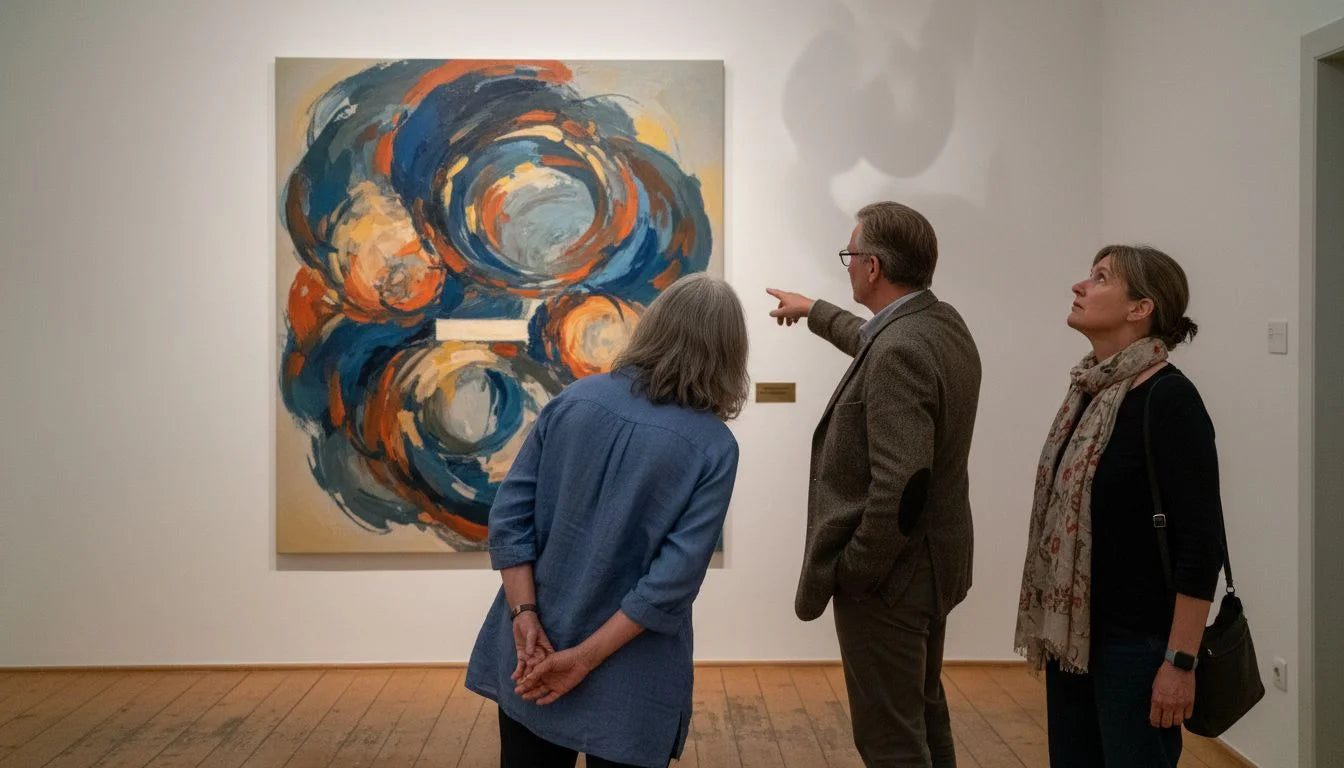
Neuroscientific research shows that abstract art stimulates the brain in more complex ways than representational art. It sparks creativity, triggers unexpected emotional responses, and creates an atmosphere that oscillates between tension and meditation. A large-scale abstract painting can transform a room—it becomes the emotional center, telling stories without words.
Pro tip: Choose abstract artworks that touch you emotionally and whose color scheme matches your room's atmosphere.
The following table illustrates how colors in abstract art contribute to the spatial effect:
| shade | Possible effect | Application example |
|---|---|---|
| Blue | Calming, expansive | Relaxation room, study |
| Red | Energetic, passionate | Living room, creative area |
| Yellow | Invigorating, friendly | Kitchen, entrance area |
| Green | Balancing, harmonious | Bedroom, reading corner |
Famous artists and influential works
The pioneers of abstract art revolutionized the art world by breaking away from representational art and developing a completely new visual language. Wassily Kandinsky, Hilma af Klint, and Piet Mondrian are among the groundbreaking artists who laid the foundation for this art movement.
Wassily Kandinsky is considered one of the most important pioneers. His famous work Composition VII is a masterful example of abstract art that uses color and form as independent means of expression. With his geometric compositions, Piet Mondrian developed a unique style that condensed lines and areas of color into a precise, almost mathematical aesthetic.
Other important artists of abstract expressionism , such as Jackson Pollock, revolutionized the art scene with their action painting technique. Pollock brought dynamism and spontaneity to the canvas by flinging paint directly and wildly onto the canvas, which was laid on the floor. His works are pure emotion that knows no boundaries between artist and artwork.
Pro tip: Visit museums and galleries to experience abstract artworks in their original form and feel their unique energy directly.
Avoid typical mistakes when buying art
Buying art involves legal pitfalls that inexperienced buyers often underestimate. The art of acquiring a suitable work of art requires more than just an emotional connection – it demands diligence, research, and a keen understanding of quality and authenticity.
A common mistake is buying without careful consideration and without verifying the artwork's authenticity. Provenance and proof of origin are crucial. Be sure to request original certificates, signatures, and documentation of provenance. Online purchases carry additional risks: Pay attention to reputable sellers, detailed descriptions, and high-quality images of the artwork.
Consumer protection rights when buying art are complex. Inform yourself beforehand about return rights, warranties, and potential guarantee claims. A professional purchase should always be accompanied by a detailed sales contract that documents authenticity, condition, and any restorations.
Pro tip: Before buying, consult an art expert or gallery owner who can give you professional advice and point out potential pitfalls.
Experience how abstract art touches your soul and transforms your space.
The challenge with abstract art lies in making emotional depth and universal feelings visible. You are looking for art that not only decorates, but speaks directly to your inner feelings through colors, shapes, and compositions. Abstract art creates special atmospheres in a space and speaks to your soul – just as the carefully curated works at Wall Art Gallery Flames Kisses Time and Compass – Curiocanvas reflect this unique connection between aesthetics and emotion.
Immerse yourself in our collection, which unites visual poetry and spiritual symbolism. Let your walls speak and create a vibrant atmosphere full of meaning with art as a mirror of your soul. Discover the Curiocanvas homepage. Find your inspiration today at https://curiocanvas.de/ and transform your spaces with art that truly touches you.
Frequently Asked Questions
What is abstract art?
Abstract art is an art form that breaks away from realistic representations and uses colors, shapes, and lines as independent means of expression. It aims to communicate emotions and inner states directly.
Why does abstract art evoke emotions?
Abstract art speaks to the soul by conveying universal feelings without linguistic or cultural boundaries. The colors and forms create a direct emotional resonance that goes far beyond rational interpretations.
What styles of abstract art are there?
The most important styles include Cubism, Abstract Expressionism, and Geometric Abstraction. Each movement has its own characteristics, such as geometric forms or spontaneous use of color.
How can I use abstract art in my interior design?
Abstract art can transform spaces and create an emotional atmosphere. Choose artworks that resonate with you and complementary color palettes to create the desired mood in your room.
Recommendation
- Why great works of art touch our inner selves – Curiocanvas
- 7 inspiring types of wall art for a meaningful home – Curiocanvas
- Why Art Has Meaning – Effect on Soul and Space – Curiocanvas
- Selecting artwork: The process of finding your soul image – Curiocanvas
- Creative gifts explained: Understanding meanings and ideas – a passion project, Manufaktur