


7 Ways: Art for Self-Discovery - Examples and Methods
More than 60 percent of art lovers in Germany experience a noticeable increase in their emotional well-being through creative processes. Art becomes a personal mirror, revealing hidden feelings and opening up space for authentic self-discovery. In this article, you will learn how intuitive painting and meditative methods serve as keys to new inner clarity and support your individual development in a unique way.
Table of contents
- 1. Intuitive painting as a way to access one's own emotional world
- 2. Meditative drawing techniques for inner peace
- 3. Self-portraits for reflecting on identity
- 4. Symbols and mythology as a mirror of the soul
- 5. Combine free writing and poetry with works of art
- 6. Art appreciation as mindful self-encounter
- 7. Creative Journaling for Personal Development
Quick overview
| Key finding | Explanation |
|---|---|
| 1. Intuitive painting fosters emotions | Intuitive painting allows for the free expression of your inner emotional world and promotes emotional healing. |
| 2. Meditative drawing reduces stress | Meditative drawing techniques can lower cortisol levels and thus reduce stress. |
| 3. Self-portraits reflect identity | Self-portraits help to recognize and understand personal aspects and emotional states. |
| 4. Art appreciation as self-reflection | Mindful art appreciation opens the way to deeper insights into one's own personality and emotions. |
| 5. Creative journaling promotes growth | Creative journaling helps to organize thoughts and support personal growth through open self-reflection. |
1. Intuitive painting as a way to access one's own emotional world
Intuitive painting is more than just a creative activity; it's a profound path of self-exploration and emotional healing. This art form isn't about technical perfection or formal artistic training, but about the free expression of your inner world of feelings.
The process of intuitive painting is based on the idea that every person possesses creative energy just waiting to be discovered. By consciously immersing yourself emotionally in the painting process, you can make hidden emotions visible and develop a deeper connection to yourself.
While painting, you let go of judgments and expectations. You simply follow your impulses; colors and shapes choose themselves intuitively. It's not about creating a perfect work of art, but about opening a space where your feelings can flow freely.
You can easily put intuitive painting into practice. Prepare a quiet space, have a blank sheet of paper ready, and choose materials that inspire you. Close your eyes, take a deep breath, and listen to your inner impulses. Begin to paint without having a specific goal in mind.
Pro tip: Don't set a time limit and let the process take as long as it feels right to you.
2. Meditative drawing techniques for inner peace
Meditative drawing techniques are powerful tools for stress reduction and inner calm. They combine artistic expression with deep relaxation and enable mindful access to oneself.
These special drawing methods, such as Zentangle, are based on repeating patterns and geometric structures. Concentrated drawing calms the mind and lowers cortisol levels, resulting in natural stress reduction.
Meditative drawing isn't about creating perfect artwork, but about the process itself. Let your impulses guide you and draw without judgment. Choose simple shapes and repeat them in different variations.
A particularly effective technique is mandala drawing. Circles and symmetrical patterns help to focus the mind and calm thoughts. Set aside time for this in a quiet place where you won't be disturbed.
Pro tip: Start with short drawing sessions of 10 to 15 minutes and gradually increase the duration of your meditative drawing practice.
3. Self-portraits for reflecting on identity
Self-portraits are more than just artistic representations; they are a powerful tool for self-exploration and identity development. They offer a deep insight into your inner landscape and help you understand and reflect on aspects of your personality.
In art therapy, self-portraits are viewed as a medium for self-observation . They not only serve to depict your outward appearance but also reflect your emotional states, developmental phases, and hidden facets.
Begin your self-portrait without judgment or expectations. Choose materials that feel right to you, such as watercolors, charcoal, or acrylics. Don't focus on perfect proportions, but rather on what you want to express about yourself.
Pay particular attention to details that symbolize your current life situation. Use colors and shapes that represent your emotional world. A self-portrait can make insecurities, hopes, and processes of transformation visible.
Pro tip: Save your self-portraits and create a collection over time to document your personal development.
4. Symbols and mythology as a mirror of the soul
Symbols and mythology are powerful windows into our inner world. They allow deeper access to our hidden feelings, dreams, and archetypes that shape our personality.
In art , symbols serve as keys to cultural and individual identity . They convey meanings that extend far beyond the visible and help us explore and understand our inner landscapes.
Begin your symbolic journey by collecting myths and symbols that resonate with you emotionally. Look for images, stories, or archetypes that evoke a special resonance within you. Paint these symbols or create a collage journal that documents your personal mythological journey.
Each symbol carries a story within it. The phoenix represents transformation, the tree growth, and the snake renewal. Discover which symbols reflect your own life journey and understand their deeper meaning.
Pro tip: Observe which symbols appear in your dreams and write them down as valuable messages from your soul.
5. Combine free writing and poetry with works of art
Combining free writing and artwork opens up a unique path to self-exploration. It is a creative method in which words and visual impressions enter into dialogue and unlock deeper layers of self-awareness.
This integrative practice combines creative writing with intuitive artistic expression , creating a holistic approach to self-reflection. While free writing brings unfiltered thoughts and emotions to the surface, artworks created in parallel can visually complement and deepen these inner processes.
Begin with an inspiring work of art. Observe it carefully and allow associations to arise. Spontaneously write down words, sentences, or poems that the image evokes in you. Experiment with different writing styles, from lyrical fragments to prose passages.
Let yourself be guided by the colors, shapes, and mood of the artwork. Sometimes, this creates surprising poetic dialogues between visual and linguistic expressions that reveal your inner experiences in unexpected ways.
Pro tip: Collect your texts and sketches in a special creative journal to document your artistic development.
6. Art appreciation as mindful self-encounter
Looking at art is more than just superficially viewing pictures. It is a profound journey of self-discovery in which each work of art can serve as a mirror to one's own inner landscape.
Mindful engagement with artworks opens a conscious space for self-reflection. By not just seeing a picture but truly perceiving it, you can discover emotional resonances and hidden aspects of your personality.
Practice art appreciation as meditation. Take time to linger in front of a work of art. Breathe consciously and let your attention gently drift over details. Ask yourself what the image evokes in you, what feelings, memories, or associations arise.
Pay attention not only to the visible elements but also to your inner reactions. A work of art can evoke emotions that may surprise you. Record your thoughts and feelings in a reflection journal.
Pro tip: Consciously choose artworks that touch you emotionally and remain open to surprising insights.
7. Creative Journaling for Personal Development
Creative journaling is a powerful tool for self-exploration that helps you organize your thoughts, reflect on feelings, and promote personal growth.
Various journaling methods allow you to systematically and mindfully accompany your inner development. It's not about writing perfectly, but about connecting with yourself honestly and openly.
Start with simple exercises like a gratitude journal. Write down three things you are grateful for each day. Experiment with different formats such as a five-minute journal, stream of consciousness, or thematic reflections.
Pay attention to your inner impulses. Sometimes write in full sentences, sometimes in bullet points. Sometimes draw sketches or paste in collages. The journal is a space that knows absolutely no rules except those of your own creativity.
Pro tip: Keep your journals and take the time from time to time to read old entries to appreciate your personal development.
The following is a clear summary of the artistic and meditative methods for self-exploration and self-reflection presented in the article.
| Theme | Description | Notes |
|---|---|---|
| Intuitive painting | Expression of inner emotional worlds through free and unjudged design. | A calming place, no time limit, focus on the process rather than the result. |
| Meditative drawing | Stress reduction through repetitive patterns. | Zentangle and mandala methods promote focus and serenity. Short sessions of 10–15 minutes are recommended. |
| Self-portraits | Exploring one's own identity through artistic expression. | Use of different materials, focus on emotions and life phases instead of perfect proportions. |
| Symbols and mythology | Use of mythical symbols for self-exploration. | Collection of emotionally significant symbols, interpretation of dreams, symbols as representation of personal transformation. |
| Free writing and artistic dialogue | A combination of artistic expression and creative writing for self-reflection. | Creating a dialogue between visual and linguistic expression, collected in a creative journal. |
| Art appreciation | Mindful perception of artworks as a method of reflection. | Study artworks intensively and note down the feelings and thoughts that arise. |
| Creative Journaling | Personal development through writing and creative expression in a personal journal. | Gratitude journal, daily reflections, combination of text and images in different formats. |
Discover art as a path to self-discovery and inner clarity
The methods described in the article, such as intuitive painting, symbolic artwork, and creative journaling, help you to make your feelings visible and support your personal development. If you wish to deepen this pursuit of self-discovery, you will find artistic inspiration at Curiocanvas that goes far beyond mere wall decoration. Our "Artwork as a Mirror of the Soul" collection offers profound artworks that speak to your inner world and transform spaces into emotional sanctuaries.
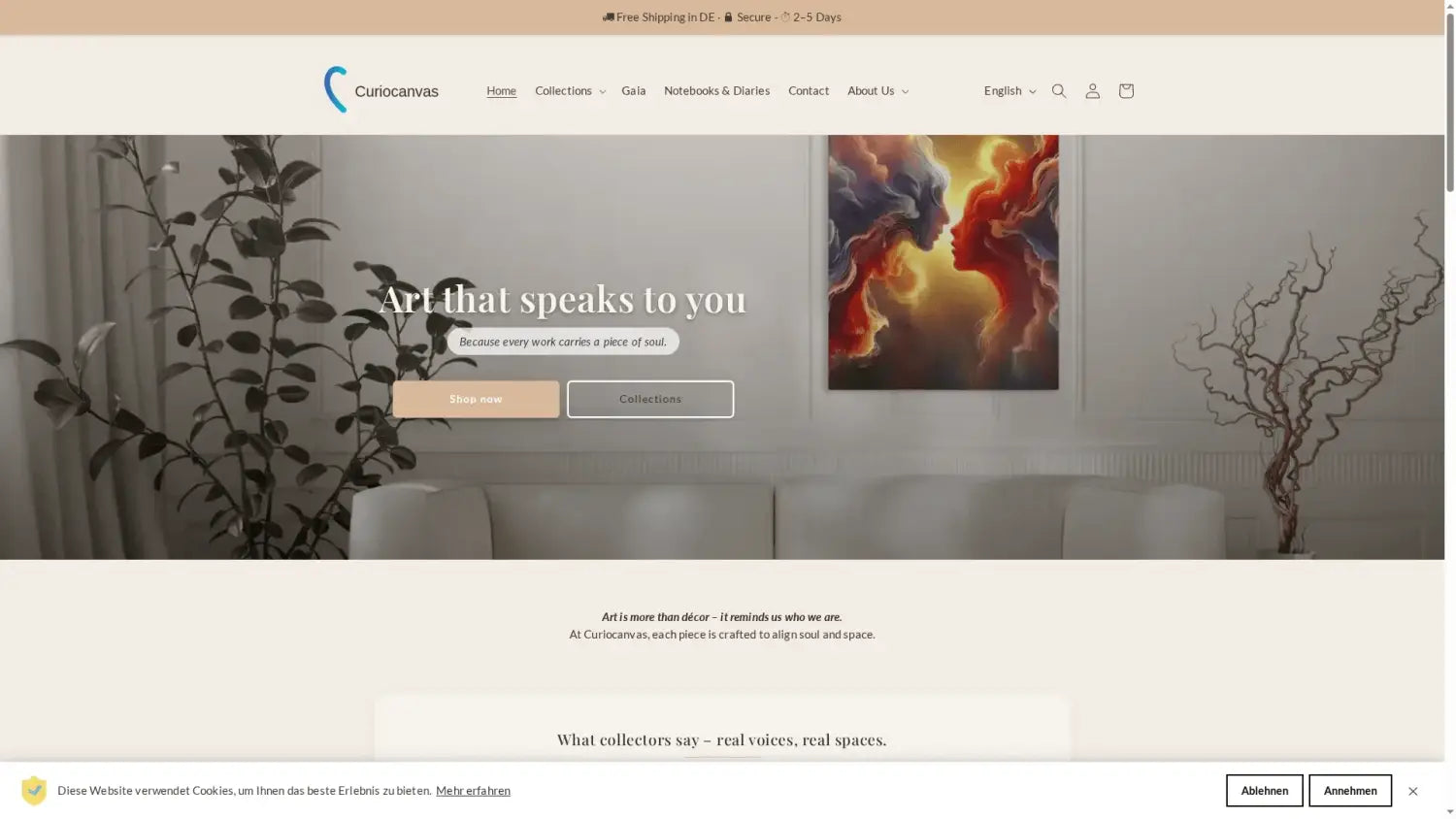
Begin your journey of self-reflection now with our poetic notebooks for thoughts and dreams . Here you can creatively capture your experiences and freely explore your ideas. Become part of a world of art and the soul that inspires and accompanies you daily. Visit Curiocanvas and transform your spaces into vibrant expressions of your identity.
Frequently Asked Questions
What is intuitive painting and how can it help me find myself?
Intuitive painting is a creative method that helps you express your inner feelings. Take time in a quiet space to simply paint without focusing on a specific goal; observe which colors and shapes emerge intuitively.
How can I effectively use meditative drawing techniques?
Meditative drawing techniques, such as Zentangle, allow you to reduce stress and find inner peace. Start with short sessions of 10 to 15 minutes to draw repetitive patterns and calm your mind.
Why are self-portraits helpful for reflecting on my identity?
Self-portraits help you explore different aspects of your personality and understand your emotional development. Start your self-portrait by expressing your feelings without judgment, using materials that interest you.
What are symbols and how can I use them in my art?
Symbols and mythology offer you access to deep inner themes and emotions. Start by collecting myths and symbols that resonate with you and integrate them into your artwork or collages to reflect your personal story.
How can I use creative journaling for my personal development?
Creative journaling is an excellent tool for organizing thoughts and feelings and fostering personal growth. Simply start by writing down three things you are grateful for each day, and vary your journaling techniques to express your creativity.
How do I practice art appreciation as a method for self-discovery?
Viewing art allows you to experience artworks mindfully and discover emotional resonances. Take your time with a work of art and reflect on your inner feelings and memories that arise when looking at it.
Recommendation
- Art as self-reflection: A guide to creative self-discovery – Curiocanvas
- Art as a lifestyle explained: More meaning, more depth – Curiocanvas
- Art and the Transformation of Consciousness – How Art Shapes Our Inner Lives – Curiocanvas
- Selecting artwork: The process of finding your soul image – Curiocanvas
- 7 Ways Crochet Boosts Mental Health for Crafters – CRAFTISS