


7-Step Checklist: Meaningful Art for the Home
Choosing the right art for your home not only influences its appearance but also profoundly impacts your personal well-being. Studies show that over 80 percent of people feel a stronger emotional connection to their spaces through art . Whether it's color selection, symbolism, or placement – every detail determines how a room feels and how art affects us. Those who follow their own feelings will not only find authentic works but also create a harmonious and inspiring home.
Table of contents
- Choosing one's own emotional world as a guide for art
- Finding suitable colors for the desired room atmosphere
- Consciously choose art style and symbolism
- Determine the correct placement for maximum effect
- Creating harmony through the interplay of several works of art
- Consider the meaning and history behind the artwork
- Check sustainability and quality in art prints
Brief summary
| Takeaway | Explanation |
|---|---|
| 1. Feelings guide the choice of art | Start with self-reflection to identify emotions related to your space. |
| 2. Colors influence the atmosphere of a room. | Use color psychology to create the desired emotions in your space. |
| 3. Art style and symbolism are crucial | Choose artworks that reflect personal stories and emotional resonance. |
| 4. Placement increases the effect | Consider lighting and arrangement to maximize the emotional impact of the art. |
| 5. Check the quality of art prints | When choosing art prints, pay attention to materials, printing techniques, and sustainability to ensure long-lasting beauty. |
1. Choose your own emotional world as a guide for art
Your feelings are the secret key to choosing the right art. Art is more than just a decorative element; it's an emotional reflection of your inner landscape.
When choosing art for your home, begin with deep self-reflection. What emotions do you want to feel in your space? Do you long for peace and meditation, or for energy and vibrancy? The art should reflect your emotional journey .
In practical terms, this means: Take your time and observe your feelings. Which colors and moods appeal to you? Perhaps you like earthy tones in brown and green when you're looking for grounding, or powerful reds and blues when you need dynamism and inspiration.
Selecting your artwork thus becomes a deeply personal process. It will not only adorn your walls but also reflect and support your inner state. As art demonstrates, as an expression of the soul, it can be a powerful medium for self-discovery.
Practical steps for choosing art based on emotion:
- Keep a feelings journal
- Pay attention to colors that touch you emotionally.
- Trust your intuitive resonance
Your art thus becomes the window to your soul, a visual diary of your emotional journey.
2. Find suitable colors for the desired room atmosphere.
Colors are more than just visual stimuli; they are emotional messengers of your space. Every color tells a story and evokes specific feelings and moods.
Color psychology is key to interior design . Different colors trigger different emotional responses. Blue represents calm and concentration, yellow optimism and energy, and green symbolizes harmony and growth.
Choosing the right color palette for your artwork transforms not only your walls but also your inner state. Warm earth tones like terracotta and brown create a cozy atmosphere, while cool blues convey spaciousness and clarity.
Decorating a living room with art clearly demonstrates how crucial the right choice of colors is for the atmosphere of the room.
Practical color selection strategy:
- Observe your emotional reaction to different colors.
- Create color mood boards
- Experiment with color combinations
Your art thus becomes the emotional compass of your home, a visual instrument for self-design.
3. Consciously choose art style and symbolism
Art is a language without words. Every art style carries its own history, deeper meanings, and symbolic messages.
Symbolic art is more than visual decoration . It is a window into emotional worlds and personal narratives. Abstract art reflects inner complexity; minimalist works symbolize clarity and reduction, while figurative art tells stories of human experiences.
When you choose artworks based on their symbolism, you connect with deeper narratives. An abstract swirl can represent transformation, a tranquil landscape peace and harmony, geometric forms structure and order.
7 Ways to Discover the Meaning of Canvas Paintings shows how every work of art carries a unique story.
Practical steps for symbolic art selection:
- Reflect on your personal life phases
- Identify symbols that touch you emotionally.
- Trust your intuitive symbolic language
Your art selection thus becomes a personal visual diary of your soul experiences.
4. Determine the correct placement for maximum effect
Art is more than a picture on the wall; it is a living organism that transforms spaces. The right placement can redefine the entire room emotionally and visually.
Art placement is a subtle choreography of perception . Every space has its own energy and dynamics. A work of art above the sofa creates a focal point; a picture in the hallway can suggest movement and direction; a work in the corner can create intimacy and a sense of security.
Consider the lighting conditions, viewing angles, and the emotional flow of your space. Large works need room to breathe; smaller pictures can create a powerful narrative when grouped together. The art should communicate with your room's architecture, not work against it.
In the article "Beautifying your living room with art" you will find deeper insights into professional placement strategies.
Practical tips for art placement:
- Experiment with different heights
- Pay attention to furniture and room lines
- Use artworks as visual anchors
Your art thus becomes a living dialogue between space, emotion, and visual poetry.
5. Create harmony in the interplay of several works of art
Several works of art in one room are like a musical ensemble; they must be coordinated to create a holistic composition.
Artistic harmony means more than visual similarity . It's about an emotional dialogue between different works. Pay attention to common elements such as color palettes, styles, or thematic connections. An abstract work can communicate with a realistic image through color tones; geometric forms can bridge different art styles.
Art should not compete but complement each other. Large works need space; smaller pieces can serve as connecting elements. Experiment with groupings that create a visual narrative.
In the guide to selecting canvas prints you will find professional tips on art composition.
Strategies for artistic harmony:
- Choose a common color palette
- Pay attention to size and proportions.
- Create visual rhythms and connections
Your artworks thus become a symphonic ensemble of your inner landscape.
6. Consider the meaning and history behind the artwork
A work of art is more than a visual object; it is a time capsule full of stories, emotions, and cultural contexts.
The history of a work of art gives it soul and depth . According to Ernst Cassirer, art not only depicts empirical conditions but also presents a 'truth of pure forms'. Every work carries a narrative layer that extends beyond its immediate visual appearance.
When choosing a work of art, consider it as a complex narrative element. Where was it created, under what circumstances, and what cultural influences shaped the artist? These questions transform passive observation into an active dialogue with the artwork.
In her non-representational paintings, the artist Claudia Desgranges shows how artworks reflect processes of perception and emotional landscapes.
Exploring strategies for art history:
- Research the artist's background.
- Understand the cultural context
- Listen to the stories behind the work
Your artwork thus becomes a living witness to history with a voice beyond its visual boundaries.
7. Check sustainability and quality in art prints
A high-quality art print is more than just a picture on paper; it is an investment in beauty and expression that should last for generations.
Quality is the key to a timeless work of art . Pay attention to materials, printing techniques, and colorfastness. A good art print should not only be visually appealing but also durable and environmentally friendly.
Examine the manufacturing processes. Are sustainable materials used? How are the inks produced? Look for certifications for environmentally friendly production. High-quality printing means precise color reproduction, age-resistant pigments, and papers from responsibly managed forests.
Art prints awaken depth in the home shows the importance of quality and sustainability in art prints.
Checklist for art print quality:
- Tested paper weight
- Archival-quality colors
- Certified sustainable production chains
Your art print thus becomes a statement for aesthetic beauty and ecological responsibility.
The following table summarizes the main points and steps for selecting and designing art in your home, as described in the article.
| Theme | Description | Key strategies |
|---|---|---|
| Emotional art selection | Using emotions to choose art | Keep a feelings journal, pay attention to colors, use intuitive resonance |
| Color psychology | The meaning of colors for room atmosphere | Emotional reaction to colors, color mood boards, trying out color combinations |
| Art style & symbolism | Deeper meanings and symbols follow | Reflect on life phases, identify personal symbols, trust intuitive symbolic language |
| Art Placement | Effective art placement for room design | Experiment with heights, pay attention to furniture and room lines, use art as visual anchors |
| Artistic Harmony | Creating harmony between several works of art | Choose a common color palette, pay attention to size and proportions, create visual rhythms |
| Meaning & History | Explore the cultures and narratives behind artworks | Research the artist's background, understand the cultural context, follow the story behind the work |
| Sustainability & Quality | Choose high-quality and sustainable art prints | Tested paper weight, archival-quality inks, certified sustainable production |
Discover art with soul and transform your home
You're looking for profound art that not only adorns your walls but also reflects your feelings and memories. This 7-step checklist shows you how to consciously select art based on meaning, style, and emotional impact. It's not just about decoration; it's about creating a visual diary of your inner landscape that transforms your home into a space filled with poetry and meaning.
Begin your journey with artworks that truly speak to you and create spaces that inspire and touch you. Find your perfect selection in our "Artwork as a mirror of your soul" collection (Discover Homepage) and complement your creative process with inspiring poetic notebooks for thoughts and dreams to capture your emotional impulses.
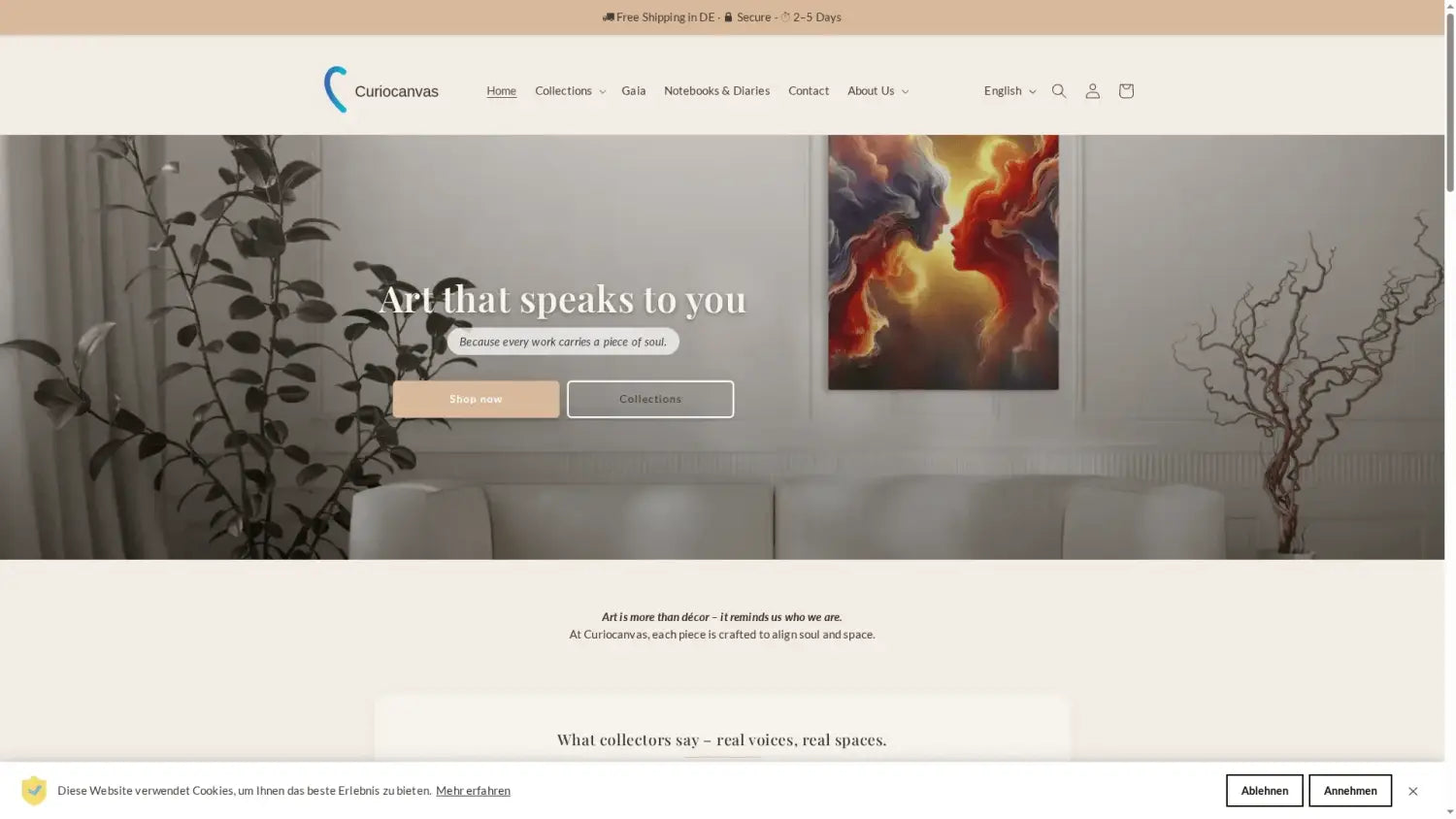
Transform your walls into vibrant stories full of emotion and symbolism with art from Curiocanvas . Discover the power of emotionally resonant art and breathe new life into your spaces. Visit us today and find your love of art – art that's more than just decoration.
Frequently Asked Questions
How do I choose the right art for my home?
Choosing the right art requires you to examine your own emotions and the atmosphere of your space. Start by keeping a feelings journal to identify which emotions you want to reflect in your room.
Which colors match my desired room atmosphere?
The choice of colors for your artwork should be based on color psychology. Pay attention to your emotional response to different colors and create mood boards to find a suitable color palette.
How can I choose artworks that are meaningful to my personal story?
When selecting artwork, reflect on your life stages and the symbols that resonate with your emotions. Note these symbols and find art that can visually represent these stories.
How do I place artworks in my room for maximum impact?
The positioning of artworks should be determined by the emotional flow of the space. Experiment with different heights and locations to find out where the art is best displayed and enriches the room.
How do I create harmony between several works of art?
To ensure harmony between multiple artworks, pay attention to shared color palettes and themes. Experiment with different groupings to create a visual narrative that enhances the emotional dialogue.
How do I check the quality and sustainability of art prints?
Pay attention to the materials and printing techniques to ensure they are high-quality and environmentally friendly. Check the paper weight and certifications for sustainable production methods to guarantee the longevity and environmental friendliness of the art prints.
Recommendation
- Beautify your living room with art: Your unique style – Curiocanvas
- Selecting Canvas Prints: A Step-by-Step Guide to the Perfect Curiocanvas
- What is Art History? Complete Guide 2025 – Curiocanvas
- 7 ways to discover the meaning of canvas paintings – Curiocanvas
- Make your own personalized gift: Step-by-step instructions – Passion Project Manufaktur